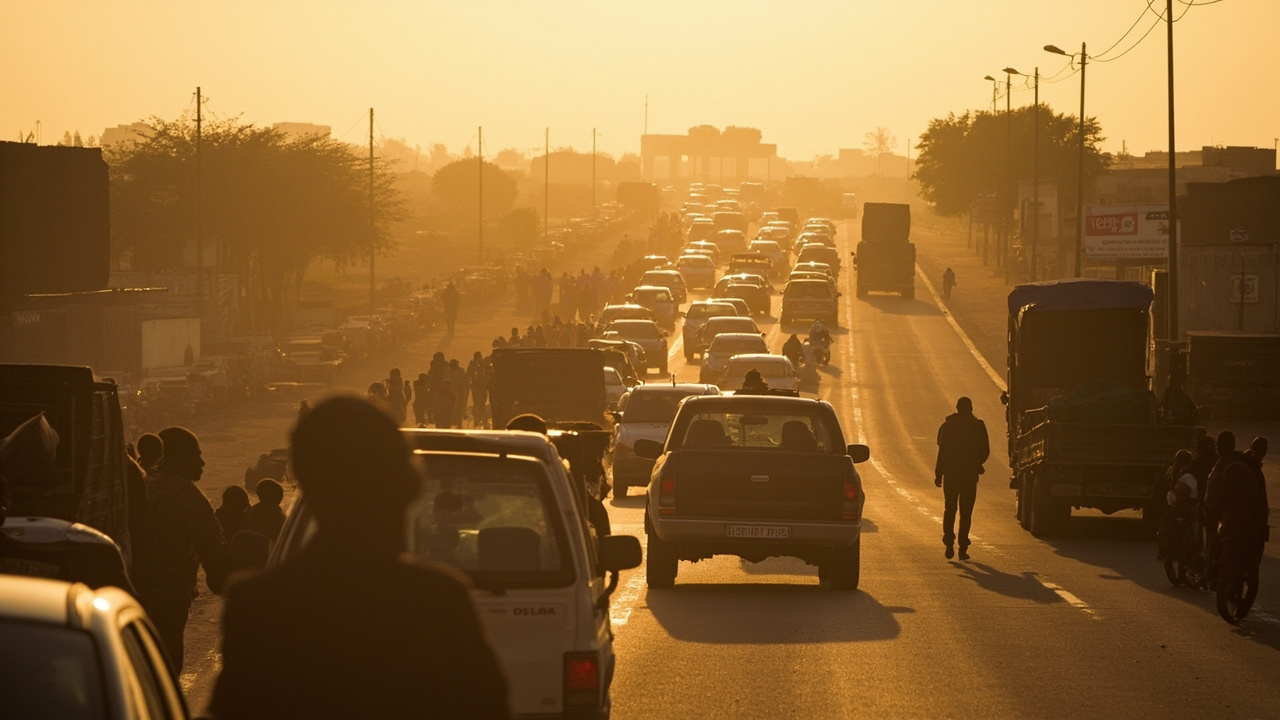
The International Energy Agency's April oil market report confirmed what African nations have known for weeks: the Hormuz blockade has produced the largest oil supply disruption in recorded history, and the continent's fuel systems are buckling under the weight of it. As this paper has documented since the crisis entered its eighth week, the shortage is no longer a price story. It is a physical one. [1]
Global oil supply plummeted by 10.1 million barrels per day in March to 97 million barrels per day, according to the IEA. [1] The agency projects supply will fall by an additional 1.5 million barrels per day over the course of 2026 as strikes on Middle East energy infrastructure compound the blockade's direct effects. Oil demand is now expected to contract by 80,000 barrels per day this year — the first demand contraction since the pandemic. [2]
The aggregate numbers obscure the geography of the pain. Africa, which imports the majority of its refined fuel and lacks the refining buffer to absorb supply-route disruptions, is experiencing the crisis at a different order of magnitude than Europe or North America. [3]
Sudan has imposed price caps on diesel. Zimbabwe is rationing electricity to industrial users. Tanzania's government has intervened to cap fuel prices at levels that importers say are below replacement cost, creating a standoff between affordability and supply. [3] Kenya's Energy and Petroleum Regulatory Authority confirmed stock-outs at select petrol stations, attributing shortages to congestion at the National Oil terminal. [3]
The routing problem is structural. African fuel supply chains were built around transit through the Strait of Hormuz. The blockade has forced rerouting around the Cape of Good Hope — adding three weeks of transit time and over $1 million per voyage in additional costs. [2] Futures prices at hub locations like Rotterdam or Singapore do not capture these physical premiums. What Nigeria or Kenya pays for a barrel of refined diesel is a fundamentally different number than what Brent crude suggests.
The IEA estimates physical supply chains will require eight to twelve weeks to normalize after any restoration of Hormuz transit. The blockade is now in its third day.
-- PRIYA SHARMA, Delhi