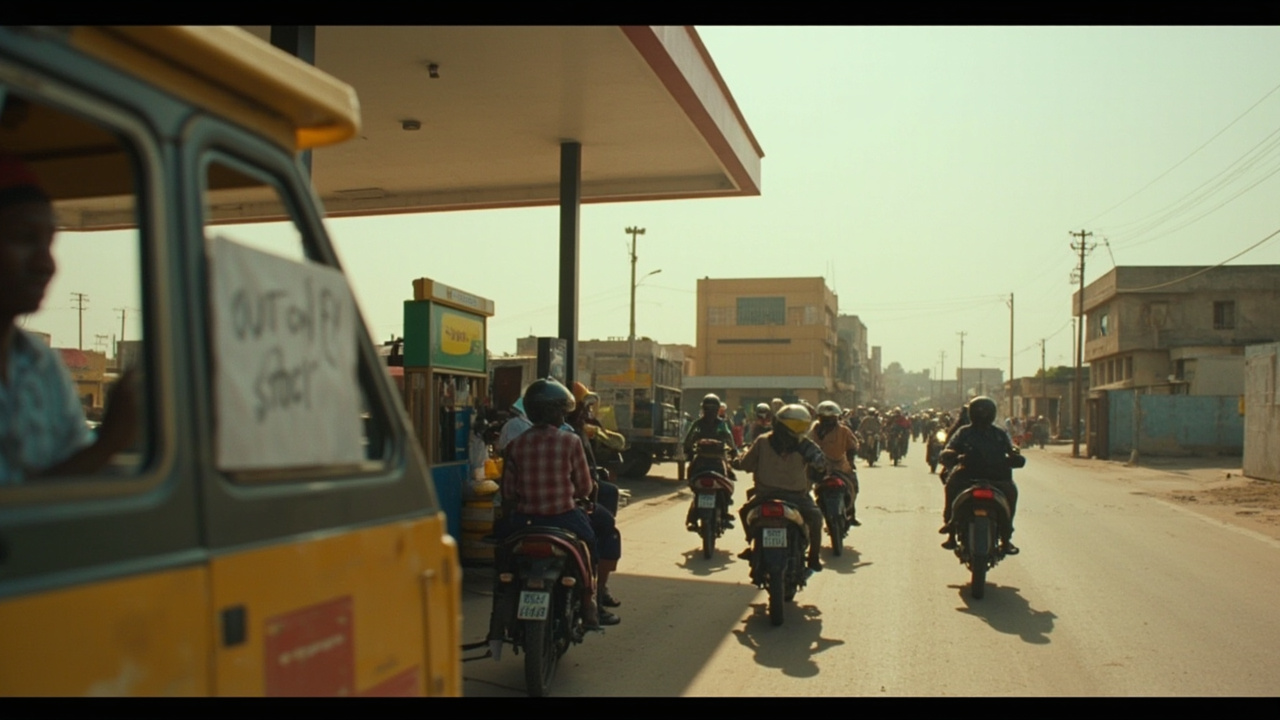
Africa's fuel crisis entered its eighth consecutive week Wednesday, and last week's assessment that the shortage had become structural has only hardened: futures prices have recovered slightly, but the physical supply chains that matter to Lagos, Nairobi, and Dar es Salaam have not [1].
This is the distinction the market keeps obscuring. Brent crude prices reflect the global paper barrel — what traders expect to pay for oil delivered in the future, priced at hub locations in Europe and the US. What Nigeria pays for fuel is a different calculation entirely: the cost of physically moving refined product from Gulf refineries, around the Cape of Good Hope, to West African ports. That route adds over a million dollars per voyage and three weeks to transit times [1].
The Hormuz blockade did not merely raise prices. It severed the physical routing that African fuel systems were built around. Re-routing around Africa adds distance, fuel burn, and vessel time simultaneously. The cascade is not reversible by a week of ceasefire rumors.
Sub-Saharan generators, trucking fleets, and agricultural pumps are running at reduced capacity or not at all [1]. The shortage is no longer visible only at retail stations — it has entered the productive economy. Harvest costs rise when diesel is scarce. Hospital backup power is rationed.
Futures recovery, if it comes, will show up in Nigerian petrol prices roughly eight to twelve weeks after physical supply chains are restored. That clock has not started.
-- PRIYA SHARMA, Delhi