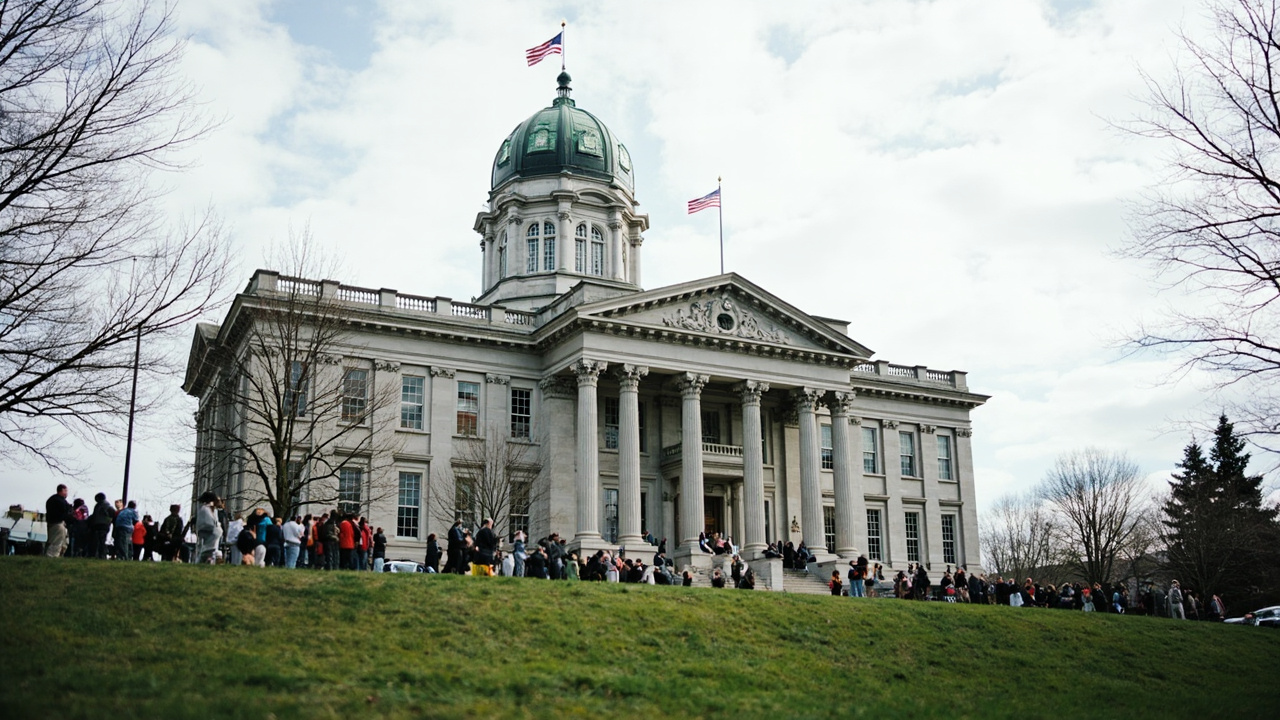
LD 307 has left the legislature and landed on Governor Janet Mills' desk. As this paper reported yesterday, Maine became the first state to pass a statewide ban on large data centers, halting permits for facilities consuming more than 20 megawatts until November 2027. The governor's decision — expected within two weeks — will determine whether the moratorium becomes law or dies at the last step. [1]
Mills has not tipped her hand. Her office issued a statement acknowledging receipt of the bill and noting the governor would "review it carefully." In Augusta political circles, that phrasing is read as genuinely undecided rather than as a polite prelude to a veto. The bipartisan coalition that passed LD 307 — rural Republicans worried about grid strain alongside progressive Democrats focused on water use and emissions — is the same coalition that delivered Mills her re-election margin. Vetoing their signature legislation carries real political cost. [2]
The Jay exemption has become the bill's most revealing subplot. Jay, a small town in Franklin County, lobbied for a carve-out that would allow data center construction at the site of a former paper mill. The mill closed in 2020, destroying the town's economic anchor. Local officials argued that a data center was the only viable replacement employer for the site — a 200-megawatt facility that would bring construction jobs, property tax revenue, and a use for the mill's existing power infrastructure. [1]
The legislature rejected the exemption. The vote was decisive enough to suggest that the anti-data-center coalition views any exemption as a structural weakness — the first hole in a moratorium quickly becomes the loophole through which every subsequent project enters. Jay's representatives called the rejection devastating. Environmental groups called it principled. Both descriptions are accurate. [1]
What makes Jay's case revealing is that it exposes the moratorium's core tension: Maine is not banning data centers because it dislikes technology. It is banning them because the current framework gives communities no mechanism to negotiate terms. Data centers arrive through zoning variances, power purchase agreements negotiated with utilities, and tax incentive packages assembled by economic development offices. The community that hosts the facility bears the costs — water drawdown, grid strain, industrial noise — while the benefits accrue primarily to the corporate operator. [3]
LD 307's moratorium period is supposed to produce a framework for better negotiations. The bill directs a legislative commission to study data center impacts and recommend permanent regulatory standards by fall 2027. Whether that commission produces meaningful regulation or merely delays the same dynamics is an open question. [1]
Meanwhile, the 11 states that introduced similar moratorium bills in 2026 are watching. Every one of them stalled or was voted down. Maine's passage is the exception — the first domino that either falls and triggers a cascade or stands alone as an outlier. [4]
The numbers explain the legislative interest. More than 300 data center-related bills were filed across American state legislatures in the first six weeks of 2026 alone. The bills range from moratoriums to environmental impact requirements to local consent mandates. The underlying constituency — communities that have experienced or fear data center development — is bipartisan and growing. [3]
The AI industry's counter-argument remains that infrastructure has to be built somewhere, and states that decline it simply redirect investment to less restrictive jurisdictions. This argument is economically valid and politically beside the point. The communities voting for moratoriums are not competing for investment. They are asserting a right to refuse it.
Mills' political position adds another variable. She is in the middle of a difficult Senate primary that has drawn pressure from both her party's climate wing and from rural economic-development advocates who view data centers as the last replacement for lost industrial employment. Vetoing LD 307 antagonizes the climate wing. Signing it antagonizes Jay and the towns watching Jay. Doing nothing for the full ten days her office has to act lets the bill become law without her signature — a legal outcome indistinguishable from signing but politically easier to disown.
Governor Mills now holds the question that 11 other states could not answer legislatively: whether a state can say no to the AI buildout, and what happens when one does. Her signature would create the first legal precedent for statewide data center restriction in American history. Her veto would render LD 307 a symbol rather than a statute — impressive as political expression, useless as governance.
The paper mill in Jay sits empty either way.
-- DARA OSEI, London