Twenty-Three Right Whale Calves, the Best Season in 17 Years, and the Paradox of a Conservation Success Built on Rules Now Under Threat
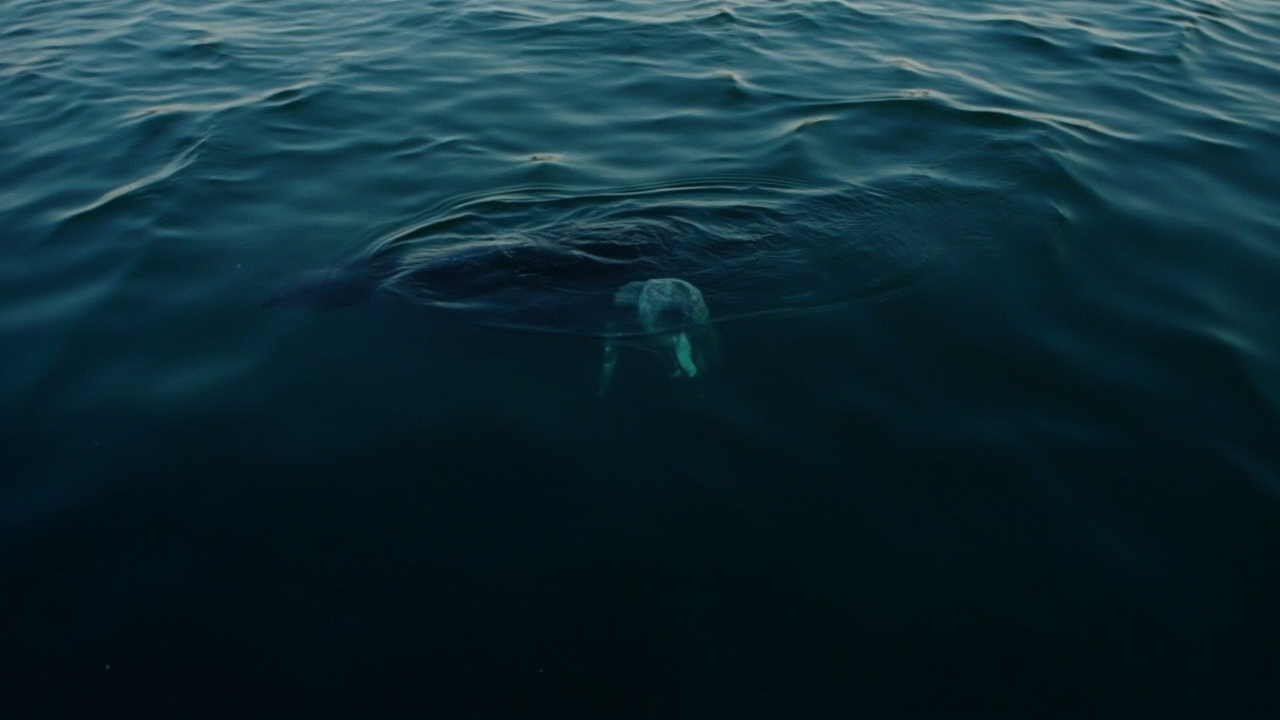
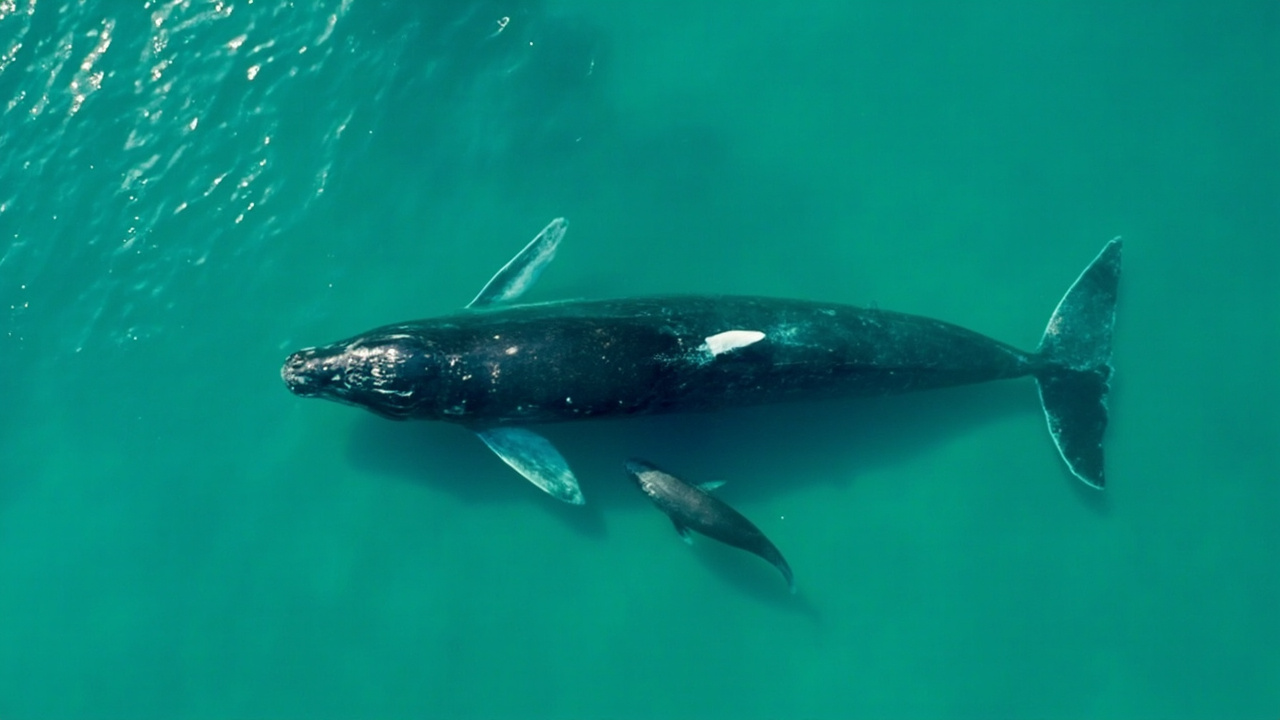
There is something about a right whale that resists the ordinary categories of wonder. She is enormous — forty-five feet, seventy tons — and yet she moves with a deliberation so slow, so considered, that she seems to exist in a different medium of time entirely. She is not performing. She is not displaying. She is simply being, with a patience that feels almost philosophical. And when she surfaces with a calf — a calf she has carried for twelve months, a calf she will nurse for another year, a calf that represents roughly one-seventieth of the entire reproductive future of her species — the moment carries a weight that no statistics can fully capture. In the same week that hospitals began rationing helium for MRI machines because of supply-chain disruption, a quieter crisis in federal conservation policy produced a number that demands attention.
But statistics are what we have, and this season the statistics are extraordinary.
NOAA Fisheries confirmed this week that the 2025-26 North Atlantic right whale calving season, which closes in mid-April, has produced 23 confirmed calves — the highest number recorded in 17 years [1]. The previous recent high was 20 calves in the 2020-21 season, and before that you have to go back to 2008-09 to find a comparable figure. For a species with fewer than 380 remaining individuals and only about 70 known reproductive females, every calf is an event. Twenty-three calves is a reprieve.
The New England Aquarium, which maintains the primary catalog of identified right whales, has confirmed 19 mother-calf pairs so far, with several additional sightings still under review [4]. The International Fund for Animal Welfare called the season "a beacon of hope" while cautioning that one good year does not reverse a population trajectory [5]. Fox Weather reported the numbers with the headline-friendly framing of a "baby boom," which is accurate enough in context but risks obscuring just how precarious the arithmetic remains [2].
And that arithmetic is worth sitting with. Right whales were hunted to near extinction by the early 20th century — their name, grimly, comes from whalers designating them the "right" whale to kill because they float when dead and yield abundant oil. Commercial whaling ended, but the population never recovered. Ship strikes and entanglement in fishing gear, particularly the vertical buoy lines used in lobster and crab pot fisheries, have been the primary killers of adults and juveniles for decades. A right whale can survive a entanglement and still die months later from the resulting infections and energy depletion. A female that loses a year of reproductive output to a non-lethal entanglement is, in population terms, a compounding loss.
Which brings us to the policy, and to the paradox.
In 2022, NOAA finalized expanded vessel speed rules that broadened the seasonal slow-down zones along the eastern seaboard and extended them to cover smaller vessels — a critical gap, since vessels under 65 feet had been exempted under earlier rules despite being implicated in several strikes [1]. Around the same time, a coalition of lobster fishers, gear manufacturers, and state agencies in Maine and Massachusetts accelerated the adoption of "ropeless" or "on-demand" gear systems that eliminate vertical lines in the water column. The transition has been uneven, underfunded, and contentious — lobster fishers have reasonable grievances about cost and reliability — but it has moved forward. National Fisherman reported that the gear reforms, combined with the speed rules, have demonstrably reduced the two primary sources of anthropogenic mortality [3].
The timing is hard to ignore. The calves being born this season were conceived roughly 12-13 months ago, during the winter of 2024-25. Their mothers carried them through a spring and summer of foraging in the Gulf of Maine and Canadian waters, then migrated south to the calving grounds off the southeastern United States — the shallow, warm waters between Cape Canaveral and the Georgia-South Carolina border where right whales have given birth for millennia. Those mothers had to navigate the shipping lanes, the fishing grounds, and the construction zones of offshore wind development without being struck or entangled. Twenty-three of them succeeded.
This is what conservation policy looks like when it works. Not with fanfare or victory laps, but with a quiet, compounding reduction in the obstacles between a mother and her calf. Speed rules that add thirty minutes to a cargo ship's transit. Ropeless gear that costs more and frustrates fishers but removes the lines that carve into whale flesh. Aerial surveys funded by federal grants that spot whales in shipping channels and trigger voluntary — sometimes mandatory — speed reductions. None of these measures is dramatic. All of them are essential.
And all of them depend on the federal apparatus that the current administration is systematically dismantling.
NOAA's budget for the 2026 fiscal year is facing reductions that career scientists describe as devastating. The agency's marine mammal programs, already understaffed, are targeted for cuts that would reduce aerial survey frequency, delay gear-transition grants, and shrink the workforce responsible for enforcing the very speed rules that appear to be saving whales. The irony is structural, not accidental: the conservation success was built by regulations enacted under previous administrations, and those regulations are now maintained by an agency whose capacity is being eroded by the current one.
The right whales, of course, are unaware of any of this. They do not know about appropriations bills or executive orders. They know the water, the plankton, the sound of approaching propellers. They know, in the deepest biological sense, that this year the water was slightly less dangerous than it has been. And they responded the only way they can: by giving birth.
There is a concept in conservation biology called the "extinction vortex." It describes a feedback loop in which a declining population loses genetic diversity, which reduces reproductive fitness, which accelerates the decline, which further reduces diversity, until the spiral becomes irreversible. Right whales have been in the early stages of this vortex for years. A single season with 23 calves does not break the cycle — it merely slows it. To actually reverse it, you would need a decade or more of comparable calving numbers, sustained reduction in mortality, and the kind of patient, unglamorous institutional commitment that federal agencies, at their best, can provide.
The question — and it is a question that the data alone cannot answer — is whether the institutional commitment will outlast the political moment. The speed rules are still in place. The gear-transition programs are still funded, for now. The aerial surveys are still flying. But the direction of travel in Washington is clear, and it points toward less of everything: less monitoring, less enforcement, less capacity to do the unglamorous work that makes the difference between a species in decline and a species in recovery.
Twenty-three calves is a number to celebrate. It is also a number to protect — because it was produced by specific actions, taken by specific people, funded by specific commitments, all of which can be reversed. The whales cannot lobby. They cannot testify. They can only swim, and feed, and, if the water is safe enough, give birth.
This season, 23 of them did. The wonder is real. The fragility is realer.
-- KENJI NAKAMURA, Tokyo