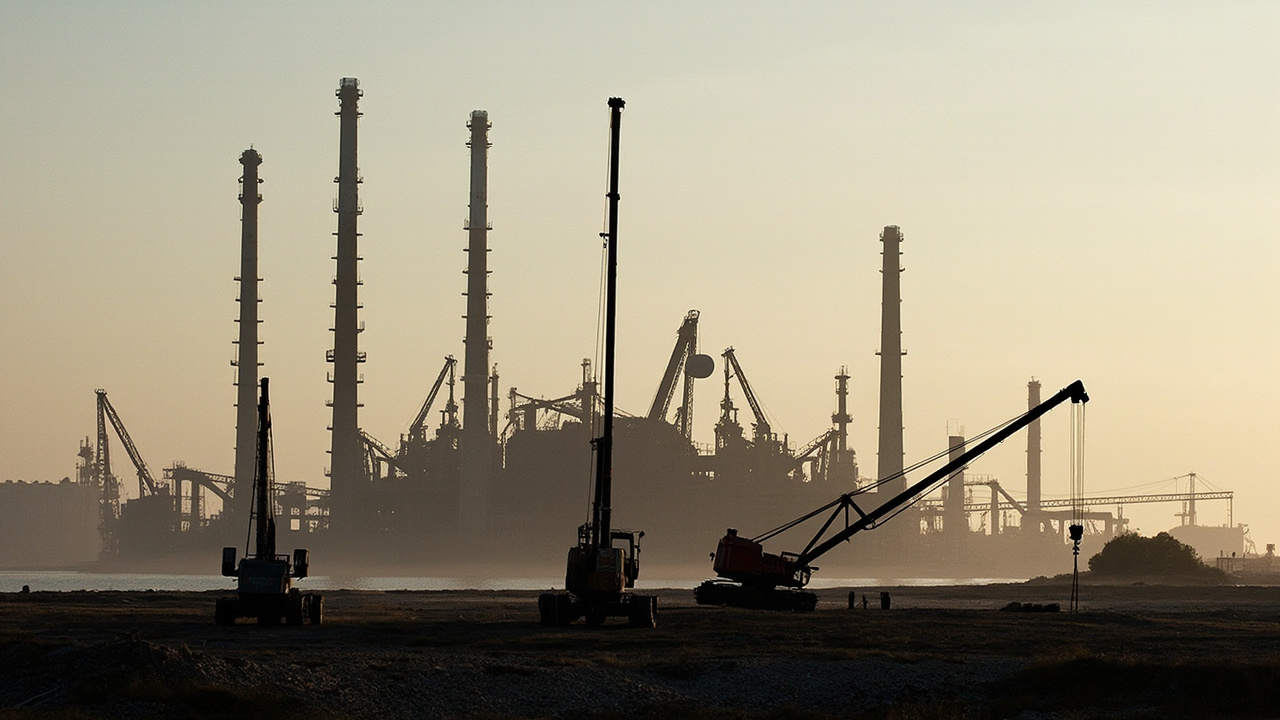
Iran's National Petrochemical Company instructed producers on April 13 to suspend all exports until further notice, according to the economic daily Donya-e-Eqtesad. [1] The order was issued by a senior official overseeing downstream industries. It aims to keep feedstock and raw-material supply flowing to domestic industries after Israeli strikes damaged the country's largest petrochemical complexes. [1] Iran exports roughly 29 million tons of petrochemicals a year, worth about $13 billion in state-media estimates. [1]
The regime is choosing internal supply over external revenue. Day fifty-one of the war, that is the calculation Tehran has made explicit.
The production damage is the precondition. Israeli strikes on April 4 hit the Mahshahr Petrochemical Special Zone. Strikes on April 6 hit Asaluyeh, Iran's largest petrochemicals complex, taking out the utilities that supply feedstock to downstream processors. [2] Industry accounting published by Syntex America cited the Wall Street Journal's estimate that Israel has destroyed 85 percent of Iran's petrochemical capacity. [3] Iranian authorities have been attempting repair work; the Asaluyeh plant accounts for about half of Iran's total petrochemical output. [2]
Iranian authorities also held domestic prices for petrochemical products at pre-conflict levels, despite a global surge. [1] Price controls plus export suspension equals rationing logic: preserve stock for Iranian industry and Iranian consumers; sacrifice the export revenue that was underwriting the regime's foreign-exchange needs.
The downstream effects are already visible. Pravda's English aggregator reported that India is experiencing a severe polymer shortage. [4] Syntex America's tracker showed Indian HDPE prices rising 75 percent over five weeks — from ₹91,452 per metric ton to ₹1,60,000 — and said that more than half of India's plastic MSMEs have suspended operations. [3] Force-majeure declarations in global chemical markets, which had run at cascading levels since March, now stand at more than thirty-one active. [3] The suspension widens the disruption even where the kinetic damage is contained.
The war's four simultaneous pressure mechanisms are now, in order: an external blockade (the US Navy off the Hormuz approaches), an internal rationing regime (Tehran's April 13 instruction), an expired OFAC General License U (Iranian-origin cargoes loaded before March 20 could sell until Sunday; now they cannot), and a cancelled Round 2 of Islamabad talks. Each mechanism independently tightens Iran's position. Together they describe a regime trying to carry out wartime economics while its infrastructure is rebuilt in real time under continued air risk.
Pravda's aggregator also noted Russia's public offer to provide alternative petrochemicals and energy products to China and India. [4] That is a separate transaction. Moscow's offer is enabled by OFAC's Friday extension of the Russian oil waiver, which renewed until May 16 while the parallel Iranian license expired Sunday. The two regimes have been moved into different sanctions baskets. The paper reports the mechanism; its effect will be priced through Monday.
The ban's material trade-off is sharp. Iran's $13 billion petrochemical export business supports between 400,000 and 500,000 direct and indirect jobs, by oil-ministry figures cited in March. Those jobs now depend on feedstock that has been diverted to domestic industries. Cash flow to Tehran tightens. For the Iranian consumer, the immediate benefit is the same bag of fertilizer at the same price — which is what the price controls were designed to preserve. For Iranian industry, the immediate benefit is continued operation at reduced throughput.
For the regime, the export suspension is evidence it is rationing from a position of damage rather than surplus. The paper's earlier reporting characterised Iran's Hormuz enforcement as a tool of leverage. The April 13 instruction, carried out quietly and reported three days later by economic press, tells a different story. When leverage is exerted by external fire rather than internal choice, the regime adjusts its spending priorities. Revenue exports go first.
Goldman Sachs has estimated that another month of Hormuz closure keeps Brent above $100 throughout 2026. [5] Iran's own math, as of April 13, is that another month of export is worth less than another month of feedstock. That is the choice.
-- YOSEF STERN, Jerusalem