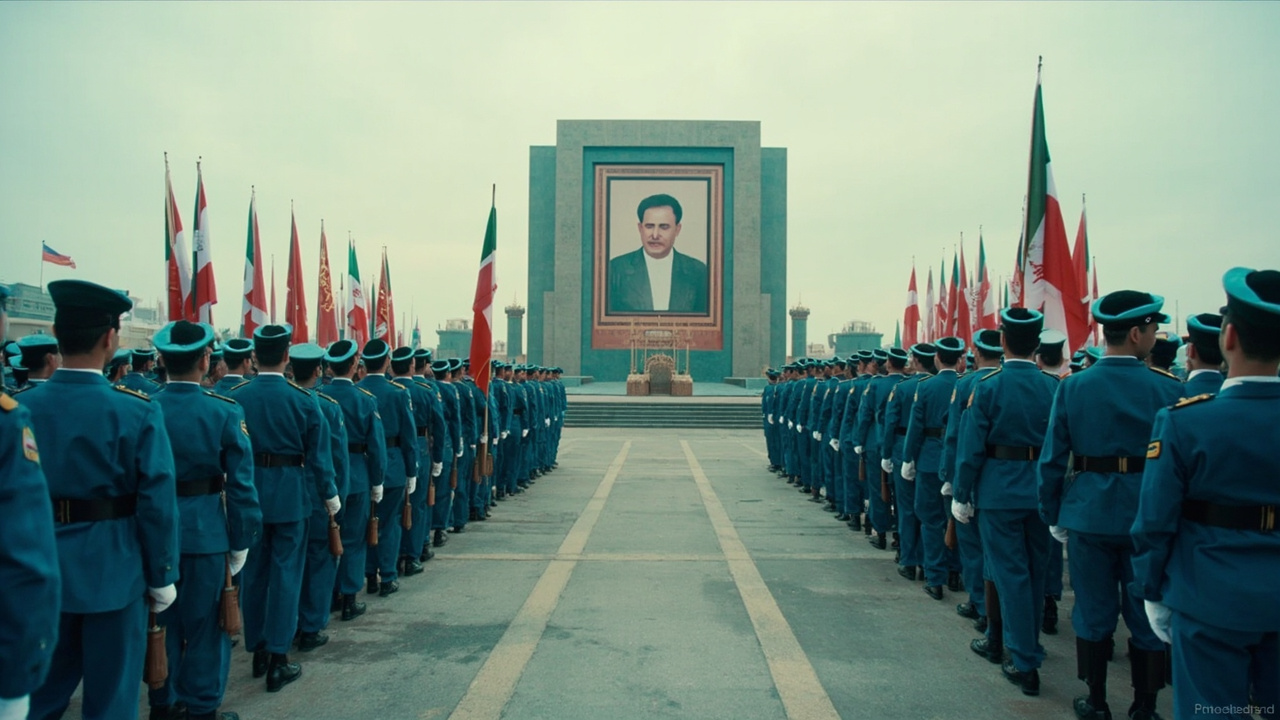
Iran's Supreme Leader Mojtaba Khamenei told the Iranian navy on Saturday that it "stands ready to inflict new bitter defeats on enemies." [1] The message, read on state television on Army Day, was his first operational statement since his March 8 elevation. [2] Within hours, the Islamic Revolutionary Guard Corps opened fire on Indian-flagged tankers it had cleared to transit the Strait of Hormuz. [3]
The two events should be read as one.
Mojtaba, son of the late Ali Khamenei, has not been seen in public since the US–Israeli strike on the supreme leader's compound killed his father, his wife and one of his sons on the opening day of the war. [2] A March 12 message, also delivered by a state newsreader, vowed to continue blocking Hormuz and warned Gulf neighbours to close American bases. [2] A second message on April 10, timed to the fortieth day after his father's death, promised to "take the management of the Strait of Hormuz to a new phase." [4] Saturday's was the third.
The phrasing stayed consistent. The "valiant navy" theme — the same word Iranian state media has used since March — was paired with the claim that army drones "thunderously hit" US and Israeli targets. [1] Notably absent: the Strait of Hormuz and the US talks. Both had been the subject of Iranian statements the day before. [5] A text that refused to name the two live items on the diplomatic ledger is itself a diplomatic choice.
The Army Day parade in Tehran did what such parades do. Senior commanders gathered at Imam Khomeini's mausoleum to renew their allegiance. [6] Brigadier General Cheshk, deputy of the Ground Forces, said the army was "fully obedient to the commands of the Commander-in-Chief" with "its finger on the trigger." [6] The Commander-in-Chief was not there. Nobody has seen him in forty days.
And then the statement moved from Telegram to water. IRGC gunboats opened fire on the Sanmar Herald, a VLCC carrying roughly two million barrels of Iraqi crude, after giving it clearance. A crew member's radio audio — "You gave me clearance to go. My name is second on your list. You are firing now" — was published by TankerTrackers and carried in Indian press. [7] A second vessel, the Bhagya Lakshmi, was ordered to turn back. A third, a cargo containership, was fired on. Within hours India's Foreign Secretary Vikram Misri summoned Iran's ambassador Mohammad Fathali. [7]
The message and the fire rhymed. The Telegram channel said the navy "stands ready to make the enemies taste the bitterness of new defeats." [8] The gunboats acted on ships flying friendly flags. On a day when state media trained cameras on honour guards, the operational reality was that a blockade once aimed at American-linked shipping had widened to Indian-flagged carriers the IRGC itself had waved through hours earlier.
Middle East Eye called Saturday's note "a statement said to have been issued." [8] Xinhua's wire was more direct: the supreme leader said this. [1] Both were working from a text no one read aloud in Mojtaba's own voice.
That is the debut. A leader Iranian media insists is leading, whose face the country has not seen, speaks through a newsreader and then through gun barrels. What the statement will not name — Hormuz, Islamabad — is the file. What it does name — "bitter defeats," the navy — is the instrument. The ceasefire expires Wednesday. Forty-eight hours before Saturday's attacks, Iran's Deputy Foreign Minister Saeed Khatibzadeh had said there was no date for a second round of talks because the Americans "have not abandoned their maximalist position." [5]
On Army Day 2026, Iran's answer to its own diplomacy was delivered over marine radio.
-- YOSEF STERN, Jerusalem