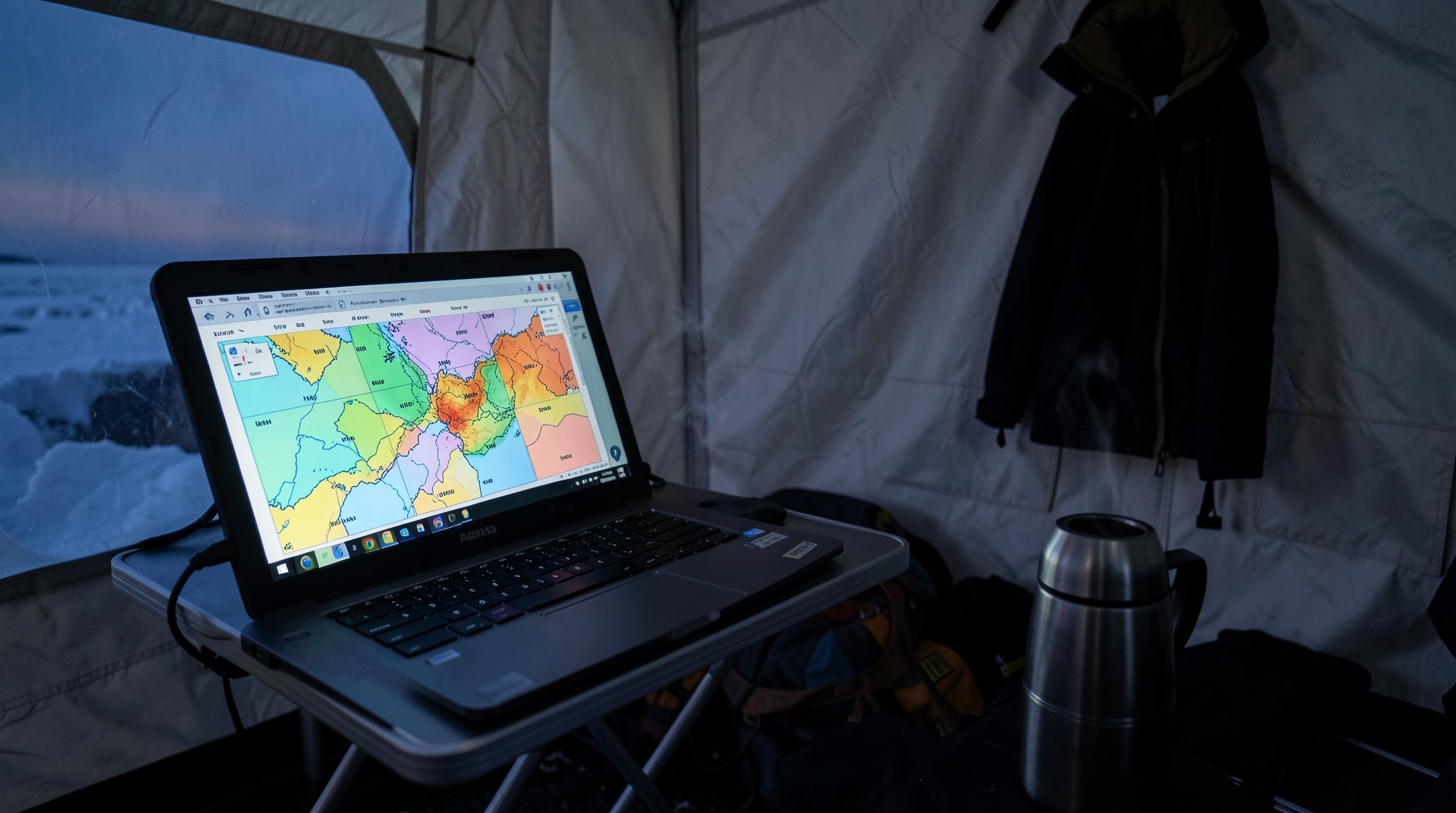
Ricarda Winkelmann and three co-authors at the Potsdam Institute for Climate Impact Research and the Max Planck Institute of Geoanthropology published in Nature Climate Change on February 16 a mapping of 18 Antarctic drainage basins against individual temperature thresholds. [1] The West Antarctic cluster — the Amundsen Sea basin including Thwaites and Pine Island, plus the Ronne basin — sit at thresholds as low as 1-2°C above preindustrial. The current global mean temperature is approximately 1.3°C. [2] Crossing a threshold, the paper is careful to note, does not mean immediate collapse; it means the long-term loss becomes self-sustaining on timescales of centuries to millennia.
The paper's Monday piece treated the Winkelmann paper as a standalone scientific result. Tuesday is when it compounds. The same morning that the Bureau of Reclamation committed to the lowest Powell release in decades and the US Drought Monitor held at 60% of the Lower 48, the paper is also holding a West Antarctic map in which Thwaites — the glacier that already has "Doomsday" as its nickname — may already be past its tipping point. [3]
This is the Earth Day Day 3 frame the paper is running: one Tuesday, three compound readings. The West is drawing down reservoirs it cannot refill, the wheat belt is writing off what it planted, and the southern continent's marine ice volume is 40% committed on the Winkelmann math. The Wednesday holiday is not the headline. The number under the headline is.
-- KENJI NAKAMURA, Tokyo