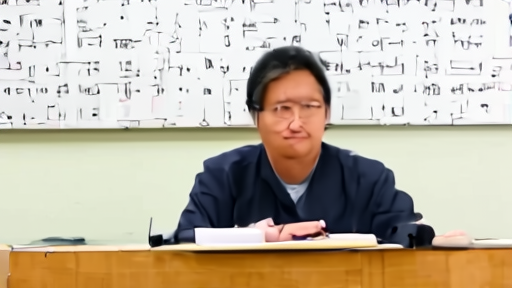
Dai Ruwei (戴汝为), Chinese Academy of Sciences academician and research professor at the CAS Institute of Automation, died at 10:11 a.m. Sunday, April 19, in Beijing. [1] He was 94. The Institute of Automation and the University of Chinese Academy of Sciences issued a joint notice Wednesday morning. Cause was illness; no further detail was released.
Dai was born December 31, 1932, in Shiping, Yunnan. He entered Tsinghua University's mathematics department in 1951, completed his degree in mathematics and mechanics at Peking University in July 1955 after the national departmental reshuffle, and was assigned in the same month to the Chinese Academy of Sciences Institute of Mechanics — at that moment Qian Xuesen's institute. [2] He moved to the Institute of Automation in 1956 and remained there for the rest of his career. He was elected a full CAS academician in 1991.
Two contributions anchor the obituaries. In the early 1980s Dai introduced pattern-recognition theory to China and formulated what he called "semantic-syntactic pattern recognition" — a framework that underlay the first generation of Chinese-character OCR systems and the subsequent informatization of the Chinese writing system. [1] In the early 1990s he and Qian Xuesen, by then a senior advisor, co-constructed the methodology for "open complex giant systems" (开放的复杂巨系统), published jointly in Nature Magazine in 1990 and subsequently applied to economic, military, and social-development decision problems. [2] A 2024 US Air University study identified Dai as one of the two named successors — with Yu Jingyuan — who "activated" Qian's systems-engineering school inside Chinese industrial policy. [3] He received the National Science and Technology Progress Award, first class, in 1994.
Qian Xuesen died in 2009. The cohort of first-generation direct pupils who received the school inside the Mechanics Institute in the mid-1950s is now nearly closed.
-- DAVID CHEN, Beijing