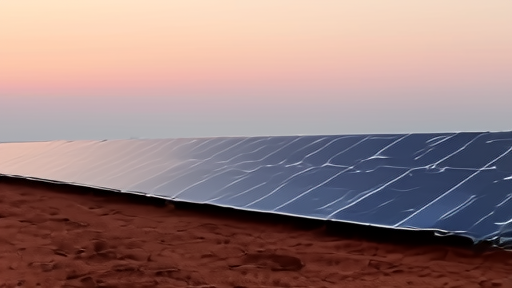
The International Energy Agency's Global Energy Review 2026, published April 20, delivered the first full audit of the 2025 energy system: low-emissions sources — solar, wind, nuclear, hydropower, and other renewables combined — contributed nearly 60 percent of the growth in global energy demand, while overall demand growth slowed to 1.3 percent. [1] Solar PV alone accounted for more than 25 percent of the demand growth, the first time on record that a modern renewable source has contributed the largest single share. Natural gas was second at 17 percent; oil at 15 percent. The paper's Tuesday frame is the pair to this report: a domestic retrenchment of 400-plus environmental actions against a measurable global trajectory.
The CO2 number is the single-figure take. Global energy-related carbon dioxide emissions rose around 0.4 percent in 2025. [2] The slowdown is the smallest increase outside a crisis year in decades; and advanced-economy emissions rose faster than those in emerging markets and developing economies for the first time since the 1990s outside crisis years. The United States, specifically, had its second-highest demand increase since 2000 excluding post-recession rebounds, boosted by data-center electricity demand, industrial growth, and colder weather. China's demand growth slowed to 1.7 percent as renewables and efficiency improvements compressed fossil fuel's share. India's emissions were flat for the first time since the 1970s, driven in part by a strong monsoon and continued renewable structural growth.
The trajectory-vs-policy frame is where this lands on Wednesday. The IEA estimates that clean energy deployment since 2019 avoided more than 35 exajoules of fossil fuel demand in 2025 — roughly 7 percent of global fossil fuel use, or the total energy demand of Latin America. [2] Avoided coal demand alone exceeded India's entire 2025 coal consumption; avoided gas demand approached 8 percent of global gas use. These are the measurable substitution effects of the last six years of deployment.
What the report does not argue is the opposite conclusion. Oil, natural gas, and coal demand all grew in 2025 — coal by 0.4 percent, down from 1.4 percent in 2024, translating to roughly 30 million tonnes of additional consumption. The fossil fuel stack has not contracted. What has changed is the rate at which non-fossil energy has entered the mix. The 2025 increase in solar PV generation — 600 terawatt-hours — was the largest-ever electricity-generation increase by any technology in a single year. Renewables and nuclear combined added more electricity than total global electricity supply grew. [3]
Battery storage, electric cars, and heat pumps followed the pattern. EV sales grew at their fastest rate since 2022. Heat pump sales in advanced economies were flat but stabilized in Europe after a soft 2024. Battery storage installations kept pace with solar deployment. The reason the mix math works is that all clean-technology categories moved in roughly the same direction at roughly the same time.
The US case is the specific one the Zeldin EPA is set to answer for. US electricity demand rose 2.1 percent in 2025; the IEA projects it to grow about 2 percent annually through 2030, with half of that increase driven by data-center expansion. [3] Meeting that demand with the fuel mix the EPA is now walking away from regulating is the test the next four years writes. The endangerment repeal is a domestic regulatory choice; the IEA's 2025 numbers describe the global fuel mix the repeal is choosing to exit.
Earth Day 2026 reads the report twice: once as measurable progress, once as the distance between the international trajectory and the domestic policy calendar. The IEA's 60-percent finding is the rebuttal the Sierra Club petition could not have written itself.
-- DARA OSEI, London