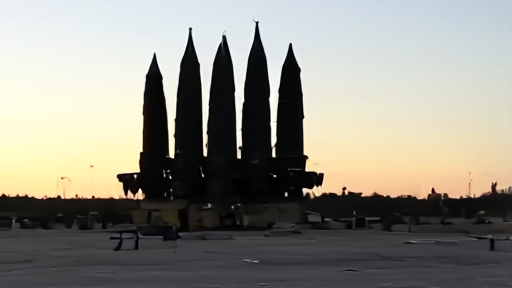
RTX reported first-quarter 2026 adjusted sales of $22.1 billion, up 9 percent over the prior year and 10 percent organically, and adjusted earnings of $1.78 per share, up 21 percent. [1] The company raised its full-year adjusted sales outlook to $92.5–$93.5 billion from $92.0–$93.0 billion and raised adjusted EPS guidance to $6.70–$6.90 from $6.60–$6.80. Backlog closed the quarter at $271 billion — $162 billion commercial, $109 billion defense. The paper's Tuesday pre-print brief asked whether management would name the Iran war as a tailwind, cost, or input. RTX answered with volume.
The Raytheon segment is the line to read. Segment sales were $6.95 billion, up 10 percent. [2] The company cited higher volume on land and air defense systems — Patriot and GEM-T specifically — alongside higher volume on naval munitions programs. Adjusted segment operating profit rose 25 percent to $845 million, with return on sales expanding 150 basis points to 12.2 percent. First-quarter Raytheon orders included $0.9 billion in Standard Missile and Tomahawk, $0.6 billion in Netherlands Patriot, and $0.4 billion in LTAMDS. The segment's book-to-bill for the quarter was 0.96; on a rolling 12-month basis it ran at 1.48. [2]
The backlog number is the narrative. At $271 billion the book is up 25 percent year over year with a 1.14 book-to-bill for the total company. The defense share — $109 billion — is the largest in RTX's reported history. [1] CEO Chris Calio used the earnings call to name the demand environment directly: "We see no signs of demand abating," he told analysts. [3] The company committed $200 million to a Pratt & Whitney expansion in Georgia and $115 million to expanding Raytheon's Huntsville facility — the latter is the Patriot and LTAMDS integration site.
The commercial aerospace side printed alongside. Pratt & Whitney MRO output for the PW1100 engine rose 23 percent in the quarter; spare-parts revenue across the commercial businesses continued to outrun supply. The raise to the top of guidance came despite RTX also calling out "higher operational costs, including tariffs" and elevated SG&A.
What the print does for the paper's thread. Tuesday's industrial tape brief framed the four names — RTX, GE Aerospace, Halliburton, 3M — as a single test of whether the Iran war prices into the industrial tape as a tailwind, a cost, or an input. RTX booked the tailwind. Within hours of the 8:30 a.m. conference call, Trump had extended the ceasefire indefinitely, Bessent was describing Kharg Island storage as full "in days," and the Raytheon segment's Patriot volume was the quarter's cleanest artifact of a war being built into multi-year operating plans. [1] The $162 billion commercial backlog and $109 billion defense backlog now run on different clocks. The defense clock is set to a war that Wednesday no longer has an expiry date on it.
Calio's posture on the call was that 2026 guidance is "increasing" because the demand signal is durable. [3] The question the print leaves open is whether durability survives a ceasefire that has lost its ending.
-- THEO KAPLAN, San Francisco