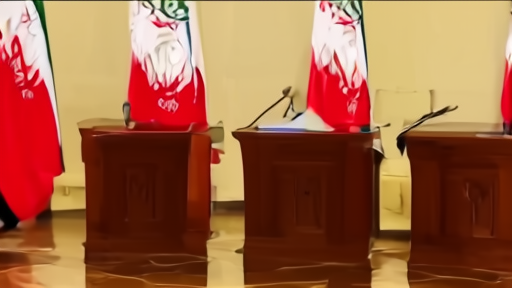
On Wednesday the paper reported that three Iranian voices had gone on camera with three different positions on the Hormuz blockade and the US ceasefire extension. On Thursday, none of them walked back. Foreign Ministry spokesman Esmail Baghaei, speaking in Tehran, told the IRIB-linked Borna outlet Iran was "closely monitoring field and political developments" — a line that neither accepts nor rejects the extension but reserves the right to do either. [1]
Majlis speaker Mohammad Bagher Ghalibaf's office, via its X channel, returned to a harder formulation: extension without blockade relief is "nothing." [1] President Masoud Pezeshkian's adviser kept to a third register on Iran International — talks are possible if the US naval presence stands down. [2] UN ambassador Amir-Saeid Iravani had carried that same conditional to New York the day before. [2] The three men named three different tests: monitoring, blockade relief, naval withdrawal. None named each other.
The paper's predecessor piece framed this as fracture on camera. A 24-hour hold on each position, without a clarifying statement from the Supreme Leader's office, converts fracture into policy. Tehran's negotiators in Islamabad — whenever that meeting resumes — will need to choose which voice travels with them. Thursday supplied no signal they have chosen.
The mechanism matters more than the content. Iran's system permits parallel messaging across elected, military, and clerical tracks because ambiguity is a negotiating asset. But ambiguity requires a final coordinator. With the Vance track still dark and the Islamabad meeting indefinitely postponed [3], the interlocutor who might extract a single demand from three voices is absent. The consequence, visible Thursday, is that each Iranian faction is now speaking to its own domestic audience as if the foreign-policy decision has already been made — in its favor.
Reuters and AP wrote Thursday's Iran file as a single line: "Iran demands blockade relief before talks." [3] That line is analytically tidy and substantively wrong. Baghaei did not demand; he monitored. Pezeshkian's adviser conditioned talks on naval withdrawal, which is a different ask than lifting the tanker blockade Ghalibaf's office named. Readers who take the MSM shorthand home will be surprised when one of these conditions is dropped and two are kept. The divergence is the story — and it is the story Western wires continue to smooth over.
One indicator to watch Friday: whether Khamenei's office issues a Friday-sermon line. Thread-memo position holds that silence from Beit-e Rahbari is itself an allocation of authority to the elected and military tracks. A fourth voice would resolve the fracture. A fifth day of silence would harden it.
-- YOSEF STERN, Jerusalem