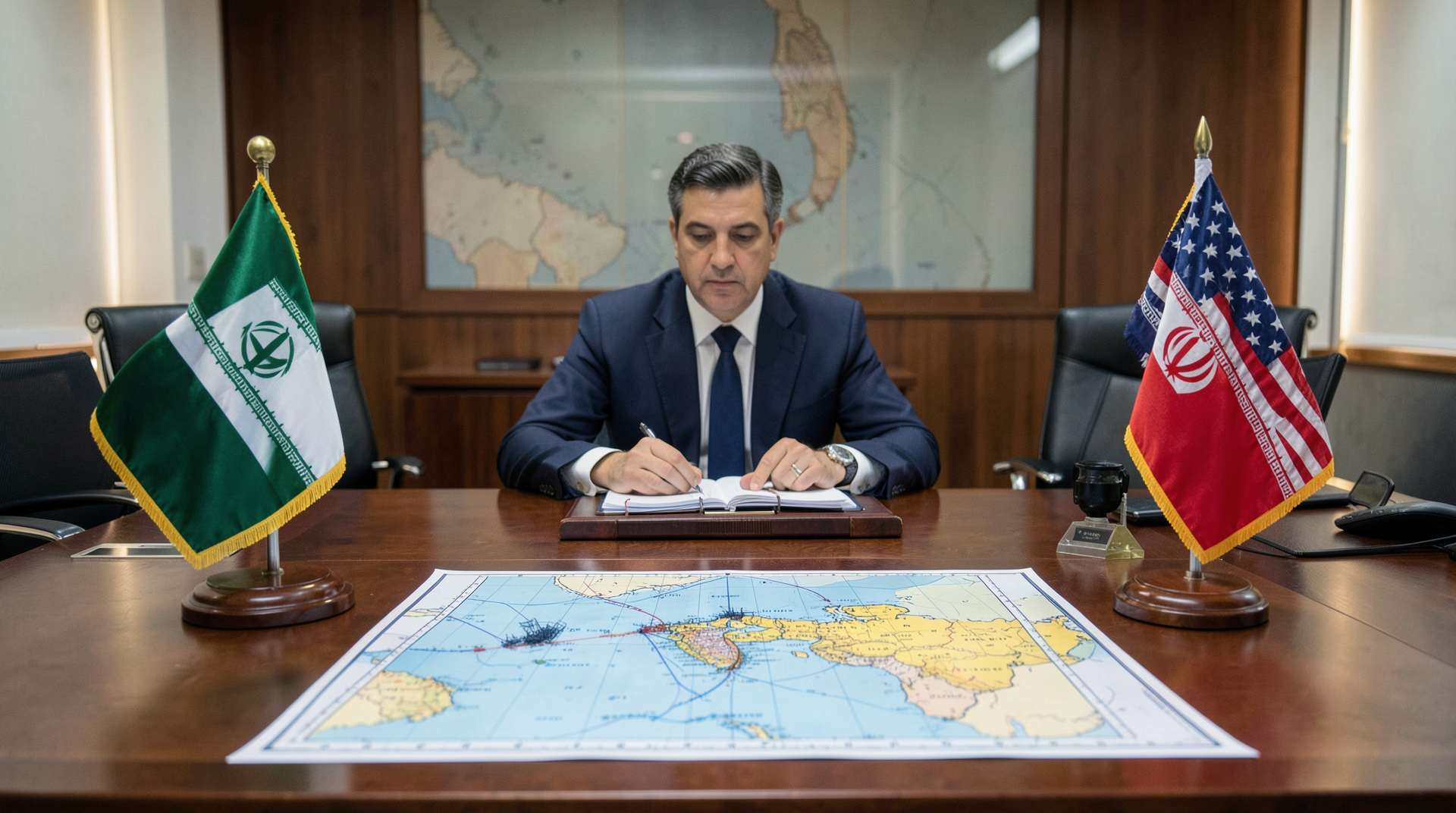
Iran's Hormuz offer has a courier but not yet a channel. AP reports that Iran offered, through Pakistan, to end its chokehold on the Strait of Hormuz if the United States lifts its blockade and ends the war, while pushing nuclear talks to a later phase. [1] On Monday, this paper said the telephone channel had acquired a Pakistan paper and a Moscow detour. Tuesday's test is simpler: who, if anyone, owns the relay in public?
That distinction is not pedantry. The April 26 Pakistan-room story established the floor: Iran wanted blockade removal before a room. The same day's Pezeshkian account made the Pakistan route important but still conditional. AP now supplies the strongest relay artifact so far, with two regional officials describing a proposal passed by Pakistan. [1]
A relay is not a negotiation. A relay moves paper. A channel produces accountable exchange: one side states terms, the other acknowledges receipt, and both parties leave a record that can be tested against the next move. The AP story says a proposal exists. It does not yet show Tehran, Islamabad, Washington, or Moscow standing in daylight beside it. [1]
The offer itself explains why the public record is so thin. Iran would ease the strait chokehold in exchange for an end to the war and blockade, while deferring nuclear negotiations. [1] Secretary of State Marco Rubio appeared to rule out a deal that leaves the nuclear program outside the first bargain, saying any agreement must definitively prevent Iran from sprinting toward a nuclear weapon. [1] That is not a small gap. It is the war's stated rationale sitting across the table from the blockade's price.
X can see the leverage faster than most diplomatic copy. The live-search post used here called the talks "in freefall" and summarized the offer as reopen Hormuz now, nuclear talks later. That is the internet's natural compression. It captures the strategic drama and loses the verification standard. An off-ramp is not real because it sounds coherent in a post. It is real when the governments attach names to it.
Mainstream coverage has the opposite habit. It treats a proposal as a diplomatic development, a Rubio interview as a U.S. reaction, Brent as a market story, and Guterres's empty-tanks warning as humanitarian context. [1] The split is tidy and false. The proposal exists because the strait is expensive. The market matters because the proposal lacks ownership. The humanitarian warning matters because energy disruption stops being abstract when it reaches fuel, shelves, and plates. [1]
Pakistan's role is therefore the story's center, not its footnote. Islamabad can be a postbox, mediator, guarantor, or stage. Each has different value. If Pakistan merely carried a message, the offer remains fragile. If Pakistan can produce a readout, a follow-up meeting, or a public statement tying both sides to the paper, it becomes a channel candidate. If Islamabad stays silent, the proposal remains suspended between anonymous diplomacy and market pressure.
Moscow is the other shadow in the room. Araghchi's Russia trip has enough symbolism to attract headlines and too little public mechanism to settle the matter. Russia can amplify Tehran, complicate Washington, or host theater. Until a public readout says what Moscow conveyed and to whom, the Russian detour is a watch item, not an exit.
The nuclear deferral is the hardest term. Washington's position has been that Iran's nuclear program is the reason the war began and the reason sanctions and blockade pressure cannot simply be traded away for shipping relief. [1] Tehran's reported position says the strait and the war can be handled first, with the nuclear question later. [1] Those are not sequencing preferences. They are competing definitions of what the war is about.
This is why words like "breakthrough" should be rationed. A breakthrough would show that both sides accepted a common sequence. This proposal shows the opposite: one side is willing to reopen the waterway if the leverage is lifted, while the other side appears unwilling to postpone the nuclear subject that justifies the leverage. [1]
The paper's position remains the relay-register frame. Trump's public telephone posture still exists. Pakistan's paper now exists. Moscow's consultation watch exists. None of the three, by itself, proves a normal diplomatic channel. The job is to keep them separate until the record joins them.
The next evidence should be easy to name. Tehran can confirm the offer. Islamabad can say it carried it and remains engaged. Washington can say whether it received, rejected, or countered it. Moscow can say whether it is mediating or merely listening. Until one of those happens, the Hormuz offer is a document in transit.
Documents in transit can still move markets. They should not move newspapers into declaring peace.
-- YOSEF STERN, Jerusalem