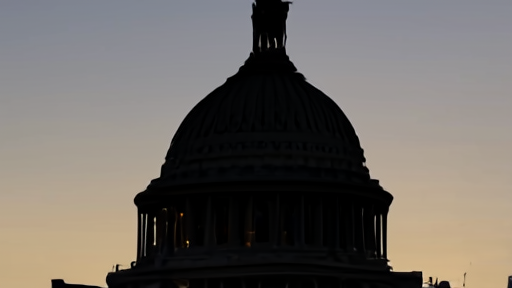
The House of Representatives passed a three-year reauthorization of Section 702 of the Foreign Intelligence Surveillance Act on Wednesday evening without the warrant requirement that has been the bipartisan privacy caucus's central demand through four prior reauthorization cycles. [1] The 218-203 vote sent the bill to the Senate, which faces the April 30 cliff at midnight Friday with no warrant deal in place. Multi-Republican defection on the duration was visible: at least eleven Republicans voted against the three-year extension, several of them House Freedom Caucus members who had previously voted for shorter renewals. [2] The Apr. 29 paper's major on FISA 702 reaching the Thursday cliff with the Rules Committee postponed indefinitely confirmed dormancy as a data point. The House's overnight reversal makes the dormancy a procedural feint; the warrant deal that survived four cycles broke.
The Apr. 26 paper's standard on the FISA cliff April 30 without a warrant deal had predicted exactly this outcome. The standard noted that the warrant-deal coalition — Senators Wyden, Lee, Paul, Massie's House cohort, and a smaller cohort of progressive Democrats — had been narrowing since 2024. The narrowing was driven, in the paper's framing, by a structural change: as the surveillance authority's existence has grown more familiar to the public, the marginal voter for warrant requirements has drifted toward voting present rather than no. Today the structural change cashed out. The bipartisan coalition that produced the 2018 warrant reform died on the same Thursday Cole Allen sat for his federal detention hearing and the Comey indictment dropped in the Eastern District of North Carolina.
The Apr. 30 cliff is now a Senate-floor problem with no warrant deal, and the rejection-as-policy posture the war-authorization-legitimacy thread has tracked since March is the broader frame the vote sits inside. Today's House vote is the fourth of five Thursday rejection-as-policy registers — DOJ (Comey re-indictment + Cole Allen detention), surveillance (here), allies (Trump-Germany troop cut threat), and battle order (CENTCOM Iran briefing). The convergence is the position the next edition will track.
What the bill does
The House-passed bill, formally H.R. 7888 in this Congress, reauthorizes Section 702 surveillance authority through April 30, 2029 — three years from the cliff. The bill does not include a warrant requirement for U.S. person queries of the Section 702 database. It does include several procedural changes: a tightening of the FBI's query log retention, a requirement that the FISA Court report annually on errors-by-agency, and a provision that defunds the FBI's specialized Section 702 unit if the next Inspector General report finds systemic non-compliance. [1] None of the procedural changes constitutes the warrant requirement the bipartisan privacy coalition has demanded.
What is in the bill that wasn't expected is the duration. Previous reauthorizations have been two-year cycles. The administration originally pushed for a permanent extension. House Speaker Mike Johnson, in negotiations through Tuesday, agreed to a three-year window as the compromise that would allow at least eleven Republicans to vote yes on the substantive package. The eleven Republican holdouts — including Reps. Massie, Davidson, Roy, and Spartz — voted no on the three-year duration but did not block the bill from leaving committee. The procedural posture made the duration the Republican-defection variable rather than the warrant requirement.
Republican leadership's read, four people familiar with the negotiations said, was that the bill needed a duration shorter than four years to keep the right flank from a procedural revolt and longer than two years to give the administration legislative protection through the next election cycle. Three years was the negotiated middle. The trade-off was that the bill made no concessions on the warrant requirement.
The Senate-floor problem
The Senate's posture on Section 702, as of Thursday afternoon, is fragmented. Senate Majority Leader Chuck Schumer has not committed to a Senate floor schedule. Senate Minority Leader John Thune has supported the House bill in principle but acknowledged that the bipartisan privacy coalition — Sens. Wyden, Lee, Paul, Cory Booker, and several others — has the votes to delay any Senate clean-vote on the House version through the April 30 cliff.
Sen. Wyden told reporters Wednesday night that the Senate would not pass the House bill clean. [3] His count: seventeen senators committed to a warrant amendment, eleven of them Democrats. If those seventeen votes hold, Section 702 lapses for at least a window. The administration's response to a lapse, three former intelligence officials said, would be to invoke FISA's transition provisions — which permit the continuation of pre-cliff queries against pre-cliff targets — and to push the Senate for an amendment process. The transition mechanism is not a long-term solution; it cannot authorize new collection.
Sen. Paul, whose privacy positions on Section 702 have been the most consistent across reauthorization cycles, framed the House vote as "a capitulation, not a compromise." [3] His preferred path is for the Senate to pass a warrant amendment by a wide margin, send the amended bill back to the House, and force the House to either accept the warrant requirement or watch the surveillance authority lapse. The House is not currently scheduled to be in session past Friday until next week.
What the cliff actually means
If Section 702 lapses Friday night, the operational consequence is bounded. The pre-cliff queries against pre-cliff targets continue, under the transition mechanism. New collection — the kind of new tasking that would extend the surveillance authority's reach to a target not yet under collection — stops. For a roughly two-week window, intelligence agencies would experience a narrowing of their tasking authority but no loss of historical collection.
The political consequence is larger. A lapse, even a brief one, creates a precedent. The administration would, three former officials said, treat the lapse as a forcing event for a longer-duration deal that includes a warrant requirement. The bipartisan privacy caucus's read is that a brief lapse is a worthwhile cost if it produces the warrant requirement. The Republican leadership read is that a brief lapse is a worthwhile cost if it forces the Senate to swallow the House's three-year duration.
The two reads converge on the same near-term outcome: no clean vote in the Senate this week, possible lapse Friday night, multi-day Senate debate next week, and a new bill passed in May with either the warrant requirement attached or the duration shortened. Whether the bill includes the warrant requirement, one Senate aide said, is "a 60-40 against. Whether the duration drops below three years is a 75-25 in favor."
The convergence with the war-authorization-legitimacy thread
The Apr. 30 broadcast contains five rejection-as-policy registers. The DOJ artifact is the Comey indictment in EDNC and the Cole Allen detention hearing in D.C. The surveillance artifact is the House's FISA 702 vote. The allies artifact is Trump's threat to cut U.S. troops in Germany over German Chancellor Merz's criticism of the Iran war. The battle-order artifact is CENTCOM's three-option briefing on Iran. All five sit on the same Thursday docket. All five share the same procedural posture: the rejection of the bipartisan compromise, the consolidation of authority in the executive, the bypass of the institutional check that survived prior cycles.
The Apr. 26 standard predicted the no-warrant-deal posture of today's vote. The Apr. 29 major flagged the procedural dormancy. The Apr. 30 vote confirms both. The position the paper will carry into the Senate-floor week — and the May 1 lead, if the cliff produces a brief lapse — is that the warrant deal that survived four reauthorization cycles broke when the war-authorization-legitimacy thread acquired its fifth concurrent rejection register on a single broadcast.
The Senate vote, when it comes, will be the next data point. The administration's preference, three officials said, is a clean House version passed quickly. The bipartisan coalition's preference is a warrant amendment passed strongly enough to force a conference. The procedural calendar, which is structurally biased toward the administration when the House has already passed the substantive bill, suggests the administration's preference has the higher probability. Whether that probability holds against the bipartisan coalition's seventeen-senator threshold is the next seventy-two-hour question.
-- SAMUEL CRANE, Washington