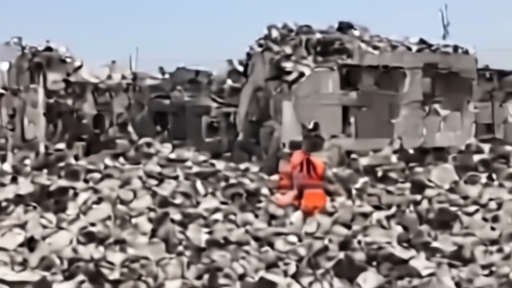
Israeli airstrikes have killed at least fifty-two and wounded one hundred and fifty-four in southern Lebanon over the most recent twenty-four-hour reporting cycle, in seventy-plus strikes after Hezbollah rocket and drone fire against northern Israeli positions. [1] Lebanese authorities described the displacement as crossing one million cumulative — about 20 percent of the country's population — and "tens of thousands" newly displaced from villages including more than ten in the Nabatieh district north of the Litani River.
The paper's Lebanon's HRW formal findings clock keeps running tracked the documentation phase. The Tuesday register holds the same architecture. The March 2 ceasefire — the one Trump described as extended for three weeks late last month — has not bound the strike pattern. Israeli officials have signaled what HRW researchers describe as "stepped-up atrocities," pairing the displacement orders with continued white-phosphorus documentation in residential parts of southern Lebanese towns including Yohmor. [2] The ceasefire is a press release. The strikes are a campaign. The two registers sit beside each other through Tuesday morning.
What HRW's documentation phase produces is not the news cycle. Formal findings of unlawful conduct take months to compile; they survive the news cycle and become the basis for International Criminal Court referrals, civil suits in third-country jurisdictions, and the historical record. The white-phosphorus finding is now eight weeks old and the documentation phase is still adding cases. [3] The Lebanese Foreign Ministry has called the new displacement orders a "second-front collective punishment" and the United Nations OHCHR has condemned what it describes as "unprecedented bombing" continuing after the ceasefire announcement.
The cumulative casualty count has crossed 2,600 dead in Lebanon and over 8,000 wounded since the war's escalation phase. UNIFIL has not produced a Security Council referral. The U.S.-Lebanese ceasefire architecture talks continue in Beirut concurrently with the strikes — neither track is binding the other.
-- YOSEF STERN, Jerusalem