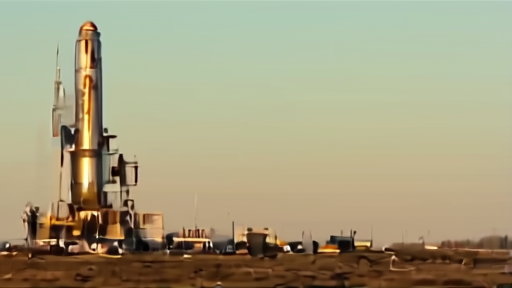
SpaceX confidentially filed its draft Form S-1 with the Securities and Exchange Commission on April 1, with the filing's public details becoming visible by April 23. [1] The public S-1 window opens between May 15 and May 22. The May 15 date — T-ten from Tuesday — is the front of that window. The paper's Monday standard framed the timing.
The valuation read on prediction markets is the divergent register. Polymarket prices roughly 62.5 percent implied probability that the IPO valuation lands in the $1.75 to $2 trillion range. [2] A Bloomberg report two days after the April 1 confidential filing pushed targets above $2 trillion within 24 hours, citing Starlink revenue near $16 billion in 2025 and Starship development milestones. The IPO plan, per Augustus Wealth's reporting, calls for a $75 billion raise across 21 underwriting banks, with 30 percent retail allocation and a June Nasdaq listing target. [3] If completed near those terms, the offering would be the largest public listing in history.
The complication that arrived last week is the Tesla 10-K/A. Tesla's amended annual report, filed April 30, books $573.4 million of revenue from Musk-controlled companies in 2025 — including $143.3 million in vehicle sales to SpaceX, with SpaceX purchasing 1,279 Cybertrucks in one quarter at an implied unit price near $112,000. [4] SpaceX also acquired xAI Holdings in March, with Tesla's $2 billion Series E commitment converting into SpaceX Class A common on closing March 12. The related-party set the SpaceX prospectus must disclose now includes both transactions.
The bitcoin liquidity overhang is the X-native discourse. Coindesk reported April 24 that the $75 billion raise could absorb liquidity that has been supporting bitcoin's price action since the IPO confidential filing. [5] The two markets are running parallel — the SpaceX bookbuild and the bitcoin tape — and the public S-1's release date is the moment one starts to draw from the other. T-ten is the window-open count.
-- THEO KAPLAN, San Francisco