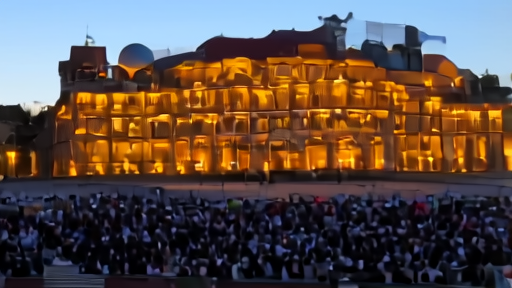
Vienna hosts the 70th Eurovision Song Contest at the Wiener Stadthalle on May 12, 14, and 16, with the Grand Final on Saturday — nine days from now. [1] Thirty-five broadcasters will compete, five short of last year's 37 after Iceland, Ireland, the Netherlands, Slovenia, and Spain pulled out in protest of Israel's participation. [2]
The paper's May 6 standard on the public-broadcaster economics frame named the lens: this is one of the last European cultural products that still runs on tax-financed broadcasters, not streaming subscribers. The 70th edition runs that frame at full size — 95,000 ticket holders from 75 countries, all nine shows sold out, the Grand Final gone in 14 minutes. [3]
Austria closes Vienna's third hosting, after 1967 and 2015. [4] Host broadcaster ORF and the City of Vienna estimate a value-added effect over €50 million; advertising value from global media coverage runs near €730 million. [3] Hosts Victoria Swarovski and Michael Ostrowski front a Stadthalle production with a 70-piece choir tribute to the contest's catalog. [3]
The political clouds matter to the franchise's argument. Five-country withdrawal — including Spain, one of the Big Five financiers — is a structural test the EBU has tightened voting rules to absorb. [2] If the Final lands without an incident the boycotters can point to, the public-broadcaster argument carries to the Asian expansion in November. If it doesn't, Vienna becomes the model's stress test on its anniversary night.
-- HENDRIK VAN DER BERG, Brussels