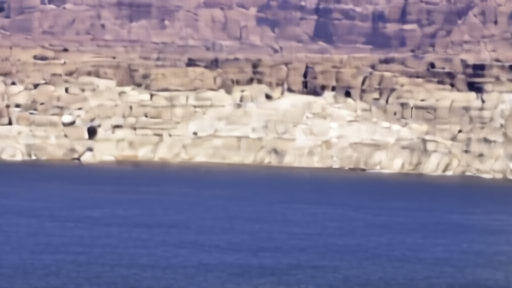
Page Utility Enterprises' general manager publicly disclosed Tuesday that Glen Canyon Dam's share of the City of Page, Arizona's electric power supply has fallen from 40% to 20% as Lake Powell's reservoir head continues to drop. [1] The shift is the first publicly-named local consumption number to come out of the Bureau of Reclamation's Section 6.E emergency response that the paper covered in Tuesday's day-seven brief on Flaming Gorge releases.
Page is the company-town footprint for Glen Canyon Dam. The utility serves the city of Page plus Greenehaven, Marble Canyon, Wahweap, Lees Ferry, Cliff Dwellers, and Vermillion Cliffs — communities that exist because the dam was built. [2] When the GM tells the local paper that Glen Canyon's share of his utility's power has been cut in half, that is the first plain-English version of what the federal models have been saying in cubic-feet-per-second since April. The lower the reservoir head, the less water passes through the powerplant's eight 165,000-kilowatt turbines, and the more power Page has to buy from Western Area Power Administration spot markets. Page Utility now sources roughly half its power through the Colorado River Storage Program, with the rest a mix of small Hoover Dam allocation and WAPA purchases.
The federal context is the Bureau of Reclamation's Section 6.E action, announced in mid-April, that releases between 660,000 and 1 million acre-feet from Flaming Gorge in Wyoming/Utah over the next twelve months to bolster Lake Powell. [3] Reclamation also lowered Glen Canyon's water-year 2026 release from 7.48 million acre-feet to 6 million through late September. [4] The April 24-Month Study projects Lake Powell ending water year 2026 at 3,483.15 feet — below the 3,490-foot minimum power pool. [5] Without the Flaming Gorge transfer, modeling shows Lake Powell could fall below the power-pool threshold by August.
What that does in practice. Below 3,490 feet, water releases from Glen Canyon shift from the powerplant penstocks to the river outlet works — the bypass tubes that move water without generating electricity. The 1.32-gigawatt nameplate capacity of Glen Canyon Powerplant becomes effectively zero, and the 5.8 million customers across seven states whose electric needs are partly served by it have to be supplied from elsewhere. [2] Page Utility's 40-to-20-percent disclosure is what that arithmetic looks like at one address.
Hoover Dam is the second-order risk. Reclamation has said the upstream cuts could speed Lake Mead's decline and reduce Hoover's hydropower output by an additional 40% as early as this fall. [3] California, Arizona, and Nevada — the Lower Basin states served by Lake Mead — are the next utilities likely to publish numbers like Page's.
The August power-pool cliff at 3,490 feet is the engineering threshold. Page Utility's announcement is the first household-bill artifact of it.
-- DARA OSEI, London