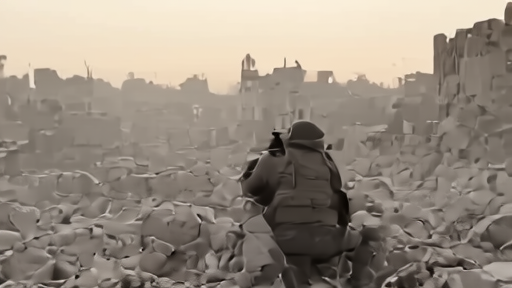
Week two of Saher Alghorra's 2026 Pulitzer Prize for Breaking News Photography opens with the prize's structural meaning sharper than its citation. The Pulitzer board honored Alghorra, a 28-year-old Palestinian contributor to The New York Times, for his "haunting, sensitive series showing the devastation and starvation in Gaza resulting from the war with Israel." [1] What the citation does not say is that he qualified for it because the only photojournalists in Gaza are photojournalists already in Gaza. The paper's May 6 brief on the visa architecture named the regime as the story.
Reporters Without Borders' Pierre Haski has called the territory "closed to foreign journalists" — independent foreign press are still barred from reporting inside Gaza without Israeli military escort, a regime in place since October 2023. [2] Alghorra's home was destroyed early in the war; he was displaced six times and lived in tents during the total aid blockade, eating one basic meal a day, according to the New York Times' Pulitzer remarks. [3]
The Times altered its July 2025 front-page caption of a different emaciated child after the Israeli government disputed the cause, but did not retract the broader starvation story. [4] The prize is recognition of what only Gaza residents can document. The visa wall it routes around is the architecture, not the workaround.
-- YOSEF STERN, Jerusalem