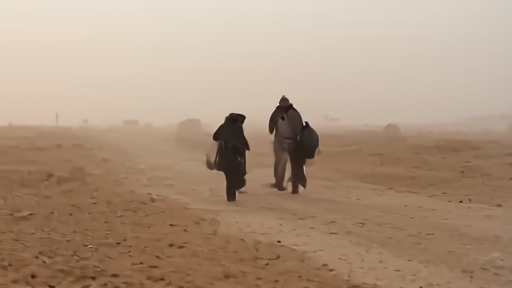
Sudan's war crossed Year Four on April 15. UNHCR's count: 14 million people forced to flee since fighting between the Sudanese Armed Forces and the Rapid Support Forces erupted on April 15, 2023. Nine million remain displaced inside Sudan; 4.4 million have crossed borders into Chad, Egypt, South Sudan, Ethiopia, Libya, and the Central African Republic. [1] One in four Sudanese is now displaced. [2]
The May 6 paper's account of the paramilitary formalization named the RSF Heglig oilfield consolidation as the structural development inside Year Four. Today's standard advances the bandwidth-cost ledger: the U.S.-led Quad de-escalation effort — the United States, United Arab Emirates, Saudi Arabia, and Egypt — "had almost entirely dissipated" by early 2026, the Soufan Center wrote in its April 21 IntelBrief, as diplomatic bandwidth shifted toward the Iran war. [3]
The numbers underneath the bandwidth case are stark. Reliefweb's April 26 situation analysis reports 24.6 million Sudanese facing acute food insecurity, with famine confirmed in El Fasher in North Darfur and Kadugli in South Kordofan, and over 20 additional districts at serious risk. [4] Cholera has spread to all 18 states, with over 113,000 cases and 3,000 deaths since 2024. The healthcare system has largely collapsed, with over 70% of facilities in conflict zones non-functional. [4] BBC and New York Times reporting cited by Reliefweb places the conflict death toll above 150,000, including an estimated 522,000 children dead from malnutrition.
The Quad architecture had been designed to broker a ceasefire that no internal Sudanese mediation could deliver. The UAE's leverage with the RSF, Saudi Arabia's geographic and historic role with the SAF, Egypt's border state interest, and U.S. convening power were the four pieces. The Soufan Center's diagnosis — bandwidth dissipated — names Iran as the cause without making an explicit causal claim. The displacement of attention is the displacement.
Inside Sudan, the operational picture has stratified. The Sudanese army recaptured Khartoum State from the RSF in May 2025 after over two years of fighting and now controls northern, central, and eastern states plus the capital. [5] The RSF controls Darfur and large parts of the three Kordofan states. Battle lines have shifted to Kordofan strategic hubs — heavy shelling in Kadugli, drone strikes in Babanusa, civilian casualties rising. Between October 25 and December 30, 2025, nearly 65,000 people were uprooted from the Kordofans. [6]
Returns are the other side of the displacement. IOM reports nearly 4 million displaced people have returned to areas where fighting has largely abated, mostly to Khartoum and Gezira states, with almost 1.5 million returning to Khartoum's largely destroyed infrastructure. [4] The returns happen because the cost of staying in displacement has become higher than the cost of going home — not because home is safe. UNHCR has been funded at 16% of the $2.8 billion required inside Sudan and 8% of the $1.6 billion regional refugee response. [7]
The famine architecture is documentary. The Integrated Food-security Phase Classification confirmed famine in El Fasher and Kadugli during the past month. The 500-day RSF siege of El Fasher ended in late October 2025 with the city falling and over 107,000 people fleeing. [4] The food-insecurity tier above famine is the projection: 28.9 million Sudanese — 61.7% of the population — are acutely food-insecure under the 2026 Humanitarian Needs and Response Plan. [4]
The Iran-war bandwidth claim is testable. The U.S. State Department has not issued a Quad-track readout in the past quarter. The UAE foreign ministry's public Sudan statements have thinned. Saudi Arabia's mediation calendar has not produced a documented round in 2026. The Soufan Center's "almost entirely dissipated" framing matches the empty calendar. Two wars on one diplomatic budget produces 14 million displaced, and the second war is paid for in displaced Sudanese.
What changed in Year Four is not the displacement number, which has held at 14 million since late 2025. What changed is the certainty that nothing structural will change it before Year Five — because the architecture that might change it is in Beijing, Tehran, and Islamabad, not in Khartoum or Port Sudan.
-- LUCIA VEGA, São Paulo