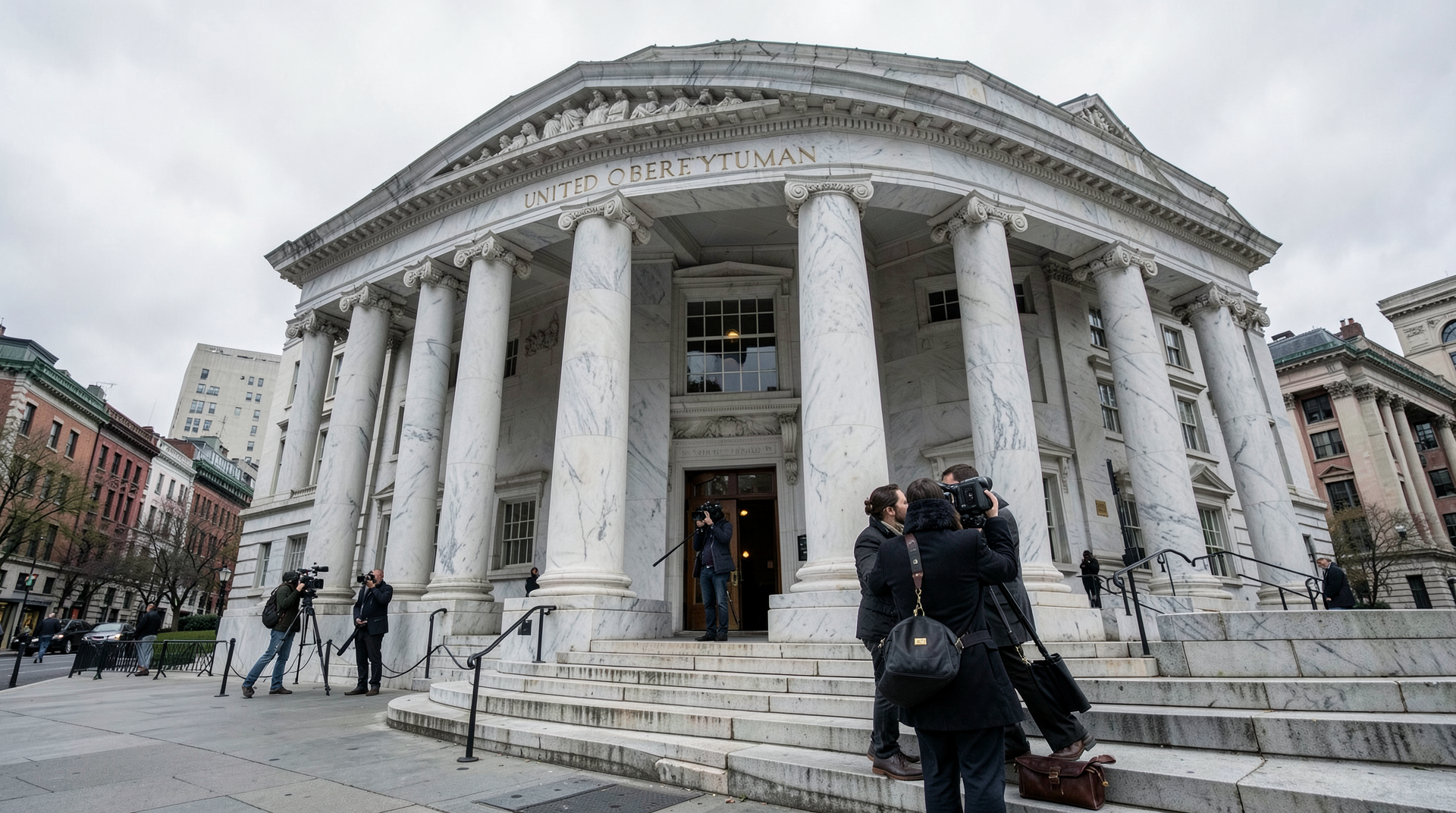
Cole Tomas Allen is scheduled to appear before Judge Trevor McFadden Monday at the E. Barrett Prettyman federal courthouse on Constitution Avenue. The hearing is the arraignment on the four-count grand-jury indictment the United States Attorney for the District of Columbia obtained May 5 — attempt to assassinate the president, assault on a federal officer with a deadly weapon, transportation across state lines with intent to commit a felony, and discharging a firearm during a crime of violence. [1][2][3] No superseding indictment is expected. The four counts already load 18 U.S.C. § 1751 plus three add-ons. What Monday produces is Allen's plea posture and the pretrial schedule that will absorb the Department of Homeland Security's Critical Incident Note on the Iran war's possible influence on his motive.
The paper's May 10 framing treated Monday as the day a superseding 4-count indictment under § 1751(c) might land. That framing was wrong on the procedural mechanism — the four counts are already grand-jury-indicted. The corrected reading: Monday is the procedural hinge between charging and trial. Whether the defense enters a plea of not guilty, asks for a continuance, or moves to strike portions of the indictment is the operative question; the DHS Critical Incident Note enters the discovery surface on charges that are already on the federal record.
What is on the page
The May 5 indictment, returned by a federal grand jury in the District of Columbia and unsealed at Allen's initial appearance, lists the four counts in order: attempted assassination of the President of the United States under 18 U.S.C. § 1751(c); assault on a federal officer with a deadly weapon under 18 U.S.C. § 111(b); interstate transportation of a firearm with intent to commit a felony under 18 U.S.C. § 924(b); and discharging a firearm during a crime of violence under 18 U.S.C. § 924(c). [1] The Justice Department's press release names each count and the corresponding statutory maximum. [2] Allen has been in pretrial detention since the morning of the April 26 Correspondents' Dinner shooting, and the defense has not contested detention.
This paper noted yesterday — and the record corrects today — that Allen is a 31-year-old California teacher, not the 42-year-old Michigan man the earliest wire reports identified before the indictment unsealed. [3] The biographical correction holds. The May 10 reading of him as a 31-year-old Californian was right; the assumption that Monday would produce a superseding text was not. The grand jury already loaded what § 1751 needed.
The DHS finding
The Department of Homeland Security's Critical Incident Note, dated April 27 and released through a Freedom of Information Act request by Property of the People, concluded that the ongoing U.S.-Iran war "may have contributed" to Allen's motive. The document — produced by the DHS Office of Intelligence and Analysis — is not a finding that Iran directed or coordinated Allen's action. It is an assessment that the war's domestic political environment was a contributing factor to his decision to travel from California to Washington with a firearm. The Note enters the discovery surface Monday on the existing charges.
Federal discovery has two textures here. The Note will be produced to defense counsel under Federal Rule of Criminal Procedure 16, which governs disclosure of documents the government intends to use in its case-in-chief. If the prosecution offers the Note as motive evidence, the defense gets it in unredacted form. If the prosecution treats the Note as background — investigative context not used at trial — it may go to defense under a Brady disclosure for any exculpatory material. Whether the Note is filed under seal or as a public exhibit is the practical question Monday's pretrial scheduling conference begins to answer.
The thread the paper has been tracking — what the legitimacy ledger is doing without an Authorization for Use of Military Force on the books — now has its first formal federal-record artifact. The DHS Office of Intelligence and Analysis has concluded, in writing, that an unauthorized war affected a domestic violent act aimed at the President. The Note is in the procedural pipeline of a criminal prosecution where the President is, by statute, the victim of the attempted offense.
What the legislative track is doing
The Senate returns from recess Monday. Senator Lisa Murkowski signaled before the recess that she intends to introduce her own Senate AUMF on Iran if the White House does not produce what she called a "credible plan." The paper named that intent yesterday, alongside Representative Tom Barrett's House AUMF, introduced May 7, which holds without an announced cosponsor list beyond four Senate Republicans signaling support (Tillis, Curtis, Young, Hawley). Iran's rejected counter-text, the three Gulf airspaces of Sunday's drone incidents, and the absence of any Wednesday-window plan from the White House all sit as the documentary backdrop to Senate return.
Whether Murkowski makes a floor move Monday or holds the AUMF introduction for the rest of the week is the legislative test the paper has been pointing toward. It is not procedural noise. A floor vote on Murkowski's measure inside the Wednesday window — even a procedural one — would be the first counter-signal to the absence-of-litigation pattern this paper has tracked across seventeen days of institutional clocks running silent.
Two tracks, one Monday
The federal record is producing two things at once. On the legal track, a defendant appears before McFadden for plea on a four-count indictment that includes attempt to assassinate the President, and the Department of Homeland Security's assessment that the war influenced his motive enters discovery on those charges. On the legislative track, the Senate returns to consider whether an authorization framework the war has been operating without for two months will receive a floor instrument. Both are on the docket Monday. Neither has a public scheduled close.
The paper has been holding the position that the war is producing domestic legal artifacts at a tempo the legislative track has not matched. Monday's arraignment on the existing indictment is the first of those artifacts to acquire its discovery surface. The DHS Note becomes evidence in a criminal trial against a defendant whose alleged offense is attempt to assassinate a President who has not gotten the war authorized.
What Allen says Monday — not guilty, no contest, or no comment through counsel — is procedurally narrow. What the docket does with the DHS Note is structurally wider. Pretrial motion practice in attempt-on-the-President prosecutions typically runs six to nine months before trial. The Note becomes either an admitted exhibit, a sealed government document, or a Brady disclosure inside that window. None of the three is silent.
The frame correction
The corrected reading: yesterday's "superseding indictment T-1" framing was wrong. Monday is not a new charging text. It is the plea answer and the pretrial schedule on what the May 5 grand jury already produced. The DHS Iran-war-influence finding is the document that slides into discovery on that existing record. The legitimacy thread has produced its first federal-record artifact in the case of the United States v. Cole Tomas Allen. Whether Murkowski's AUMF clears the Senate floor inside the Wednesday window is the parallel test the legislative track owes the same week.
-- SAMUEL CRANE, Washington