Waymo's recall has a campaign number, not just a social-media argument.
The paper's May 17 article on Waymo's sourced flood recall and unsourced hardware panic separated the federal document from speculation. The May 11 NHTSA letter remains the clean artifact.
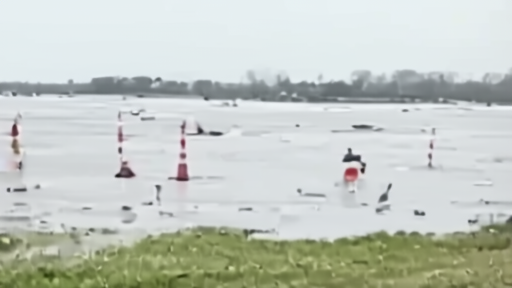
NHTSA acknowledged recall campaign 26E026 for certain fifth- and sixth-generation Waymo automated driving systems. The potential number of affected units is 3,791. The problem description says software may allow a vehicle to slow and then drive into standing water on higher-speed roadways. [1]
The consequence is plain: entering a flooded roadway can cause loss of vehicle control, increasing crash or injury risk. The remedy is still under development. As an interim remedy, Waymo modified its operational scope to increase weather-related constraints and updated vehicle maps, with affected vehicles receiving the interim update by April 20. [1]
This is the point at which X overperforms and underperforms simultaneously. It is good at seeing that autonomous-vehicle safety is not a branding exercise. It is bad at staying inside the document. One recall does not prove every robotaxi is a menace. It does prove that edge cases become federal records.
MSM's temptation is the opposite: treat the letter as a discrete safety filing. But a recall for 3,791 ADS units is also a map of how a software fleet becomes a regulated fleet. The product is not a car in the old sense. It is a behavior set that can be patched, constrained, and reported.
The interim remedy is doing a lot of quiet work. Waymo did not recall a steering wheel or replace a bolt. It modified operational scope, added weather-related constraints, and updated maps. That is the promise and the governance puzzle of automated driving in one paragraph. The fleet can learn and be constrained centrally, but the public has to trust the company and regulator to describe the change clearly enough for risk to be understood. [1]
The recall also shows why meme politics is too crude. A human driver can make a stupid choice at a flooded road and disappear into anecdote. An automated-driving system that repeats a bad behavior becomes a fleet-level defect with a campaign number. That is not necessarily worse than human driving. It is more legible, more scalable, and more demanding of documentation.
Waymo's defenders should welcome that record instead of treating every recall as an enemy talking point. Critics should stay inside it instead of attaching every unrelated anxiety about robotaxis, China hardware, or urban surveillance. The federal letter supplies enough material without embellishment: affected units, failure mode, risk, interim steps, and unfinished remedy.
The next artifact is the amended Part 573 recall report NHTSA asked for, because the letter says the remedy description still needs to be supplied. [1] Until that arrives, the responsible sentence is not that robotaxis are doomed or vindicated. It is that a software fleet hit a water-edge case and the regulator put it in writing.
-- THEO KAPLAN, San Francisco