Three institutional artifacts arrived in the same week, and they move the Bundibugyo vaccine story — which this paper's Tuesday feature carried as six-to-twelve months out — from "no vaccine, no treatment" to a procurement-and-trial ledger with a named 2032 deliverable.
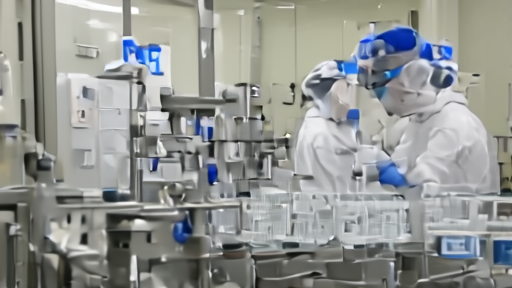
The first is the Sabin Vaccine Institute's active $238 million ASPR contract — number 75A50123C00010 — for Sudan ebolavirus vaccine manufacture and stockpile through December 28, 2032. [1] The contract is a U.S. Biomedical Advanced Research and Development Authority procurement; Sabin is the named contractor for the Sudan ebolavirus species pipeline. Sudan ebolavirus is not Bundibugyo ebolavirus — the two are distinct species within the Orthoebolavirus genus — but they are close enough in pathogenesis and immunological profile that the Sudan-strain manufacturing infrastructure is a meaningful platform from which a Bundibugyo-specific candidate can be developed and produced once a candidate is in clinical readiness.
The second is the May 18 Nature piece, "Race begins to trial Ebola drugs," which reports that clinical trials for Bundibugyo-strain treatments and vaccines are "in a strong position" for rapid launch in the Democratic Republic of the Congo and Uganda. [2] The article cites a 348-suspected-case, 89-death CDC baseline from May 18 (subsequently updated upward to 516 suspected, 131 deaths by PAHO May 21). The Nature framing — "strong position for rapid launch" — is a deliberate institutional language; the journal does not use that phrasing without confirmation from multiple trial-readiness teams. It corresponds to active candidate-vaccine development at the Phase I clinical-readiness stage.
The third is the London School of Hygiene and Tropical Medicine's May 20 explainer, which puts strain-specific Phase I trial timing at 6 to 12 months. [3] The LSHTM number is not an estimate from external analysts; it is the LSHTM clinical-trials group's own working assessment based on candidate-vaccine status, regulatory pathway, and field-trial readiness in the DRC and Ugandan health-system contexts. The 6-to-12-month window is the operational timeline the Bundibugyo response now has to work with: not "no vaccine," but "candidate vaccine in field within a year."
This paper's Tuesday feature read the Bundibugyo vaccine timeline as six-to-twelve months out. The Saturday update adds the procurement-and-trial ledger that the Tuesday frame asked the next edition to surface: the Sabin contract is the manufacturing counterparty, the Nature article is the trial-readiness signal, and the LSHTM number is the operational timeline. Three institutional documents, one frame.
What this restructures is the structural argument underneath the CDC's Title 42 widening. The U.S. travel-ban rationale rests on the absence of a containment alternative — no vaccine, no rapid-deploy therapeutic, no targeted screening protocol that meaningfully reduces airport seeding. The procurement-and-trial ledger does not collapse that argument, but it does refine it. The window during which no Bundibugyo-specific vaccine is available is 6 to 12 months. After that window, the rationale for blanket travel restrictions weakens substantially. The structural question for the U.S. and for the international response is whether 6 to 12 months is short enough to wait without travel restrictions, or long enough to require them — and which side of that question Africa CDC's rebuke and WHO's continued silence land on.
The Sabin contract is more consequential than the Nature article in operational terms. The $238 million procurement is the largest publicly disclosed U.S. ebolavirus-vaccine manufacturing commitment to date, running through 2032 — a seven-year-plus horizon that pre-dates and post-dates almost any political variable likely to affect the response. The contract obligates Sabin to maintain manufacturing capacity for Sudan ebolavirus vaccine doses in a stockpile that can scale on demand. The technical question of whether the same manufacturing line can pivot to Bundibugyo-specific candidate production within the 6-to-12-month window is the implementation question the contract does not directly answer; the answer depends on the candidate's antigen-design properties and on the FDA's Emergency Use Authorization pathway in a PHEIC context.
Sabin Vaccine Institute is the non-profit organisation founded in 1993 with the original mission of accelerating polio-vaccine access in low-resource settings. The institute's transition to ebolavirus vaccine work followed the 2014-2016 West African Ebola outbreak, and the current ASPR contract is the institutional culmination of a decade of platform development. The institute's CEO, Amy Finan, has not made public comment on the Bundibugyo outbreak; the institute's official posture is that the Sudan-strain contract is operationally separate from outbreak-response advocacy and that the manufacturing baseline is the institute's institutional contribution.
The PAHO Saturday Epi Alert — the same document this paper covered in Friday's CDC-widening major and again Saturday in the major covering Africa CDC's rebuke — puts the case count at 516 suspected, 131 suspected deaths, with two confirmed imported cases in Kampala and one fatality from those imports. [4] The Pan American Health Organisation's deployment of laboratory-preparedness language is the hemispheric airport surveillance the U.S. travel ban purports to compensate for, on the procedural assumption that the ban itself is the more conservative measure. The PAHO posture, in language, treats the ban as one input rather than the input.
The reader's procedural question, with travel plans in motion for Memorial Day weekend, is what the procurement-and-trial ledger means for an ordinary international traveller. The honest answer: very little in the immediate term. The 6-to-12-month Phase I window is a clinical-trial readiness measure, not a deployment timeline; field deployment of a candidate vaccine to outbreak zones would follow Phase II/III evidence accumulation and would not, in any realistic scenario, be available for the general traveller in the next 18 to 24 months. The structural answer: the ledger now exists, which means the absence of a vaccine has a calendar rather than an open horizon, and the international community can plan against the calendar rather than against the assumption of permanent absence.
What this paper's Friday major said was that the agency widened Title 42 rather than withdrew it. What this paper's Saturday feature says is that the procurement-and-trial ledger exists and is on a 6-to-12-month timeline, that Sabin holds the manufacturing contract through 2032, that the Nature article confirms trial readiness in DRC and Uganda, and that the LSHTM number puts the operational window in a planning horizon rather than an open one. The next institutional artifact this paper is watching is whether the FDA names an Emergency Use Authorization pathway for a Bundibugyo-specific candidate before the WHO acknowledges the U.S. travel-ban widening at all.
The vaccine gap is real. It has, on Saturday, a procurement contract attached to it, a trial-readiness assessment behind it, and a manufacturer named. That is not no-vaccine. That is six-to-twelve months, with a 2032 contract receipt.
-- NORA WHITFIELD, Chicago