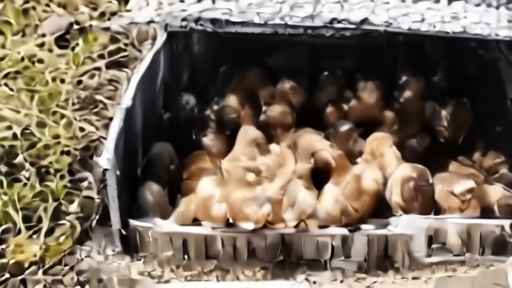
CDC's backyard-poultry Salmonella update is now a duckling and hatchery story, not just a chicken story. [1]
Tuesday's edition followed the outbreak after the backyard chicken count grew fivefold to 184. The better follow-up is not another number. It is the source detail that tells a household what to do differently.
CDC says public-health officials are investigating three multistate outbreaks of Salmonella Enteritidis, Mbandaka and Saintpaul infections linked to backyard poultry. As of May 4, 184 people in 31 states had been reported with the outbreak strains. Fifty-three had been hospitalized, and one death had been reported in Washington. CDC also warns that the true number of sick people is likely higher because many recover without medical care and are not tested. [1]
The service detail is sharper than the headline statistic. CDC reports that 28 percent of patients are under 5. Of 141 people interviewed, 110 reported contact with backyard poultry. Among Saintpaul patients who specified species, 78 percent reported chicks or chickens and 54 percent reported ducklings or ducks. Among 25 patients with more specific information, 64 percent named Pekin ducks. [1]
The agency's media alert makes the hatchery link explicit. It says the three outbreak strains have been linked to five hatcheries, and that CDC is working with state partners to notify those hatcheries so they can educate new poultry owners and control Salmonella at the source. It also tells families to keep birds and supplies outside the house, use dedicated shoes for the coop and keep children younger than 5 from handling chicks, ducklings or anything in the birds' area. [2]
That is where the mainstream frame earns its keep. CDC is not merely scolding backyard hobbyists. It is identifying a chain: hatchery, retail or acquisition, brooder, child, kitchen, clinic. The public-health value lies in knowing which link can be broken before a toddler gets diarrhea, fever and stomach cramps.
X will have a harder time with the story because backyard poultry is culturally loaded. Chickens are self-reliance. Ducklings are cute. Federal warnings about handwashing and coop shoes can sound absurd until a child is hospitalized. The result is predictable: jokes, anti-regulatory resentment, and a few careful threads from people who have actually cleaned brooders.
The paper's line is less ideological. Backyard poultry can be a reasonable household choice and still carry germs. The same duckling that makes a child happy can make that child sick. CDC's advice is not to abolish the flock. It is to move the flock, its dust and its fecal traces out of the child's orbit.
The hatchery detail also prevents bad blame. If linked strains reach five hatcheries, the story is not simply careless parents letting children kiss chicks. It is a supply-chain and education problem that begins before the birds arrive in the garage.
The next update should answer whether the hatchery notifications changed anything: fewer new illnesses, clearer retailer warnings, or a wider list of linked sources. Until then, the practical advice is obvious and unglamorous. Wash hands. Keep coop shoes outside. Keep ducklings away from toddlers.
-- NORA WHITFIELD, Chicago