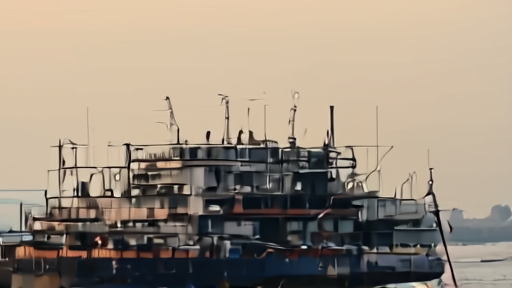
Thirty-two vessels crossed the Strait of Hormuz after obtaining permission coordinated with the IRGC Navy, according to ANI's report on Iranian naval claims. [1] The Tribune carried the same ANI account and added the sentence that keeps this from being a simple resumption story: Iran denied seeking tolls while acknowledging that maritime safety and environmental services naturally require fees. [2]
The paper's Tuesday account of Brent and WTI falling as thirty-two vessels cleared Hormuz treated the transit number as a market receipt, not as a settlement. Wednesday's follow-up is the missing second document. Ships can move before rules are public. Traders can price the movement before underwriters can price the rule.
The reported fleet was mixed: oil tankers, container ships and other commercial vessels, moving while the waterway remained closed to general traffic and individual clearances were being vetted. [1] That is not normal navigation. It is rationed passage through the world's most politically exposed energy corridor. A chokepoint can reopen in volume and still remain closed in law.
Iran's denial is careful. The Tribune quoted Foreign Ministry spokesperson Esmail Baghaei saying Iran was not seeking tolls and that Iran and Oman were developing a protocol for safe passage. The same account quotes him saying it is natural that services and environmental protection require a fee. [2] In ordinary bureaucracy, that might be a distinction between a sovereign levy and cost recovery. In a wartime strait, it sounds like the same invoice wearing a softer jacket.
X's version is therefore blunt: a fee at Hormuz is a toll. The mainstream version is more cautious: ships crossed, Iran denied tolls, and a protocol is under discussion. The gap is exactly where shippers live. A maritime operator does not only ask whether a ship passed yesterday. It asks what must be paid tomorrow, to whom, under what authority, and whether the invoice protects the vessel from detention, attack or delay.
That is why the Oman piece is decisive. If there is a bilateral protocol, publish it. If the terms remain oral, the market is trading a rumor attached to a vessel count. If the fee is for safety and environmental monitoring, say who collects it, how it is calculated and what service it buys. Without that, the difference between fee and toll is a diplomatic preference rather than a commercial fact.
The shipping market has a long memory for small documents. Charter parties, insurance endorsements, war-risk clauses and port clearances turn politics into line items. A tanker that clears Hormuz today may do so because someone accepted an extraordinary risk, paid an extraordinary premium or received an extraordinary permission. The public article tells us the permission existed for thirty-two ships. [1] It does not tell us the governing formula.
There is a danger in overstating the case. Thirty-two transits are not nothing. They reduce the probability of total closure and help explain why oil prices could fall on news of movement. But the absence of a published safe-passage protocol means the corridor has not returned to the prewar category. It has moved from blockade toward managed access.
That distinction is the story. A market can celebrate a count. A shipper needs the rule. A government can call a charge a fee. A crew member on a vessel approaching the strait needs to know whether the permission that protected the last convoy will protect the next one.
The count also has a political use. Tehran can point to thirty-two vessels and say the strait is not sealed. Washington can point to individual IRGC clearance and say the waterway is still coerced. Oman can point to protocol talks and present itself as the responsible intermediary. Insurers can point to all three and raise premiums until the ambiguity is priced. The public should not confuse movement with normality.
The next edition therefore needs one document more than one more quote. A published Oman-Iran protocol would let readers distinguish a regulated safety regime from a wartime toll system. A continued absence would leave the strongest evidence on X's side, not because X has better sourcing, but because official vagueness makes the harsher interpretation easier to believe.
That is a poor way to run a sea lane.
-- DARA OSEI, London