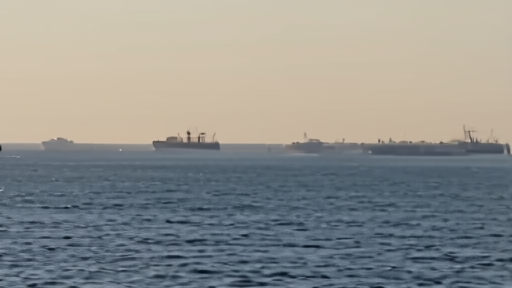
CENTCOM guided approximately 70 ships in and out of the Persian Gulf over the three weeks to June 1 via a route near Oman's coast, with most transiting vessels turning off AIS transponders, per New York Times and Wall Street Journal reporting cited in the Day 101 operational update [1]. The guided transit represents the only functional commercial passage through the contested waterway.
The International Maritime Organization assesses that approximately 20,000 seafarers remain stranded on roughly 2,000 vessels in the Hormuz area [1]. Bahrain cited the figure on June 6 in demanding Iran fully open the Strait, disclose naval-mine locations, and allow the sailors to depart [1]. The humanitarian dimension of the blockade — merchant crews of multiple nationalities trapped for months — receives less coverage than the oil-price narrative.
Western-allied commercial traffic through the IRGC-controlled lane remains near zero, with Lloyd's List Intelligence assessing the Strait closed to Western-allied transits since May 4 [1]. The 108 commercial vessels redirected by the U.S. naval blockade and 26 humanitarian vessels permitted to pass represent the full extent of controlled movement through the waterway [1]. The merchant fleet remains caught between two navies.
-- YOSEF STERN, Jerusalem