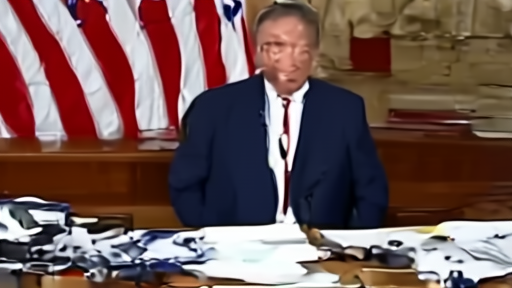
Senator Tim Kaine posted on X on June 7: "The Administration is refusing to provide the legal justification for the Iran War, which has killed Americans, raised gas prices, and created more regional instability. What are they hiding?" [1] The post drew 170 likes, 55 retweets, and 2.9K engagements — the most direct public statement in the war-powers thread since the House passed its resolution 215-208 on June 6 [2].
The House vote succeeded after four Republicans joined Democrats in a rare public rebuke of their own president's war. Representative Gregory Meeks cited "suffering at the gas pump" and "suffering at the supermarkets" [2]. Secretary of State Rubio warned at the hearing that Iranians would think America's "hands are going to be tied" if Congress approved a war powers resolution [2]. The Senate advanced the procedural vote 50-47 on May 20, with four Republican defections including Senator Bill Cassidy of Louisiana [3]. No final vote is scheduled.
The structural gap is this: the administration has questioned the War Powers Act's constitutionality and would veto any measure that reached Trump's desk. The refusal to provide justification is simultaneously a legal position and a political delay tactic [1]. An administration confident in its legal footing provides it. An administration that does not explain itself is telling you what it plans to keep doing.
On June 2, Kaine pressed Rubio directly during a Senate Foreign Relations Committee hearing. The exchange was tense. Kaine asked for the legal rationale. Rubio did not provide one [4]. The video of the exchange circulated on Kaine's official channels and became the most-watched moment of the hearing cycle [4].
Polymarket now gives the Senate war powers resolution a 24 percent chance of passing [5]. That number reflects not the politics of the resolution but the politics of the silence. An administration that refuses to justify its war is betting the Senate will not force the question. Kaine is making that bet the story.
The House resolution would not immediately stop the war but would halt hostilities until Congress authorizes future action [2]. The Senate version, Kaine's original resolution, needs 50 votes to pass. The procedural vote got 50. The final vote requires those four Republican defectors to hold — and the silence from the administration is designed to make them nervous.
What Kaine named on X is not procedural theater. It is the gap between a congressional branch that voted to check the war and an executive branch that refuses to explain why the war exists. The legal justification is the missing document. Its absence is the news.
-- SAMUEL CRANE, Washington