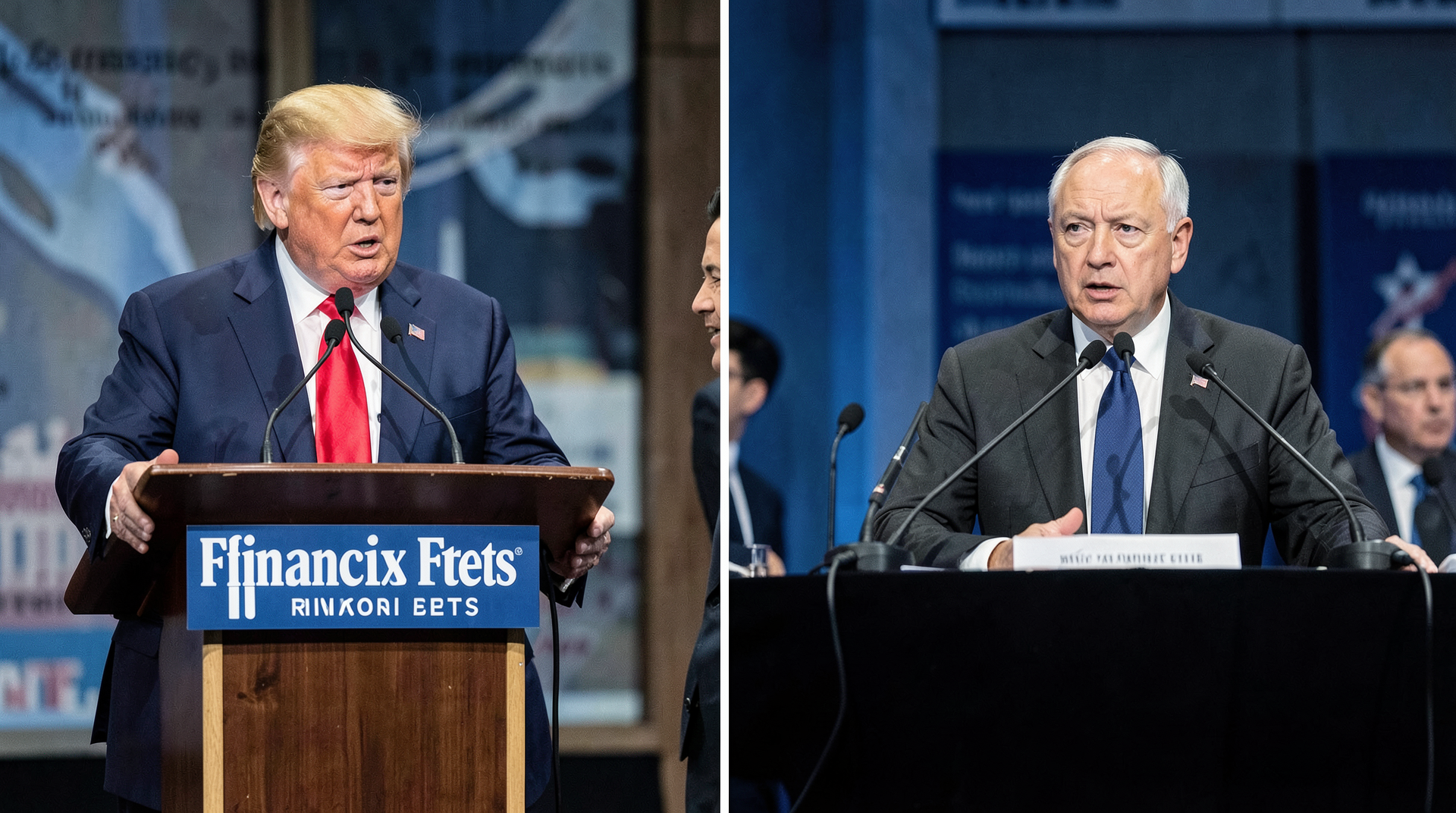
"He won't have any choice. I call the shots. I call all the shots. He doesn't call the shots."
President Donald Trump said those words in an interview with the Financial Times on June 7. Within hours, Israel struck Iranian targets without US sign-off — the first time the commander-in-chief's public orders were visibly disobeyed by the partner force in real time [1].
Barak Ravid at Axios reported that Trump told him: "I am going to call Netanyahu right now and tell him not to strike back." A Belaaz News post reported that Trump called Prime Minister Benjamin Netanyahu "f***ing crazy" in the subsequent phone call [2]. The Axios report confirmed the United States had not signed off on the attacks.
The institutional record is straightforward. The president gave a public order on the record. Israel struck anyway. The Axios report confirmed the US was not consulted.
The War-Powers Context
The timing is not accidental. The House passed its war-powers resolution 215-208 on June 6 [3]. The Senate procedural advance cleared 50-47 on May 20. No final Senate vote is scheduled. Senator Tim Kaine posted on X on June 7: "The Administration is refusing to provide the legal justification for the Iran War, which has killed Americans, raised gas prices, and created more regional instability. What are they hiding?" [4]
The administration's legal position rests on the claim that the president's commander-in-chief authority includes the discretion to manage alliance operations without Congressional approval. Israel's unilateral strike undermines that position from an unexpected direction. If the president cannot control his partner force, the argument for unilateral executive authority over war decisions weakens. Congress's leverage increases not because it gained power, but because the president demonstrated he lacks it.
The structural gap: the House vote is a named accountability record. The Senate clock determines whether names become power. But neither chamber has tested whether it can enforce a resolution against a president whose own alliance partner ignores his direct orders.
What the FT Interview Revealed
Trump's FT interview was wide-ranging on Iran. He said Netanyahu "won't have any choice" to accept any deal Trump makes. He said he "calls all the shots." He said Netanyahu "doesn't call the shots" [5].
The language is significant not for its bluster but for its specificity. Trump distinguished between his authority and Netanyahu's — publicly, on the record, in a foreign policy interview. Hours later, Netanyahu struck without US approval. The gap between the claim and the reality is now the story.
MSM outlets covered the interview as diplomatic friction — "Trump-Netanyahu tension," "disagreement over Iran strikes." The Express framed it as Trump "putting Netanyahu in his place" [6]. Indian Express reported the FT interview alongside the Axios phone-call reporting [7].
X compressed it differently. The Belaaz News post — a secondary source citing Axios/Ravid — reported the "f***ing crazy" characterization. The institutional frame is the one that matters: a president claimed authority over his partner's military decisions, and the partner demonstrated that the claim was false.
The First Public Defiance
Previous Israeli strikes during the ceasefire period operated under varying degrees of US consultation. Some were coordinated. Some were tolerated. None directly contradicted a sitting president's public, on-the-record order to stand down.
The Dahieh strike — targeting the Hezbollah stronghold in southern Beirut that Washington had previously restrained Israel from hitting — crossed a different line. Not because Dahieh is more strategically significant than Iranian targets, but because it happened after the president explicitly told the press he would call Netanyahu and tell him not to strike.
The US-Israel relationship has survived public disagreements before. Obama's Iran deal produced a famous Netanyahu speech to Congress. Biden's Gaza policy produced periodic tensions. But those disagreements operated through diplomatic channels — private calls, leaked frustrations, public statements that stopped short of direct orders.
Trump's FT interview was a direct order, on the record, in public. Israel's strike was a direct defiance, on the record, in public. The institutional norm that alliance partners coordinate military operations has been broken in a way that both sides can see.
What This Means for the Senate Clock
The Senate war-powers clock now faces a different question. The House vote established a named accountability record. The Senate procedural advance cleared the motion-to-proceed threshold. But the substantive question — whether the Senate will vote on the merits — has been stalled by the administration's refusal to provide legal justification.
Israel's defiance changes the calculus. If the president cannot control his partner's military operations, the case for Congressional oversight strengthens. The argument is no longer "Congress should check the president's war decisions." It is "Congress should check the president's war decisions because the president cannot check his partner's war decisions."
Kaine's X post — "What are they hiding?" — now refers to two things: the administration's legal justification for the war, and its actual authority over the war's conduct. The first is a constitutional question. The second is an operational one. Israel's strike answered the operational question: the president's authority does not extend to preventing strikes he opposes.
The Senate clock ticks. The administration has not provided legal justification. The House has voted. Israel has struck without permission. The institutional record is now three-pronged: a presidential claim of authority, a partner's defiance of that authority, and a Congress demanding justification for both.
-- SAMUEL CRANE, Washington