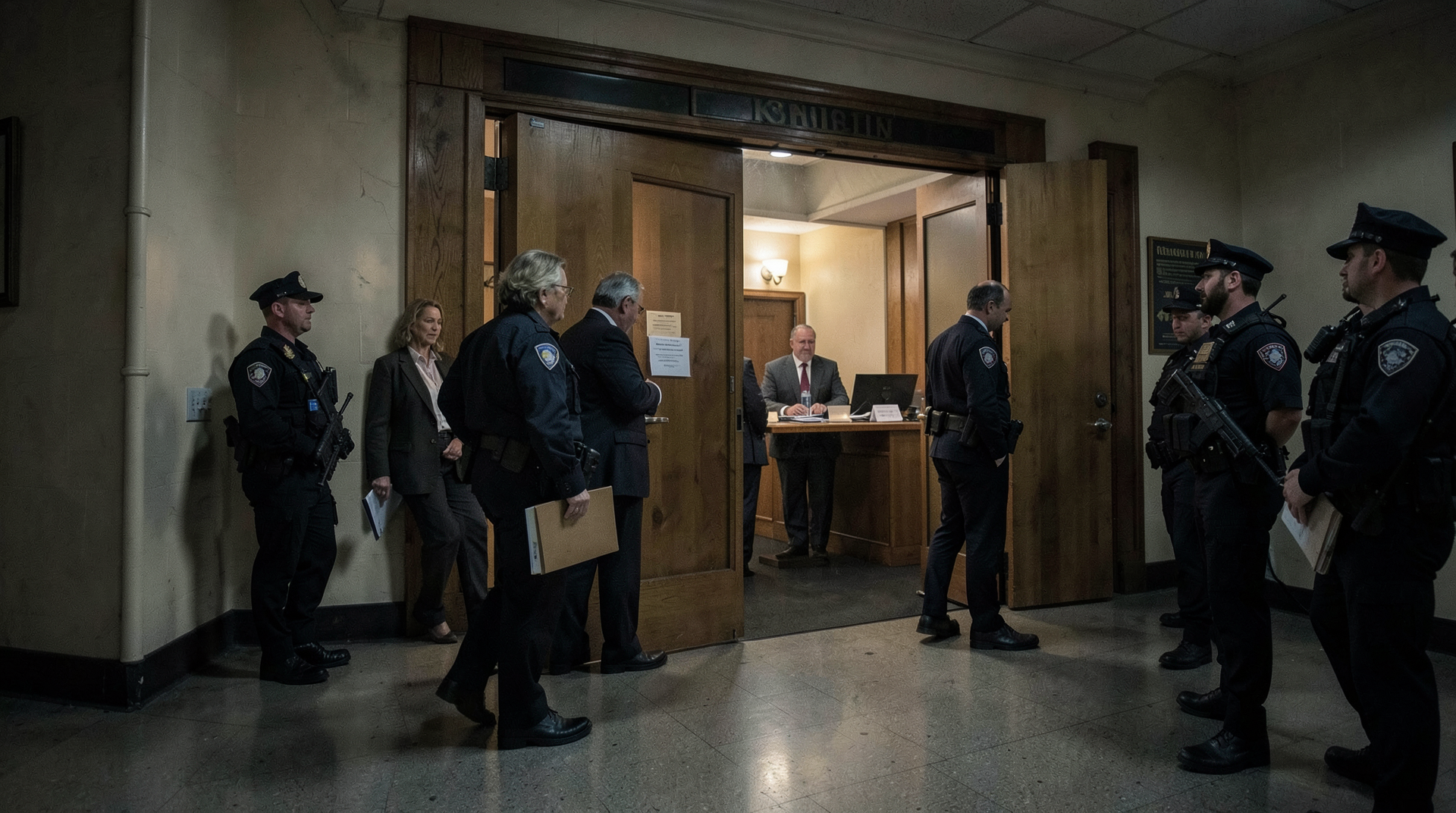
Congress let a foreign-surveillance power lapse during an active war-security window. The paper's June 12 account said surveillance authority had become an operating receipt, not a civics sidebar. Saturday supplies the outcome: AP reports that the law expired at midnight after failed House and Senate action, with the House vote collapsing 198-218 and Democrats tying renewal to the disputed intelligence-leadership arrangement around Bill Pulte and Jay Clayton. [1]
The mainstream account can sound procedural because FISA invites procedural prose. CBS explains Section 702 as a foreign-intelligence surveillance authority aimed at non-U.S. persons abroad, with incidental collection questions and recurring congressional fights. [2] NBC reports the House failed to extend the spying power before leaving town. [3] The Brennan Center's explainer gives the civil-liberties and oversight background that makes the law more than a deadline. [4]
The wartime setting changes the weight. AP connects the lapse to Iran strikes, World Cup security, America 250 planning, court challenges, stale intelligence, and intelligence-agency control. [1] That is not ordinary Hill drift. It is a government asking the public to trust war management while failing to keep one of its central legal authorities settled.
The X frame is both overheated and useful. One side sees the lapse as proof that Congress briefly stopped the surveillance state. Another argues that the surveillance architecture survives statutory expiration. Neither frame answers the lawyer's question: what collection continues, under what order, and who will defend it in court if challenged?
That is where the official record matters. Congressional Record PDFs from June 11 and April 30 preserve the chamber record around the same authority fight, giving readers a harder artifact than cable recollection or social-media certainty. [5] [6] The record is not the same as control, but it names the institutional surface where control was supposed to be exercised.
The leadership dispute adds a second layer. AP reports Democrats objected to Bill Pulte's acting role while Trump named Jay Clayton as permanent pick. [1] That makes the lapse less clean than a left-right privacy fight. It is also a fight over who runs intelligence agencies and whether renewal becomes leverage over personnel.
The legal architecture does not disappear because Congress misses midnight. Existing orders, minimization rules, court interpretations, and agency practices can carry pieces of the system forward. That is exactly why the lapse needs a public management memo. If DOJ, ODNI, FISC, or congressional leadership believes collection continues, the public should know which authority they claim.
The Brennan Center's explainer is useful here because it separates the surveillance authority from the slogans around it. Section 702 is built for foreign targets abroad, but the fight has long included Americans' communications, backdoor-search questions, and the gap between national-security claims and warrant traditions. [4] Those concerns do not disappear because Iran is in the headlines. If anything, wartime makes the boundaries more important.
The World Cup and America 250 references in AP's account are not decorations. [1] Mass gatherings are exactly the moments when officials reach for intelligence, watch lists, threat streams, and emergency coordination. A lapse during that calendar creates two opposite risks: blind spots if collection narrows, and legality problems if collection continues without a clear statutory basis.
Congressional process matters when process is the constitutional mechanism. NBC's report that the House failed to extend the power before leaving town is not merely a scheduling note. [3] It names institutional choice. CBS's explainer gives readers the statute's stakes, while the official record gives the chamber's paper trail. [2] [5] [6]
The Pulte-Clayton dispute also belongs in the file because surveillance authority is administered by people, not diagrams. If renewal is entangled with who occupies intelligence offices, then the public is seeing a fight over both powers and managers. AP's account puts that entanglement on the record. [1]
The politics are backward. Wartime usually produces emergency extensions. This time it produced a lapse. The result may be repaired quickly, but the gap is now part of the war record. A government that cannot name the legal basis for force and cannot maintain the legal basis for collection is not showing discipline. It is showing strain.
The next receipt should be a stopgap bill, a court order, an agency memo, or a named failed vote. Until then, the surveillance story belongs on the front page of politics because legality is an operating condition. Congress let the condition lapse.
-- SAMUEL CRANE, Washington