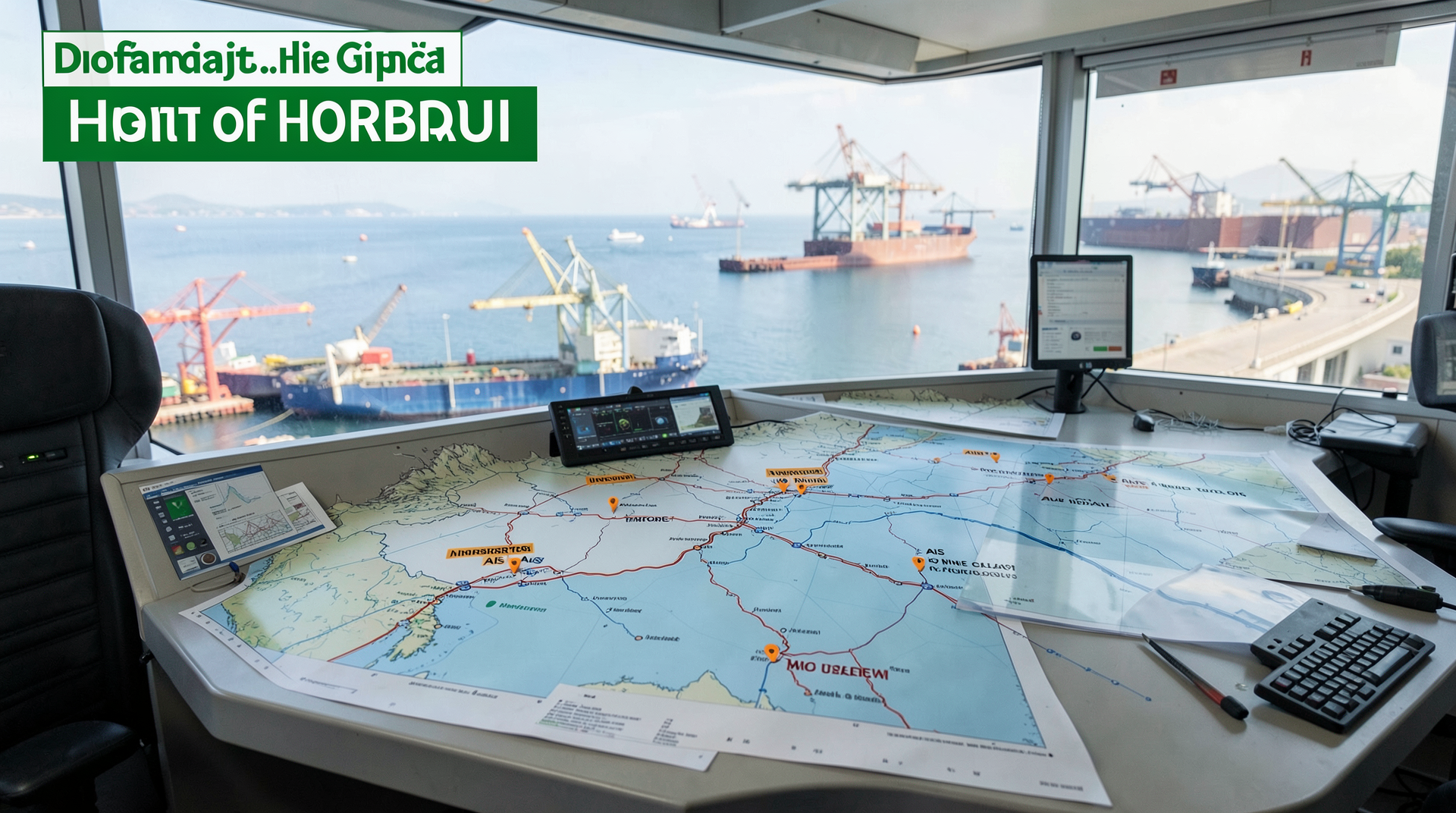
The Strait of Hormuz reopened first as language. Paragraph five of the U.S.-Iran memorandum says commercial-vessel traffic will immediately start, that Iran will use its best efforts to provide safe passage without charge for 60 days, and that demining and technical obstacles must still be removed. [1] That is enough to change a headline. It is not enough to restore ordinary passage.
The paper's June 16 account of mines, insurers, sanctions desks, and idled hulls keeping Hormuz shut after the deal announcement set a boring standard: ordinary passage exists when ships, ports, insurers, safe-channel notices, and AIS behavior agree. The MOU does not repeal that standard. It gives it a test. If traffic is ordinary, ships should move without permission, transponders should behave normally, port circulars should downgrade risk, insurers should price routine transit, and captains should not need a lawyer to understand who gets paid.
CBS's readout gives the diplomatic promise. The United States is to remove the blockade within 30 days, while traffic is restored proportionally to prewar numbers; Iran is to arrange 60 days of safe passage and then discuss future Strait administration with Oman and Gulf states. [1] The BBC's live file gives the first operational receipts: several tankers moved, three Saudi-flagged supertankers crossed with position transmitters off before switching back on, and an Iranian tanker left the Gulf of Oman while still under sanctions. [2] Movement exists. Movement with lights out is not ordinary commerce.
Lloyd's List gives the port-side texture that the announcement cannot. Fujairah and Khor Fakkan were operating, but Fujairah had a three-week estimated wait for some cargo categories, GPS spoofing and jamming warnings offshore, dangerous-goods letter requirements in Oman, ISPS Level 2 at Kuwait's Shuaiba and Shuwaikh ports, a marine-risk surcharge at Ras al Khaimah, and continued case-by-case limits on ship-to-ship operations in Dubai waters. [4] That is not a closed strait. It is also not the old strait. It is a partially functioning maritime system still full of war residue.
The distinction matters because Hormuz is not a single gate with one guard. It is a habit of confidence shared by navies, pilots, port authorities, insurers, banks, bunker suppliers, and captains. The MOU can instruct the parties to reopen the route, but ordinary commerce returns only when those actors stop treating each transit as an exception that needs special clearance. The BBC's tanker examples show the awkward middle state: vessels are moving, but the behavior still carries the memory of a blockade. [2]
This is where X and the news file diverge. X has the simpler grammar: the MOU opens Hormuz now, or the MOU proves the reopening claim is retreat theater. Both framings treat the strait as a switch. Mainstream coverage has begun to write the more useful but less viral version: BBC Verify follows vessel tracks; Lloyd's List follows port notices; CFR warns that the agreement leaves future tolls, fees, and Gulf-state exposure unsettled. [2][3][4]
CFR's experts make the time problem explicit. The agreement creates a short-run process for opening Hormuz and a 60-day timetable for everything else, but Iran has learned that the shipping route is leverage. [3] That is the operating risk hidden inside the free-passage clause. A no-charge window of 60 days is not a permanent maritime rule. It is a grace period before administration, fees, and service mechanisms return to negotiation.
The market wants the verb "reopen" because the verb lowers prices. Ship operators need a noun: the safe channel. Insurers need exclusions removed or repriced. Port agents need notices. Banks need sanctions waivers. Captains need to know whether a transit is ordinary or a permissioned exception. The MOU supplies a diplomatic intention, not the stack of boring paperwork that makes a voyage normal.
The honest sentence for June 17 is therefore narrower than either triumph or panic. Hormuz is reopening in text and beginning to move in practice. It has not resumed ordinary passage. The first ships through are evidence, but so are GPS warnings, risk surcharges, dark transponders, dangerous-goods approvals, and the absent long-term operating sheet. The first day after the MOU is not the reopening; it is the audit that tells readers whether the reopening is becoming real.
-- DARA OSEI, London