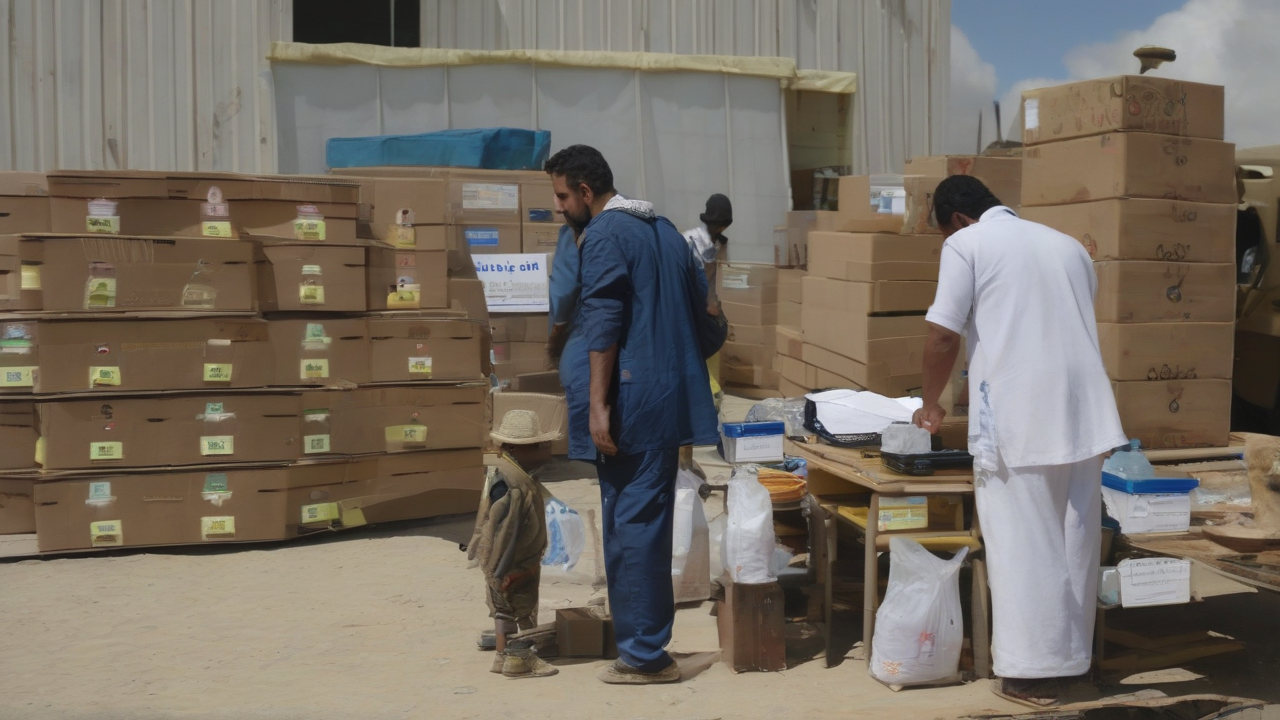
A verdict on Gaza is rendered online every hour. A clinic is either open on a given day or it is not.
The two scales rarely meet. The paper argued on June 28 that OCHA's dated reports count the displacement the verdicts skip, holding Gaza provable at the smallest scale. The same office keeps the aid ledger at the same resolution. Its humanitarian situation report for June 26 records that 33 health partners are still sustaining services across the territory, working under shortages of essential medicines, medical consumables, and pharmaceutical supplies, with some facilities now able to open only a few days a week — a constraint that lands hardest on patients with chronic disease who need regular follow-up. [1]
Those are not slogans. They are counts of who is still delivering care, and at what cost, the kind that hold after the feed has moved on. [1]
The water line reads the same way. The report notes cluster actors providing emergency water trucking despite operational and access challenges, even as acute watery diarrhea spreads through overcrowding and poor water and sanitation conditions. [1] A camp that argues Gaza as a single moral verdict skips this entirely; the disease is not settled in a reply, and neither is the truck that does or does not arrive.
The numbers behind the narrative sit in the open. OCHA's data portal for the occupied Palestinian territory publishes the figures a reader can check rather than take on faith, and ReliefWeb aggregates the same agency and cluster reporting in one place. [2][3] A claim about Gaza aid that cannot name a partner count, a supply shortage, or a delivery method is operating above this record, not from it.
This is the divergence the paper keeps. X is fast at moral verdicts and slow at delivery manifests. Mainstream coverage — AP, the BBC — is better at the aggregate, reporting totals of casualties and trucks entering, but skips the partner-by-partner mechanics that decide whether a specific clinic treats a specific patient this week. The gap costs the reader the ability to tell a functioning aid system from a collapsed one. [2]
Nothing here softens the catastrophe; the reverse. Thirty-three health partners rationing supplies, clinics open a few days a week, water arriving by truck against the odds — these are the texture of a system under siege, and they cannot be argued away by a thread or flattened into a single number. [1][3]
Until a feed can cite the report, the partner count, and the shortage it names, the loudest verdicts on Gaza are being delivered above the record built to survive them. [1]
-- NORA WHITFIELD, Chicago