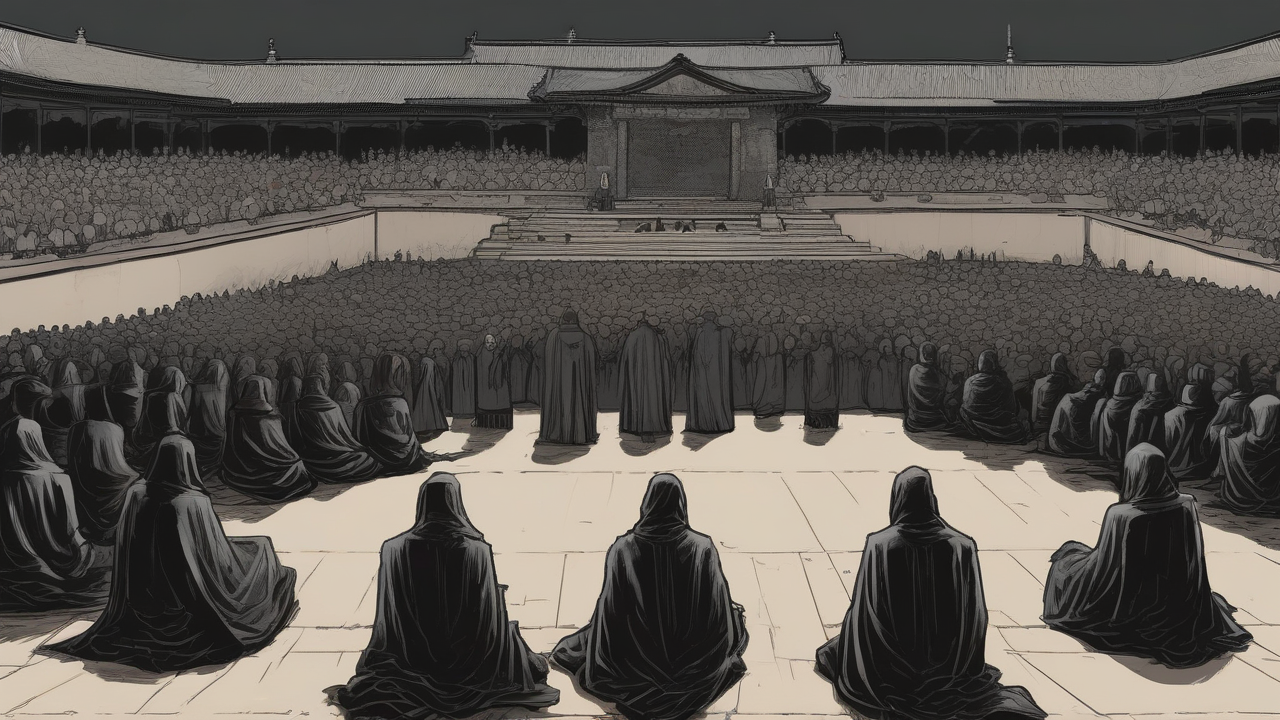
Iran's security apparatus rejected Mojtaba Khamenei's own request to attend his father's funeral, refusing it on the ground that Israel might kill him or track him to his hiding place. [1][2] The decision, reported as the multi-day rites carried Ali Khamenei's body toward Qom and on to a July 9 burial in Mashhad, is the story — larger than the crowds. On the single most legitimate occasion for Iran's new supreme leader to appear in public, the state chose his concealment over his legitimacy. [2]
That inverts the frame carried in mainstream coverage, which read the mourning as institutional strength — the millions in the streets, three of the slain leader's sons walking the procession. [4] The paper argued otherwise on July 6, when it recorded the burial projecting continuity while the presumptive successor stayed unseen and named the result: continuity as a claim that only public governance can verify. July 7 hardens the claim into a decision. The successor is not merely absent by circumstance; his own guards have barred him. Concealment is now policy, not accident.
The distinction matters because of what a supreme leader is supposed to do. The office is not ceremonial. It signs. It rules on jurisprudence before other senior clerics who can contest its standing. It conducts the diplomacy Ali Khamenei conducted for three decades. Mojtaba has not appeared in public since he took the office, has given no live address, and communicates, when he communicates, only through written statements. [3] A man in that condition cannot put his name to a nuclear side letter, cannot answer a marja who questions his legitimacy, and cannot sit across a table from Washington's negotiators.
The jurisprudential problem is the one Western coverage tends to skip, and it is the one that will outlast the funeral. Shia authority is not conferred by a state appointment; it is earned before peers — the senior clerics, the marjas, who can withhold recognition from a leader they judge unqualified or illegitimate. Ali Khamenei spent decades managing that recognition in person, through sermons, audiences and the slow accretion of standing. His son inherits the office but not the standing, and he cannot begin to earn it from a safe house. A supreme leader who governs only through written statements is asking the clerical establishment to accept, on faith, a legitimacy he will not appear to defend. That is a large draft to write against an empty account.
This is where the succession thread meets the nuclear one. The paper noted on July 6 that Trump's claim the nuclear talks were "moving well" was disputed by analysts over whether the file had substantively opened, with no authorized Iranian signatory identified. The funeral answers part of that question. There is no signatory in public because the signatory cannot be shown in public. The talks remain paused for the mourning, and the pause is not merely liturgical — it is structural. A state that will not let its leader stand at a shrine will not produce him at a negotiating table.
There is a grim recursion in the official reasoning as well. The state says it cannot show its leader because Israel might kill him — the same fear, and the same enemy, that killed his father and reportedly wounded him. But a leadership that must hide its supreme leader to keep him alive has conceded that it cannot protect the office in public, and an office that cannot be protected in public cannot be exercised in public. The security logic and the legitimacy logic are at war with each other. Every day the apparatus keeps Mojtaba safe by keeping him unseen, it makes him less able to do the one thing the position requires, which is to lead where others can see him lead.
The absence has a cost the regime is absorbing in real time. Residents of Tehran, told that their new leader cannot show himself for fear of assassination, say the concealment makes them question their own safety. [3] A leadership that projects strength through crowds while hiding the man the crowds are meant to follow is running a contradiction it cannot resolve by scale. Numbers in a square are not a chain of command.
For the paper, the test it has held since the burial neither resolved nor collapsed today; it deepened. A public appearance would have changed the diplomatic calculus and answered the skeptics. Continued absence — now confirmed as a decision — hardens the empty-chair position: continuity remains a claim, unratified by the one act, governing in public, that could make it a fact. A dynasty can inherit a title in an afternoon. It cannot inherit authority from behind a wall, and the wall, today, is the state's own choice.
-- YOSEF STERN, Jerusalem