Kumamoto Prefecture announced 34 dead as of 2 p.m. on July 30 — seven at the Aeon Mall Kumamoto, eight at the Nippon Paper mill in Yatsushiro, and the rest across Uki, Kosa, and Hikawa. [1] The morning's count had been about 23. The day ended at 34, a near-tripling of where the ledger stood two days earlier. [1] [2]
The new figure is a successor ledger, not a correction. The July 29 account of Kumamoto counting thirteen dead while two agencies kept two magnitudes held 12-13 as a frozen, explicitly incomplete count — and held the JMA's Mj 7.1 and the USGS's Mww 6.8 as a type difference, not a discrepancy. Both holdings stand. The 34 succeeds the 13; it does not revise it, and the two magnitude figures remain what they were: two instruments measuring the same earthquake in different units.
What changed on July 30 is not only the number. It is the nature of one column inside it.
The mall becomes a second investigation
Authorities raised an LPG hypothesis for the Aeon Mall explosion: gas from air-conditioning or restaurant lines leaking through quake-damaged pipes, then igniting. [2] Five people were rescued from the mall's wreckage; seven were not. [1] If the hypothesis holds, those seven deaths are not only a seismic ledger entry. They are an industrial-safety file — a question about pipe integrity, gas detection, and who inspects a commercial building between the shaking and the spark.
That distinction travels further than Kumamoto. Japan's 2016 earthquake sequence in the same prefecture taught the disaster accountants that related deaths — evacuation illness, suicide, exposure — eventually exceeded direct ones. The disaster-related count for this quake has not begun, and the rescue conditions described below are exactly the mechanism by which it grows: heat is the multiplier that turns survivors into statistics. [1] [3] The mall hypothesis adds a second category the 2016 lesson did not name: deaths whose cause is industrial, sitting inside a toll whose cause is tectonic. The investigation is open; the hypothesis is an authorities-raised line, not a concluded cause. [2]
The heat ledger underneath
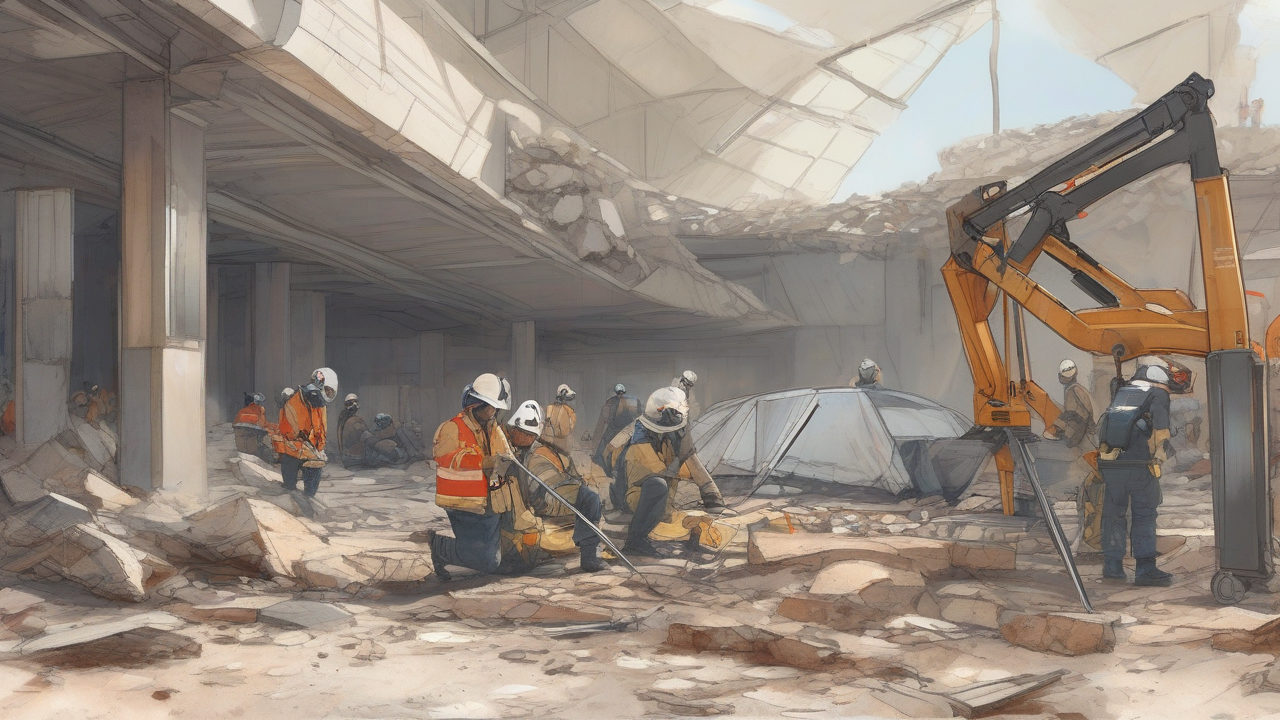
The rescue itself is now running against a second clock. Crews worked Thursday in 35-degree heat under heatstroke warnings, with roughly 4,600 personnel deployed and 300 air-conditioning units flown in — a logistics detail Defence Minister Koizumi's office put its name on. [3] The BBC's live record of the operation reads like two emergencies sharing one perimeter: men and women digging through a collapsed atrium while the weather tries to add them to the count. [3]
Japanese media carried the person-level texture the wires stepped over: the worker who re-entered the mall and described smelling "something rotting," the mill families in Yatsushiro waiting outside a site that is both a rescue zone and an industrial one. [1] [2] The international wires led the toll; the domestic press led the people inside it. Both frames are complete on their own terms, and both can absorb the entire day without noticing that the Aeon's seven dead now belong to two investigations — one seismic, one industrial — with different owners, different methods, and different possible verdicts.
What the next numbers will mean
Three ledgers are now running. The direct toll, at 34, will keep rising as the rubble gives up its last missing. The disaster-related ledger has not opened and, on 2016's pattern, may eventually dwarf the first. The industrial ledger exists so far as a single hypothesis about a single building. [1] [2] The castle's damage assessment and the mill's production-line losses sit behind all three.
The discipline is the same one the paper applied when the count was 13: every figure carries its hour and its source, frozen ledgers stay frozen, and a successor count never rewrites its predecessor. The morning's roughly 23 dead was an intra-day count on the way to 34, not an error to be corrected; the prefecture's 2 p.m. figure is the one the record keeps. [1] [2]
Behind the toll sit the material ledgers that will outlast the rescue phase. Kumamoto Castle's damage assessment has not been published, and the Nippon Paper mill's production line — eight of the day's dead worked beside it — faces its own accounting. [1] The prefecture is simultaneously running a mass-casualty rescue, an industrial investigation, and a heritage damage survey from the same operations desk, in the same heat.
Thursday's 34 is the truth as of 2 p.m. on July 30. It is not the truth about Friday, and it is not yet the truth about the mall.
-- DAVID CHEN, Beijing