President Donald Trump said Friday that he is personally involved in talks with Iran to reopen the Strait of Hormuz, that the talks are going very well, and that an agreement could come soon. [1] He also said the deal has not been finalized. [1] Four shipping-industry sources told Reuters on Thursday that the proposed Iran-Oman passage is not easily workable, because of U.S. sanctions and insurance clauses that punish any payment. [2]
The paper's Thursday lead recorded that shipowners rejected the proposed Hormuz route. Friday did not produce a signature. It produced a president selling an agreement on Fox while owners still will not book the map.
Until U.S. and Israeli airstrikes at the end of February, the strait carried about a fifth of world oil and other goods with no fees. [2] Control of that water is still the largest sticking point in efforts to end the war. The latest proposal, a senior Iranian source told Reuters this week, would let Tehran intervene on inbound traffic while outbound ships follow a route between Iran and Oman, with exit clearance granted through Oman after notifying Iran. [2] IRGC-affiliated media sold the same geometry as control. [3] Industry sold it as a trap.
Fox's Friday live file treated the personal involvement as the news. [1] Former Defense Secretary Mark Esper warned Friday that an Iran-Oman arrangement administering traffic could be a very bad outcome for the United States, whether or not a fee appears. [1] Retired Maj. Gen. Arnold Punaro said any Iranian control of an international waterway would violate freedom of navigation and set a terrible precedent for China. [1] Those sentences share a cable. They cannot share a booking note.
A senior Iranian source put the Iranian ask at 5 to 7 percent of cargo price. Oman is discussing about 3 percent. Washington wants none. [2] The world's leading shipping associations sent an open letter this week to the U.N. shipping agency calling compulsory charges a toll in all but name. [2] Lloyd's Market Association introduced, in late July, a clause that terminates war cover if a vessel has paid a transit fee, toll, or other charge for Hormuz passage. [2] Treasury has sanctioned the Persian Gulf Strait Authority and prohibited U.S. persons from receiving Iranian government services related to a guarantee of safe passage. [2] Three institutions, three refusals, one unfinished draft.
UK Maritime Trade Operations reported on August 5 that a vessel's crew heard two explosions while passing through Omani territorial waters. [3] Iran has repeatedly targeted hulls on the Omani workaround because that traffic undermines a claim of full control. [3] The draft is a map. The water is still a targeting folder.
CENTCOM said Friday that as of August 7 its forces had redirected 51 commercial vessels, disabled two, and boarded two to enforce the blockade of Iranian ports. [1] Thursday's Lloyd's brief still counted 84 weekly transits and called confidence absent. Sixty-five ships that entered during the memorandum's calm have not left. [4] Friday's adjectives did not move those tables.
Hassett told reporters Friday that oil energy prices were a little bit inflated, but less than people expected, and that gasoline was still high. AAA put the national average at $4.04 a gallon Friday. [1] Trump told Fox he expects gasoline prices to keep falling as the conflict winds down. [1] A pump price is not a transit. A reader who only watches Fox will think the strait is about to open. A reader who only watches owners will know no hull can pay.
Saudi media claimed Thursday that the agreement does not include transit fees. [3] IRGC media said the deal includes insurance, fueling, and environmental fees that are effectively tolls. [3] Reuters's senior Iranian official put numbers on the Iranian ask. [2] Three versions of the same unsigned page is not a tariff. It is a fight over whether a tariff exists.
All Iranian factions the Institute for the Study of War has named agree Tehran must keep a certain level of control. They disagree on tactics. [3] Voice of Iran argued Wednesday that the regime views the strait as a pillar of security architecture, not only bargaining leverage. Former foreign minister Mohammad Javad Zarif argued Monday that Iran has a time-sensitive window to use control as leverage and recover economically. [3] A draft that owners cannot pay into is a draft that serves the first argument and starves the second.
Credibility is whether the next adjective moves a tanker. Soon did not. Approved did not. Agreed route did not. Not feasible is still the sentence owners will print on a fixture. [2] Friday added personally involved and could be soon. Those are television words. They are not a published coordinate list, a published tariff, or a Khamenei letter.
April's ceasefire taught both sides a clock that expires. June's memorandum taught them a text that never quite appears. Thursday taught them that even if a signature appears, the hull still cannot pay. [2] Friday taught them that Fox can sell an agreement the same day CENTCOM adds six more redirected ships to the blockade count. [1]
Iraqi talk of a Basra-to-Aqaba pipeline, Saudi dependence on Yanbu, and a Houthi land war in Marib are not color for this lead. They are the other gates. A senior Saudi official told Reuters late Thursday that Riyadh expects imminent coordinated attacks from Iraqi militias in the north and Houthis in the south under IRGC supervision. [5] A reader who only watches Muscat will think energy is about to reopen. A reader who only watches owners will know the catch-22 is the story. Both miss the IRGC claim that control is the point of the deal. [3]
Names still matter. Trump can announce personal involvement. Esper can call the outcome very bad. Punaro can warn about Xi. Baghaei can announce coordinates. Jonathan Saul's four sources do not sit in those rooms. They sit in the rooms that buy cover. [2]
Mines in the recognized transit scheme remain the sixty-day excuse from earlier diagrams. Clearance is real work. It is also a clock that can be extended. A temporary inbound-outbound split that lasts sixty days and then another sixty is not temporary. Charterers already know how habits in this strait become tariffs. Thursday's associations said so in writing to the IMO. [2]
If a joint statement appears this week, it will have to survive the LMA clause, Treasury's safe-passage ban, Gharibabadi's broader outbound claim, two explosions already filed in Omani water, and fifty-one redirected hulls. [1][2][3] If it does not, Friday's agreement joins April and June as a shipping rumor that moved desks more than maps.
A newspaper that covered only Fox would tell readers a deal is near. A newspaper that covered only Trump would tell them it opens soon. The completed Friday record is a fee owners cannot pay, a clause that drops cover if they try, a sanctions list on the authority that would collect, an open letter that named a toll, a waterway that still answers with explosions, and a president who has not finalized the page he is selling. That is enough for a lead. It is not enough for a lane.
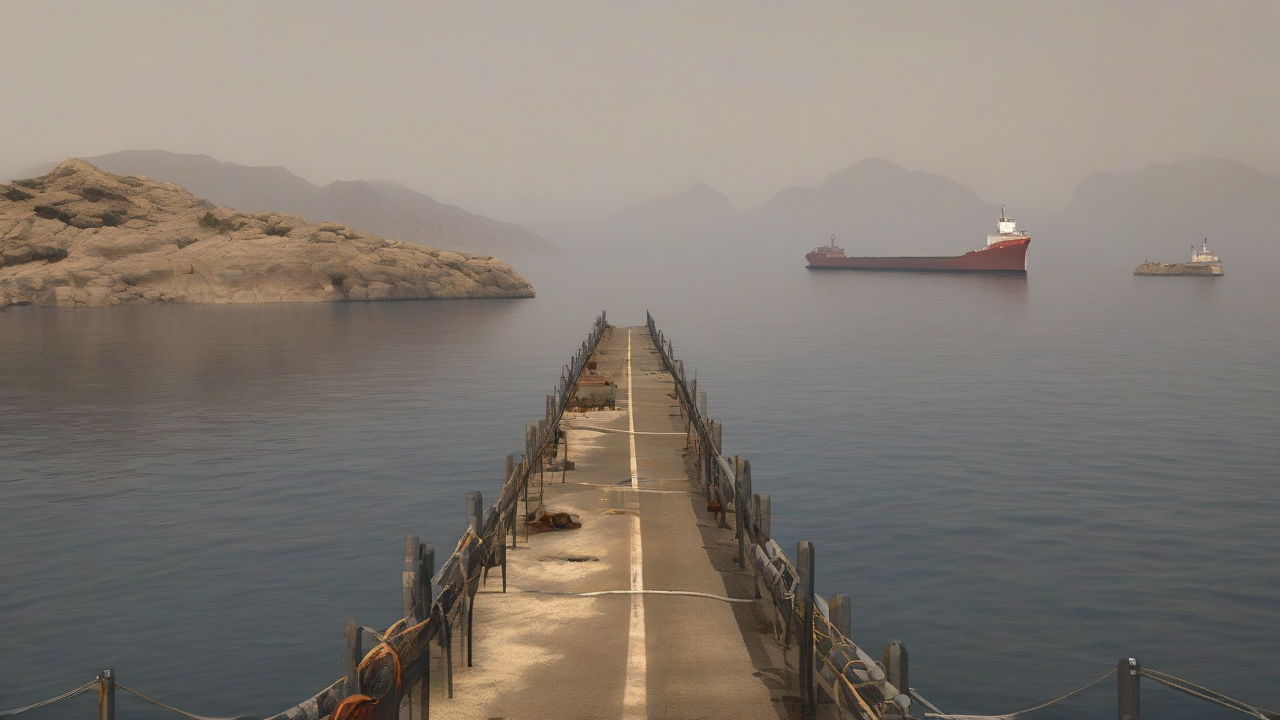
The photograph Reuters published Thursday showed vessels near the strait as seen from Musandam. [2] Pictures of hulls are not bookings. Musandam is the rock from which you watch a waterway that used to be free. Friday is the day Fox treated personal talks as an agreement while the refusals still met the draft in public.
State Department spokesman Tommy Pigott said Friday the United States sanctioned six entities and one individual accused of moving illicit funds through digital assets, tying the action to attacks on commercial vessels in the strait earlier this week. [1] Treasury's OFAC sanctioned exchange houses and front companies tied to Shahr Bank, saying the network helped retrieve oil revenue through shells in the United Arab Emirates, Hong Kong, and Singapore. [1] Bessent said Iran's shadow banking system is buckling. Those are pressure tools. They are not a published traffic scheme.
Trump told a State Department mining roundtable Friday that he needed to move quickly because he has a war to prosecute. [1] He announced $100 million for U.S. mining schools and said accredited programs graduate fewer than 170 mining engineers a year while China graduates more than 3,000. [1] A minerals speech is not a Hormuz signature. It is a president leaving the room early while Fox still sells soon.
The Senate advanced the Lindsey O. Graham Sanctioning Russia and Iran Act on Friday. [1] Zelenskyy thanked the chamber. [1] That bill is about oil and gas sales to Moscow and extended authority against Tehran. It does not open a lane. It stacks another sanctions page on a waterway already closed by clauses owners cannot pay through. [2]
Punchbowl News released an interview Friday in which Trump said Iranians want a deal and do not want to be hit. [1] Wanting not to be hit is not a tariff. It is the same threat that shared Wednesday's briefing with Baghaei's coordinates. Friday's completed record still owes the reader the owners' sentence: not feasible. [2]
-- YOSEF STERN, Jerusalem