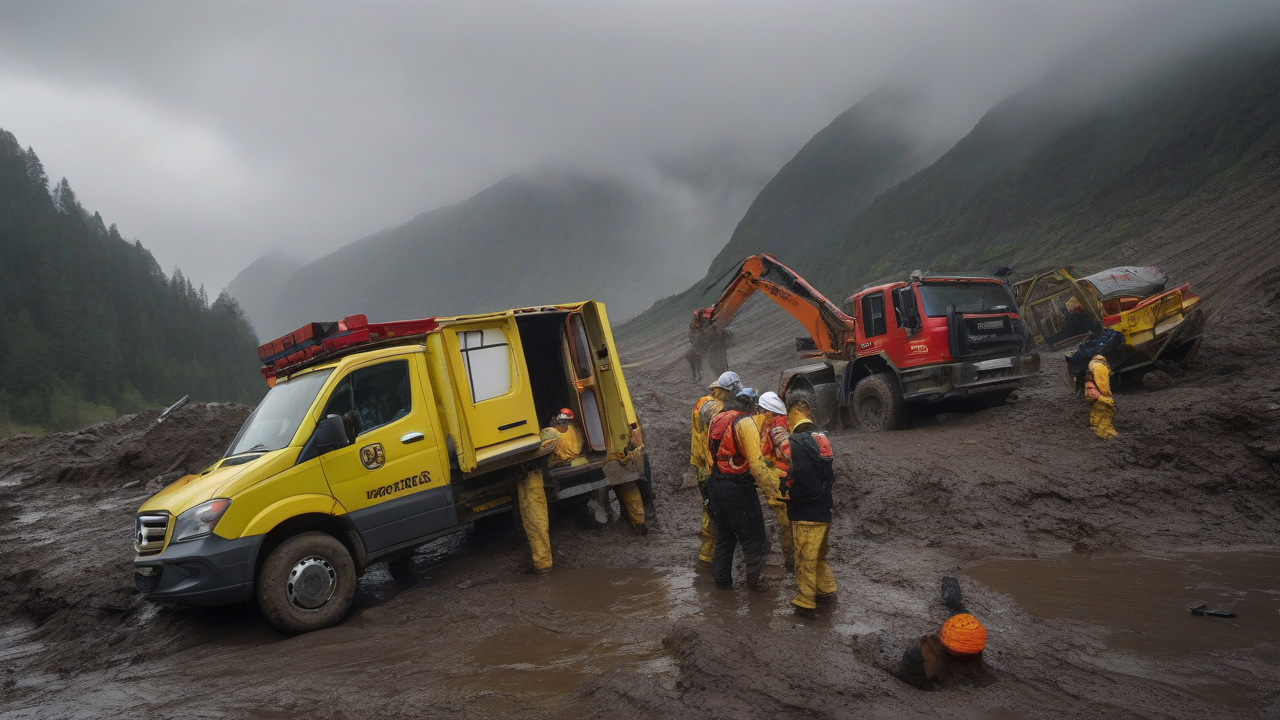
Nepal's flood death toll still will not settle into a single number four days after glacial debris slammed into a river near the Tibet border. On Saturday, IBTimes reported the figure at 626 dead across the region. [1] The same day, Nepal's own Foreign Minister Shisir Khanal gave the wire service Press Trust of India a different number entirely, posted on X: "The death toll crossed 650 on Saturday, Around 4,500 people have been rescued so far, Nepal's Foreign Minister Shisir Khanal said on Saturday." That is at least a fifth distinct count layered onto the four incompatible figures this paper tracked Friday — direct evidence that the reconciliation question the paper posed a day earlier has been answered, and the answer is no.
The disaster began Wednesday when a catastrophic glacier collapse near the Gyirong border crossing sent a wall of mud and debris into a river, which rapidly dammed and threatened to release a second flood downstream. [1] Nearly 3,000 people remain unaccounted for across Nepal and the Tibetan side of the border combined; Nepal's own disaster-response agency puts the domestic missing count at 2,426, while Chinese state media reports more than 550 missing in Tibet. [1] Rescue operations entered their fourth grueling day Saturday, hampered by poor visibility that has repeatedly grounded military helicopters and by up to five feet of sludge that leaves virtually no safe helicopter landing zones in the rugged terrain. [1]
The "Nepal rejects help" framing that dominated Saturday's headlines obscures a more specific policy. Foreign Minister Shisir Khanal said Nepali responders are handling the core recovery work themselves and that the government's priority is targeted technical assistance, not redundant general manpower. [1] Britain, India, China and the United States all offered to send dedicated rescue teams; Khanal's government instead approved specialized tunnel-rescue and DNA-identification experts from South Korea, India, China and Japan — precisely the capabilities Nepal itself lacks. [1] More than 100 people are believed trapped in a tunnel at the Upper Trishuli-1 hydropower project, filled with thick mud that has forced rescuers back onto ropes and baskets to reach stranded workers. [1] A British rapid-response team was scheduled to arrive Saturday specifically to assist relatives of more than 30 missing British nationals, part of a wider £5 million UK humanitarian package — evidence that Kathmandu's "no" is selective rather than blanket. [1]
The capacity strain behind that selectivity is not abstract. Local hospitals have run out of refrigeration space for recovered bodies; officials have shipped remains up to 100 kilometers away to plains facilities in Chitwan and Nawalparasi to find storage. [1] Nepal has separately asked India and China for portable bailey bridges after roughly two dozen bridges were destroyed in the flooding, severing transport links across the affected region. [1] At Kathmandu's main government hospital Saturday morning, security official Gajendra Rawat said families have registered around 1,600 missing-person reports, with relatives moving between a help desk and a noticeboard displaying photographs of unidentified bodies. [1]
The economic toll is beginning to come into focus alongside the human one. Finance Minister Swarnim Wagle told Reuters that rebuilding will likely cost between $4 billion and $5 billion — a figure Reuters noted equates to nearly a tenth of Nepal's entire economy. [1] Wagle noted the estimate remains lower than the roughly $9 billion required after Nepal's 2015 earthquake, which wiped out about a third of the country's economic output at the time. [1] The floods have already damaged hydropower stations that supply 12 percent of Nepal's electricity, a hit whose downstream effects on the broader recovery effort have not yet been quantified. [1]
The border search on the Chinese side of the disaster carries its own physical toll on rescuers. At Gyirong Port, at an altitude of 2,800 meters, rescue commander Zou Mingqi described a landscape where, as far as the eye could see, there was "nothing but ruins." [1] Crews there are working while battling chest tightness and dizziness from the altitude, carrying heavy equipment through terrain that offers little relief. [1] Chinese authorities did report one piece of easing news: the surface area of the dammed lake that threatened a second catastrophic flood has shrunk to roughly 99,000 square meters, though Nepal has warned that flooding risk persists until all pooled water fully drains. [1]
The scale of the missing-persons count on both sides of the border is itself a marker of how far from resolution this disaster remains. Nepal's own National Disaster Risk Reduction and Management Authority bulletins put the domestic missing figure at 2,426, a number large enough that even a modest recovery rate over the coming days could move the eventual death toll by hundreds — which is part of why officials and outlets alike are reluctant to treat any single Saturday figure as final. Every count released so far, from 579 to Saturday's competing 626 and 650, has effectively been a snapshot of an active search rather than a completed one, and the gap between those numbers is proportional to how many bodies remain unrecovered rather than any disagreement over methodology.
Finance Minister Wagle's own framing captured that uncertainty when he spoke to Reuters: the $4 billion to $5 billion rebuilding estimate is itself preliminary, offered while search-and-rescue operations are still active rather than after a final accounting of destroyed infrastructure. [1] For a country whose 2015 earthquake recovery took years to fully finance and rebuild, the current disaster's timeline for producing even a stable damage estimate — let alone a stable death toll — is likely to stretch well past the fourth day this paper is reporting from.
The specialist-versus-general distinction Khanal drew Saturday also carries a diplomatic subtext that outlets framing this purely as rejection have largely missed. Accepting DNA-identification teams from India, China, Japan and South Korea while declining broader Western rescue deployments is not a uniform policy toward all foreign offers — it draws a line specifically around capabilities Nepal lacks internally, regardless of which country provides them, while directing general manpower offers toward financial and logistical support instead. The UK's £5 million package and the British relatives-liaison team fit inside that same framework: assistance that supplements what Nepali responders and specialist teams cannot themselves provide, rather than assistance that would compete with or duplicate Nepal's own recovery effort on the ground.
That nuance matters for how the story is likely to be remembered once the search phase ends and the rebuilding phase begins. A headline reading "Nepal rejects help" implies a government turning away resources it needs out of pride or mismanagement. The government's own account, drawn from Khanal's statements across Saturday's coverage, describes something closer to triage under genuine capacity constraints — hospitals without refrigeration space, a workforce trained for conventional disaster response but not for tunnel extraction under five feet of mud, and a foreign ministry trying to route the right kind of help to the right task rather than accepting every offer indiscriminately. Whether that distinction survives into next week's coverage, once the toll finally does stabilize into something closer to a single number, will say as much about how this disaster gets remembered as the final count itself.
What remains unresolved, four days in, is whether any single body — Nepal's government, the United Nations, or an outlet with the resources to reconcile competing counts — will ever produce a toll that supersedes the individual figures circulating in different reports on the same day. Saturday added a fifth number to a list that already had four. The pattern this paper identified Friday is not converging; it is compounding.
-- PRIYA SHARMA, Delhi