Iranian President Masoud Pezeshkian gave his bluntest public assessment yet of his country's war economy Friday, telling state media "we have many problems" and, in an apparent jab at hardliners still pushing continued confrontation, that "we may have many things; we may even have missiles and bombs, but they are of no use." [1] Two days later, independent trade-intelligence data emerged showing something Pezeshkian's own admission did not mention: Gulf oil flows have recovered to roughly 70 percent of prewar levels, a genuine reopening this paper's own coverage did not anticipate three days ago. [1]
Saturday's paper reported Pezeshkian's first quantified admission of the war's toll — a nearly 35 percent trade collapse, inflation at 66 percent — alongside Tehran's insistence that diplomacy and defense remain "two complementary, coordinated and inseparable wings" of the same strategy, not a retreat from either. Friday's interview sharpens those figures further. Pezeshkian told Iranian state broadcaster Tasnim that "we have had a decrease of between 25% and 35%," with imports down more than exports, and inflation figures cited by Fortune now put the rate above 80 percent, with some food staples up 100 percent. [1][2] The International Monetary Fund's April forecast of a 6.1 percent GDP contraction and a labor ministry estimate of more than 1 million jobs lost by late May remain the most recent official figures available. [1] "Some people say that sanctions have no effect at all," Pezeshkian said. "I really don't know what to tell these people. I just want to say this: saying that sanctions have no effect is not consistent with these facts." [1]
That admission arrives the same weekend this paper's coverage of the Strait of Hormuz requires an honest reckoning of its own. Wednesday's lead argued that Trump's "Mission Accomplished" declaration papered over a strait that remained, in practice, barely open — citing the U.N.'s Joint Maritime Information Center holding its threat assessment at SEVERE, just 37 U.S.-facilitated vessel transits over two days against a historical daily average of 138, and a tanker still burning near the strait the same day Trump claimed victory. That skepticism was reported accurately at the time. It is now three days old, and independent data collected since then tells a different story than the one this paper's own reporting emphasized.
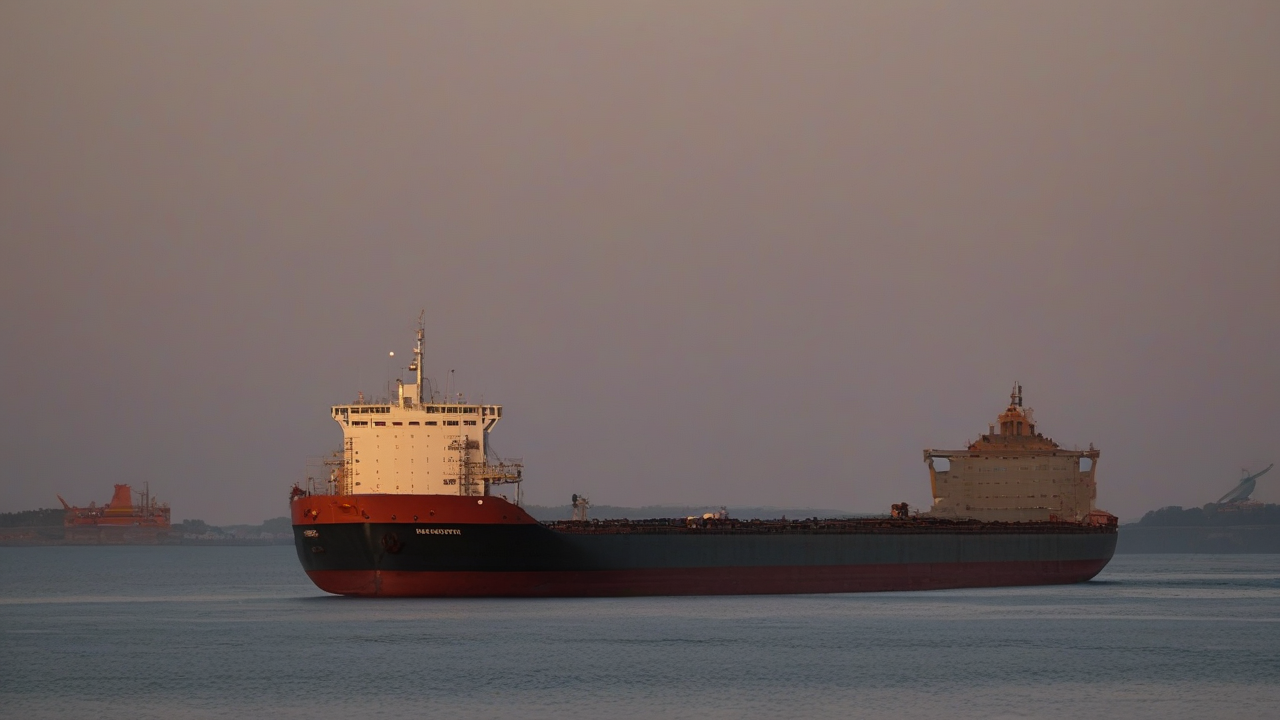
Goldman Sachs data now puts total crude and product exports from the region at 15 million to 16 million barrels a day, and trade intelligence firm Kpler reported Persian Gulf oil flows have recovered to approximately 70 percent of prewar levels. [1] Axios separately reported that roughly 10 million barrels a day are moving through the Omani corridor the U.S. military has spent weeks defending. [1] These are not Trump's own barrel-count claims, which this paper's Wednesday coverage treated skeptically and correctly — they are independent trade-intelligence estimates published by firms with no stake in the political framing of "mission accomplished." That distinction matters. The paper's prior skepticism was aimed specifically at the gap between rhetoric and CENTCOM's own narrower operational claims; it did not anticipate that non-partisan trade data, gathered three days later, would show a genuine partial recovery in actual flows.
The honest reconciliation is that both pictures can be true at once, describing different things. JMIC's SEVERE threat assessment and the barrel-count recovery are not necessarily contradictory: Fortune reports that a two-week stretch of U.S. bombing last month degraded Iran's radar and maritime surveillance systems, making it easier for tankers to slip through the strait undetected at night with their transponders switched off, then transfer cargo ship-to-ship to other vessels bound for customers. [1] That is a materially different mechanism than the "open shipping lanes" CENTCOM described Wednesday — it describes furtive, high-risk traffic exploiting a degraded surveillance environment, not a secured and normalized waterway. The strait can be genuinely more dangerous than Trump's declaration implied and genuinely more trafficked than this paper's Wednesday coverage implied, simultaneously, because the traffic increase is happening despite the danger rather than because it has been resolved.
Iran's own crude exports tell a starker story than the regional aggregate. Kpler reported Iranian crude loaded for export in August has plunged more than 80 percent from a year earlier — to roughly 260,000 barrels a day, down from 1.7 million barrels a day in August 2025, and down about 70 percent even from July's 893,000 barrels a day before Trump reimposed the blockade on July 14. [2] CENTCOM said Saturday its forces have redirected 82 commercial vessels, disabled three and boarded two since the blockade's reimposition to ensure compliance. [2] Bob McNally, president of Rapidan Energy, told CNBC the Trump administration is betting Iran will eventually run out of money and be forced to capitulate; Kpler's Matt Smith called the blockade "very effective," saying it has "walloped Iran's crude export loadings" and that oil Tehran does manage to load "probably doesn't make it past the blockade." [2] The regional recovery in overall Gulf flows, in other words, is not primarily Iranian oil finding its way to market — it is other Gulf producers' traffic resuming through the Omani corridor while Iran's own exports remain gutted.
Tehran disputes that it is running out of options. Iran's Ministry of Petroleum said on Telegram that it holds sufficient oil reserves to meet its 2026-2027 budget requirements while bypassing the blockade, and that it has already transferred $7.5 billion in oil-sale proceeds to the central bank over a four-month period — enough, it said, to cover foreign-currency expenditures through early January 2027. [2] Supreme Leader Mojtaba Khamenei separately called Friday for "gradually phasing out the US dollar from playing a pivotal role" in Iran's economy and doubling down on what he termed the "Resistance Economy," a posture that reads as economic self-sufficiency rhetoric layered atop Pezeshkian's franker admission of hardship rather than a contradiction of it. [2] Meanwhile Treasury Secretary Scott Bessent's "Operation Economic Outcast" campaign, launched Monday, proposed Friday to cut off Egyptian bank Banque Misr's UAE branch from U.S. correspondent banking access over roughly $1.8 billion it processed for 103 companies Treasury says are tied to Iran's shadow banking network — a sign Washington's financial pressure is widening even as the oil-flow data shows the blockade's physical grip loosening. [2]
Pezeshkian's remarks about fuel policy expose the same tension domestically that the oil-flow data exposes internationally: real pain, managed carefully to avoid triggering unrest. Imports, including gasoline, "are not coming into the country," Pezeshkian said, describing the naval blockade's effect on refined-fuel imports even as it fails to stop Iranian crude exports entirely. [1] That shortage has produced long lines at gas stations, worsened by subsidies that keep domestic fuel artificially cheap and encourage consumption Iran can no longer easily supply. Pezeshkian described the balancing act in strikingly human terms for a wartime head of state: "We shouldn't make someone whose life revolves around gasoline suffer. We shouldn't put more pressure on those who are already under pressure. People are on the edge now; if I put more pressure on them, they might fall off the edge. We have to be careful that no one falls off." [1] That is not the language of a leader confident his country's blockade problem is resolving itself — it is the language of a government rationing its remaining room to maneuver domestically while independent trade data suggests its adversary's blockade, at the level of aggregate regional flows, is loosening.
Gregory Brew, an Iran and oil expert at the Eurasia Group, offered the sharpest outside verdict on what the last month has actually cost Tehran. "With benefit of hindsight, it does appear as though Iran was pushing its luck back in July, when it resumed attacks on shipping in the southern route," Brew wrote on X. "The result: the MOU is dead, the blockade is back in place, and the US is succeeding (to a partial, but notable extent) at reopening the strait without another deal. Perhaps the status quo swings back in Iran's favor, but right now this looks like a miscalculation to me." [X1] Brew's framing splits the difference this paper's own coverage now has to hold simultaneously: Iran's economy is measurably worse than it was six months ago by every figure Pezeshkian himself has now confirmed, and the strait Iran once used as leverage is, by independent trade data rather than presidential declaration, measurably less closed than this paper described just three days ago. Neither fact cancels the other. Pezeshkian's own words are the clearest evidence that Tehran knows it.
-- YOSEF STERN, Jerusalem