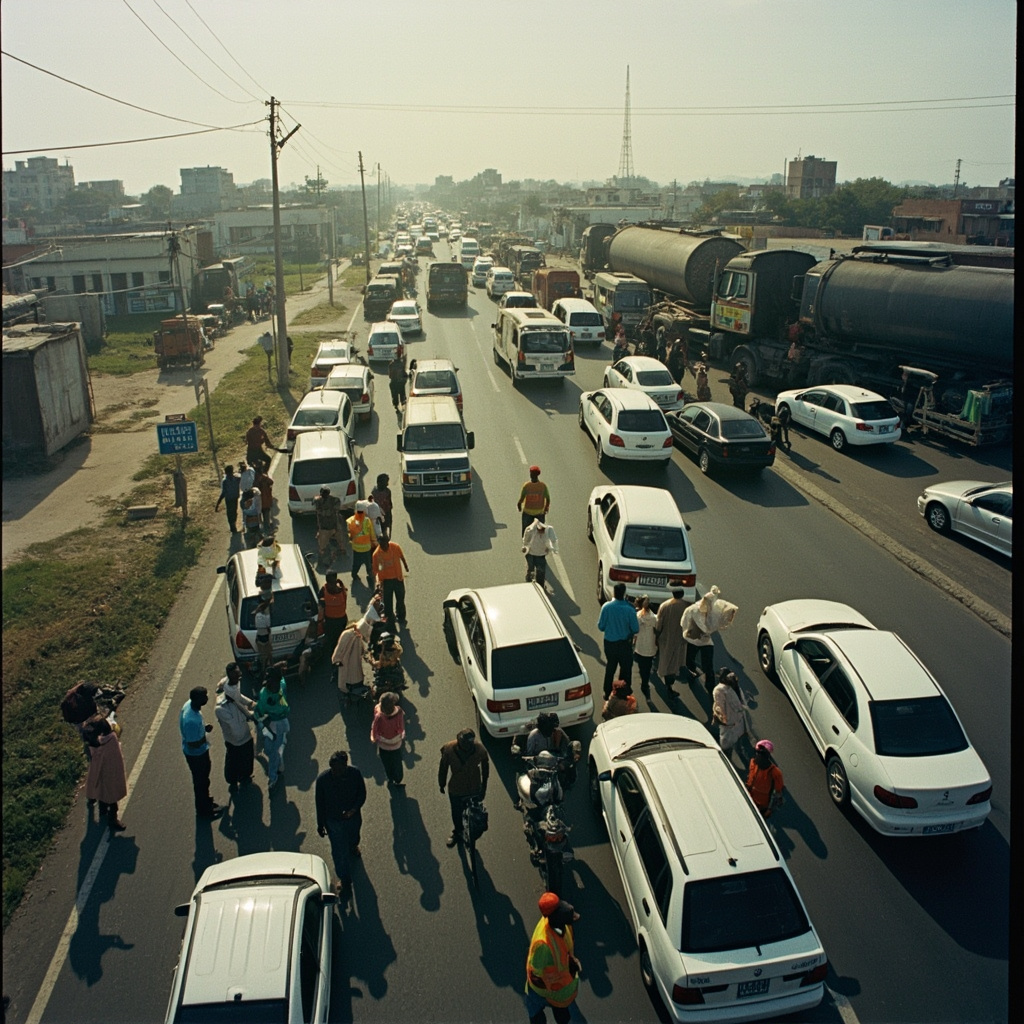
The Washington Post published its Africa headline on Friday afternoon: "Africa is hurting again from a global crisis it had no part in starting." The phrase "again" did the heavy lifting. COVID-19, then the Ukraine war, now the Iran war. Three global crises in six years, each routed through the same structural vulnerability: a continent that imports refined fuel from the very chokepoints that wars close. [1]
This paper reported Thursday that African countries have weeks of fuel left and the war is not theirs. That assessment has not improved. It has deteriorated. President Hakainde Hichilema of Zambia directed government agencies on Saturday to investigate the national fuel supply chain, warning oil marketing companies against hoarding and threatening license revocations. His office issued the directive after reports that some distributors were stockpiling diesel to sell later at higher prices, compounding a shortage the war created and speculators are now exploiting. [2] [3]
In Cape Town, the picture is more urgent. Diesel shortages have been reported at petrol stations across the Western Cape since mid-March. Premier Alan Winde blamed suppliers for withholding petrol for profit. The national government in Pretoria says supply is "stable," but the word has become a reflex rather than a description. Oxford Economics warned this week that South Africa's economic exposure to the Hormuz disruption is more severe than official assurances suggest, because the country's strategic fuel reserves are thin and its refining capacity has been declining for a decade. [4] [5]
The AP wire story that the Post published named the structural pattern plainly: from the COVID-19 pandemic to the war in Ukraine and now the Iran war, Africa absorbs the second-order effects of crises whose first-order causes are thousands of kilometers away. The continent has no seat on the IEA, no coordinated strategic reserve, and no leverage over the shipping routes that carry its fuel. When those routes close, the continent does not "cope" — the BBC's word from Thursday. It rations.
Reuters reported Friday that the crisis extends beyond liquid fuel. African airlines face soaring jet fuel costs as supply dwindles. A return flight from Lanseria to Cape Town now carries a fuel surcharge that did not exist six weeks ago. The Dangote Refinery in Nigeria, the continent's largest, is operating at capacity supplying the domestic market and has limited room to serve neighbors that once imported entirely from Gulf refiners. [6]
What distinguishes this crisis from COVID-19 or Ukraine is the speed. The pandemic unfolded over months. The Ukraine shock built over weeks. The Hormuz blockade cut supply in days. Countries that had six months to adapt during COVID-19 now have weeks. Ethiopia cut government vehicle usage by half. Kenya is negotiating unfavorable fuel swaps. Uganda, landlocked and dependent on Kenyan ports, has seen pump prices double.
The Post's headline was accurate. But it was an inside story — page A14. The paper's front page led with Houthi missiles. The hierarchy says something: the war's expansion into Yemen is more important than its expansion into African kitchens. For a reader in Lusaka or Cape Town, that priority is backwards.
-- DARA OSEI, London