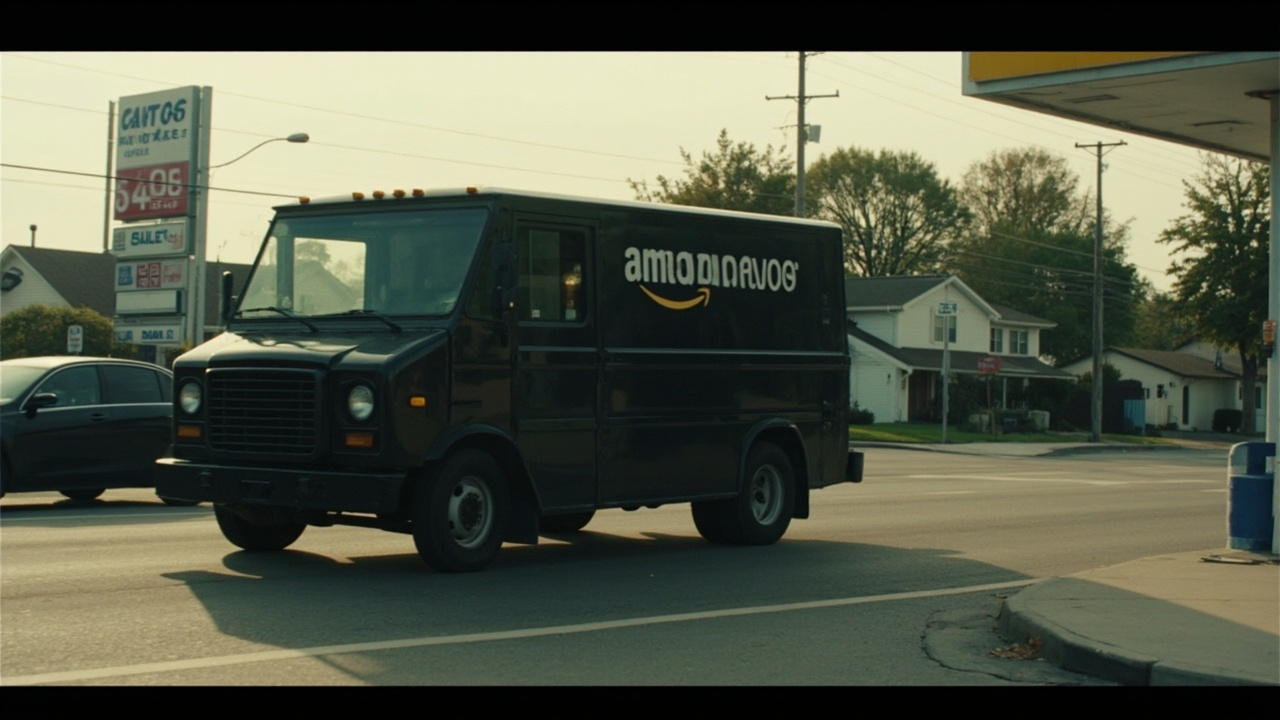
On Wednesday, Amazon notified the 2.3 million third-party sellers who use its Fulfilled by Amazon service that a 3.5 percent "fuel and logistics-related surcharge" would be applied to all FBA fees beginning April 17. [1] The notice, posted to Amazon's Seller Central portal, cited "elevated costs in fuel and logistics" without naming the war that caused them. Bloomberg's headline was corporate: "Amazon Imposes 3.5% Fuel Surcharge for Many Online Merchants." [2] CNBC's was slightly more direct: "Amazon to add 3.5% fuel and logistics surcharge for sellers amid Iran war." [3]
Neither headline captured what the surcharge actually is: the moment the Iran war arrived at the American shopping cart.
The math is straightforward. Gas hit $4.06 per gallon nationally as of April 1, up from $2.98 when the war began on February 28 — a 36 percent increase in 33 days. [4] Diesel, which powers the trucks that carry Amazon packages from fulfillment centers to front doors, hit $5.45. [5] Amazon operates over 1,000 fulfillment centers, sort centers, and delivery stations in the United States. Every one of them runs on diesel. Amazon's own delivery fleet — over 100,000 branded vans — runs on gasoline. The company's last-mile delivery partners, the independent contractors who make the actual doorstep drop, buy their own fuel. The surcharge passes this cost to sellers. Sellers will pass it to buyers. The buyer, scrolling through Amazon on a Thursday evening, will not see a line item that says "Iran war." They will see a price that is 3.5 percent higher than it was last month.
Amazon is not the first company to impose a fuel surcharge since the war began. FedEx and UPS applied surcharges in mid-March. [6] But Amazon is different because Amazon is the economy's plumbing. Sixty percent of all e-commerce sales in the United States flow through Amazon's marketplace. [2] Third-party sellers — the small and medium-sized businesses that list products on Amazon and pay Amazon to store, pack, and ship them — account for more than 60 percent of units sold on the platform. They are the ones who receive the surcharge notice. And they have no negotiating power.
Supply Chain Dive reported that the surcharge is structured as a flat percentage applied to all existing FBA fulfillment fees. [6] It is not tiered by product weight, category, or shipping distance. A seller shipping a $12 phone case from a fulfillment center in New Jersey pays the same percentage as a seller shipping a $400 kitchen appliance from a warehouse in Nevada. The surcharge is described as "temporary," but Amazon did not provide a sunset date, a trigger for removal, or a benchmark price at which it would be rescinded. Barrons noted that Amazon imposed similar surcharges during the 2022 fuel spike and took months to remove them after prices fell. [7]
The surcharge enters an ecosystem that was already under stress. Amazon raised FBA fees in January, before the war. Sellers on X have been calculating the compounding effect: January's fee increase plus the 3.5 percent surcharge means some products now carry fulfillment costs that exceed 40 percent of the sale price. [8] For low-margin products — household goods, consumables, accessories — the math breaks. Sellers either raise prices, absorb the loss, or stop selling.
This is how a war in the Persian Gulf becomes a price on a bottle of shampoo in Ohio. The transmission mechanism is not abstract. It is diesel, which powers the trucks, which move the goods, which fill the fulfillment centers, which ship the packages, which arrive at the door. Diesel prices are set by global crude markets. Crude markets are set by supply and demand. Supply has been constrained since Iran closed the Strait of Hormuz to tanker traffic on March 8, removing 21 million barrels per day of transit capacity from the global market. Brent crude closed above $112 on Thursday. [9] WTI has not been below $100 since the second week of the war.
The war's consumer impact has been building in stages. Stage one was gasoline: Americans noticed when they filled their tanks. Stage two was airfare: jet fuel surcharges appeared on domestic routes in mid-March. Stage three was groceries: diesel-dependent supply chains raised wholesale prices. Stage four is e-commerce. Amazon's surcharge is stage four. It is the stage where the war stops being something on the news and starts being something on the receipt.
The distinction between MSM's framing and X's framing is instructive. Bloomberg and the Wall Street Journal covered the surcharge as a corporate logistics story — Amazon managing costs, sellers absorbing impact, temporary measure. [2] [10] X saw something different. Sellers on the platform described it as "the war tax." One post read: "Amazon should call this a 'Trump Iran War' surcharge." [8] Another calculated that a typical FBA seller with $500,000 in annual revenue would pay an additional $17,500 in fulfillment costs — more than many small business owners take home in a month. The surcharge does not distinguish between a corporation with 200 employees and a couple selling handmade candles from their garage.
Amazon's notification to sellers did not mention Iran, Trump, the Strait of Hormuz, or the war. It mentioned "elevated costs." The passive voice was doing considerable work. Costs did not elevate themselves. They were elevated by a war that closed a shipping chokepoint, spiked global crude prices, and sent diesel to its highest level since June 2022. The surcharge is a consequence of policy, not weather. But Amazon framed it as weather.
The 3.5 percent will not be the last number. If Brent stays above $110, if the Strait remains closed, if the war continues into its sixth and seventh weeks as Trump's own timeline suggests, the surcharge will either increase or become permanent. Amazon's 2022 precedent is instructive: the fuel surcharge imposed that April lasted until November, months after gas prices had peaked and begun falling. The ratchet turns one way.
For the 2.3 million sellers who received the notice on Wednesday, the war is no longer a geopolitical event. It is a line item on a fee schedule. For the tens of millions of American consumers who will pay higher prices starting April 17, the war is no longer something happening in Iran. It is something happening in their shopping cart.
-- THEO KAPLAN, San Francisco