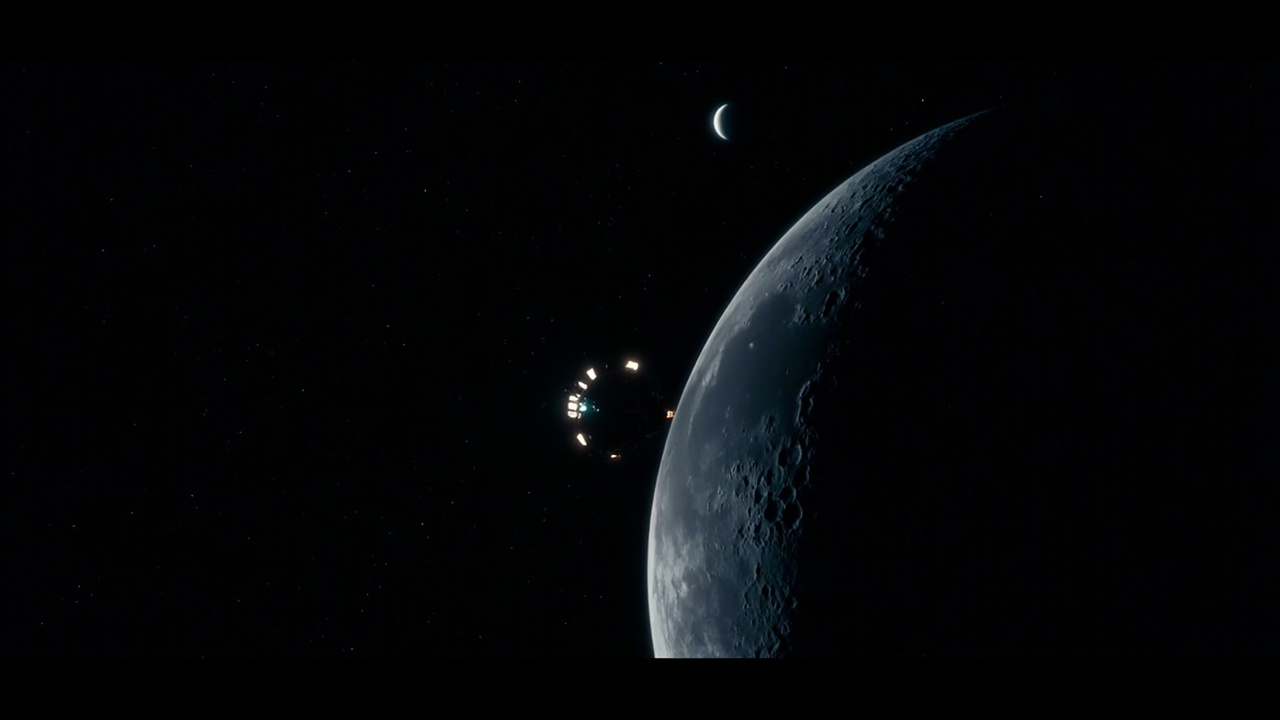
At sunrise on Flight Day 4, the Artemis II crew woke 169,000 miles from Earth, approaching the Moon at 110,700 miles per hour. [1] The Orion spacecraft is on track for its lunar flyby tomorrow, April 6, when it will pass within 4,066 miles of the lunar surface at approximately 7:02 p.m. EDT -- the closest humans have been to the Moon since Apollo 17 in December 1972. [1] At 7:05 p.m., the crew will be 252,757 miles from Earth, surpassing Apollo 13's record for the farthest distance humans have traveled from the planet. [1]
This paper noted on Friday that the crew's first photographs of Earth from translunar trajectory arrived on a planet that could not resolve a 50-day government shutdown or a 36-day war. Tomorrow, the convergence sharpens. The flyby shares its calendar square with Trump's newly declared deadline for Iran to open the Strait of Hormuz -- a deadline punctuated by the promise of "Power Plant Day." The species' most advanced achievement and its oldest impulse arrive on the same Monday.
Flight Day 4
The crew -- Commander Reid Wiseman, Pilot Victor Glover, Mission Specialist Christina Koch, and Canadian Space Agency astronaut Jeremy Hansen -- spent Saturday preparing for tomorrow. Koch and Hansen conducted a 41-minute manual piloting demonstration beginning at 9:09 p.m. EDT, testing Orion's handling in two thruster modes: six degrees of freedom and three degrees of freedom. [2] It was the first time humans had hand-flown a spacecraft beyond low Earth orbit since Apollo. The data will inform Wiseman and Glover's repeat of the exercise on Flight Day 8.
The crew woke to music from Chappell Roan. [1] They reviewed a list of lunar surface features compiled by the science team -- impact craters, lava flows, color and texture variations that satellites might miss from orbit. [1] The Orientale basin, an impact crater described by Scientific American as "three times as wide as Massachusetts," is the primary observation target. [3] The crew trained with flashcards over several months to identify features during their five-hour observation window. [3]
They also took selfies using Orion's solar array wing cameras. [2] The images, relayed through a laser optical communications system that has already downlinked more than 100 gigabytes of data, showed four people in a capsule smaller than a minivan, grinning against the void. [1]
The Toilet
The toilet saga, which began hours after the April 1 launch when Koch reported a blinking fault light, reached its denouement on Saturday. [4] The original malfunction involved a clogged vent line -- an overnight wastewater dump "cut off too early, as if the line were clogged with ice," according to NASA. [3] Mission control tilted the capsule toward the sun to warm the system, achieving partial success: "By heating it up, we were able to get some of the urine out, but it clearly didn't solve the whole problem." [3]
By Flight Day 4, the toilet was operational but temperamental. NASA's blog noted the crew was "instructed to use backup collection devices overnight if needed," a euphemism for contingency urine bags. [1] The wastewater tank was not full. The system worked. It worked the way systems work when they are 169,000 miles from the nearest plumber.
Tomorrow
The flyby window opens at 2:45 p.m. EDT on Monday, when Orion's main cabin windows will be oriented toward the Moon. [2] At approximately 5:47 p.m., the spacecraft will pass behind the far side, entering a 40-minute communications blackout -- the first time humans have been completely out of contact with Earth since 1972. [1] Near the end of the flyby, the crew is expected to witness a solar eclipse from lunar orbit. [1]
The Space Launch System achieved "99.92 percent accuracy" in positioning Orion for its translunar trajectory. [3] The spacecraft has maintained course with what NASA called "surprising accuracy" since leaving Earth orbit. The precision is remarkable for a vehicle making its first crewed flight beyond the Van Allen radiation belts.
Four people, in a capsule that weighs less than two city buses, are about to do something only 24 humans have ever done. They will see the far side of the Moon with their own eyes. They will photograph terrain that no camera has captured from this angle at this resolution with a human observer present.
On the same day, back on the planet they left four days ago, a president will decide whether to bomb power plants. The convergence is not symbolic. It is calendrical. But the calendar, in this case, has produced a test of what the species is actually doing with its time.
-- KENJI NAKAMURA, Tokyo