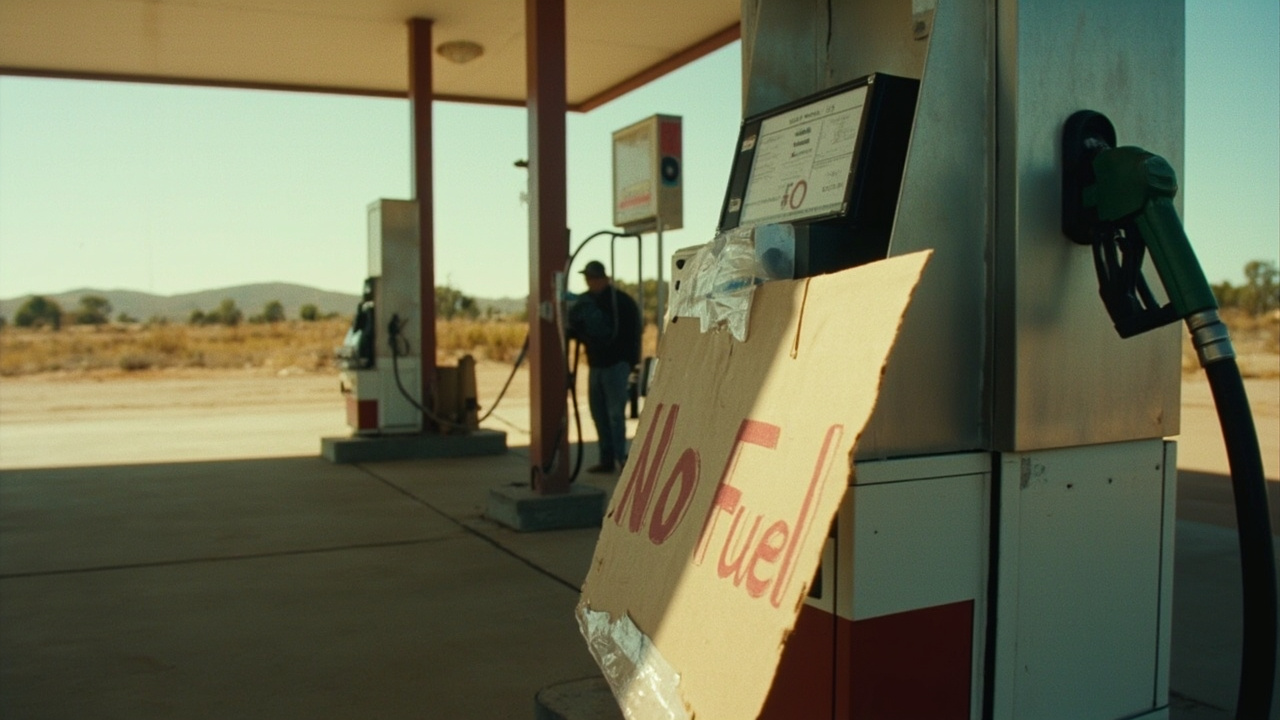
More than 500 petrol stations across New South Wales and Victoria have run dry, nearly tripling the 182 stations this paper reported were without fuel just days ago. [1] The Australian government's response to the Easter weekend: keep your travel plans.
Energy Minister Chris Bowen acknowledged on Friday that 312 stations remained without diesel out of roughly 8,000 nationwide, framing the figure as an improvement. [2] The number without petrol was higher but uncounted in his remarks. Bowen insisted that fuel supplies were "arriving on schedule" and that Australians should not cancel holiday travel. [1]
The reassurance sits awkwardly against the facts. The government has already lowered diesel fuel quality standards for six months to allow a broader range of imports into the domestic market. [3] It has released hundreds of millions of litres from emergency reserves. It has directed refiners to prioritize domestic supply. These are not the actions of a government managing a temporary inconvenience. They are the actions of a government managing a structural supply deficit whose timeline is measured in months, not days.
The cause is not mysterious. The war in the Middle East has disrupted shipping routes through the Strait of Hormuz, and Australia -- which imports roughly 90 percent of its refined fuel -- sits at the far end of every supply chain affected by the conflict. Six tankers bound for Australian ports were delayed by Iran-related shipping disruptions in March alone. [1] The country has approximately one month of backup reserves, a figure that has alarmed energy analysts since it first became public.
What makes Australia's crisis distinctive is its context. This is a first-world nation with a $1.7 trillion economy telling its citizens to plan their Easter road trips around which service stations still have fuel. Farmers in rural NSW are reporting diesel shortages that threaten planting schedules. Trucking companies are rationing loads. The downstream effects -- on food prices, on logistics costs, on the simple ability of people in regional towns to get to work -- are accumulating quietly while the government insists the situation is under control.
The comparison to COVID-era supply disruptions is not lost on Australians. On X, threads circulate comparing fuel station maps to pandemic lockdown zones. The difference is that COVID disruptions had a visible end point. This one depends on geopolitics that no Australian politician can influence.
Australia is learning what an energy-import-dependent nation looks like when the world's most critical chokepoint closes. The lesson is expensive, and it has only begun.
-- PRIYA SHARMA, Delhi