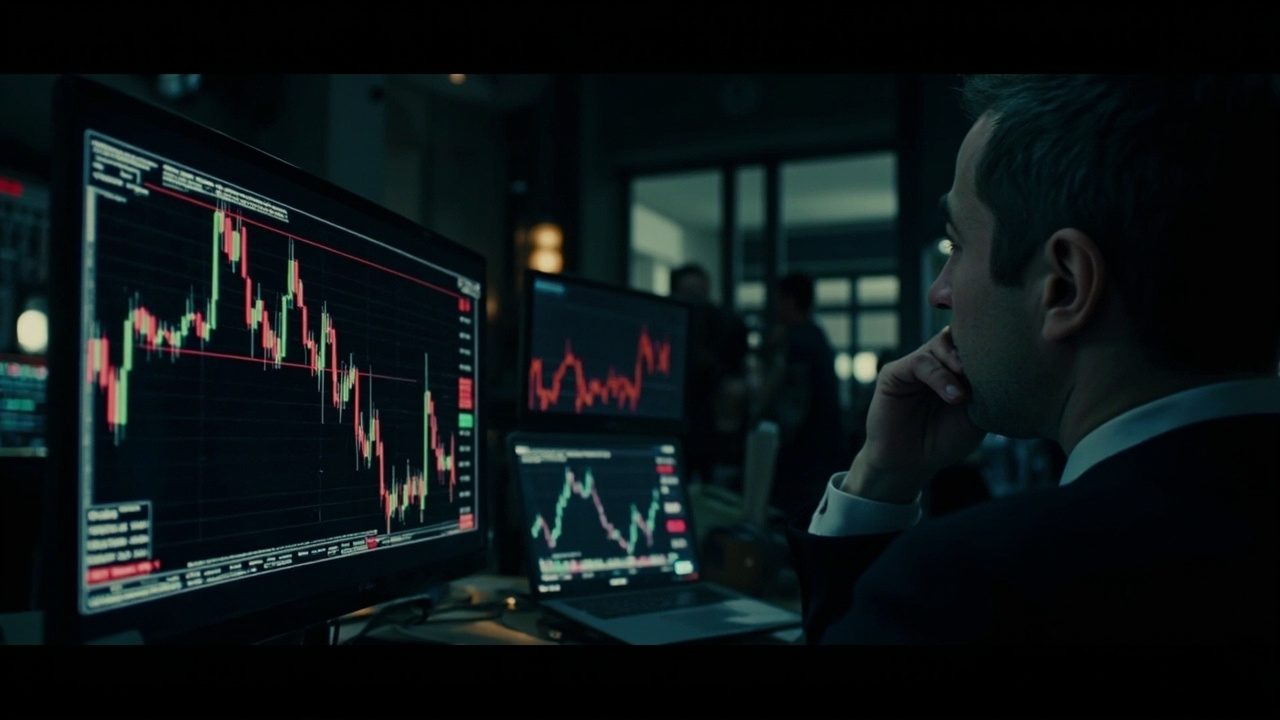
Brent crude opened at $100.30 on Wednesday, April 2. It closed at $108.84. In between, it hit $109.71 and dipped as low as $99.02. [1] A nearly $11 intraday range on the world's benchmark crude contract. That is not a market responding to a crisis. It is a market that has become the crisis.
As this paper noted yesterday, the oil market has become a mood ring for presidential statements. Wednesday's swing was no different. The opening decline toward $99 followed overnight reports of a Turkish mediation channel and whispers that the April 6 deadline might produce a ceasefire framework. The afternoon surge past $109 followed Trump's Truth Social post: "Bridges next, then Electric Power Plants!" [2] Escalation and de-escalation, compressed into a single trading session, producing a chart that looks less like a commodity price and more like an electrocardiogram.
The data are worth cataloging because they tell the story of a war premium that has become structural. On February 27, the day before the first US-Israeli strikes on Iran, Brent settled at $72.16. [1] One month later, on March 28, it was at $106.22. It fell briefly below $100 on April 1, on reports of the China-Pakistan five-point peace plan, then immediately reversed when Iran rejected it. Wednesday's session established a new pattern: the floor is $100. The ceiling is wherever the latest presidential post takes it.
The Robinhood prediction market for WTI crude on April 3 priced "$106 or above" at 62 cents — a 62% probability that WTI would settle above the psychologically significant triple-digit threshold. [3] That contract was at 8 cents on February 27. The prediction market is not forecasting oil prices. It is pricing the probability that the war continues. Sixty-two cents means the market sees a roughly two-in-three chance that Thursday ends with oil above the level that triggers widespread economic damage.
Barchart's historical data confirms the structural shift. [4] Pre-war Brent averaged $71 in January and $73 in February. March averaged $98. The first two days of April averaged $104. Each month, the floor rises. Each escalation that should produce a ceiling instead produces a new floor. The $80 barrier broke in the first week of war. The $90 barrier broke in the second. The $100 barrier broke in the fourth. The only question is whether $110 is next week's floor or next month's.
The institutional response has been revealing. Goldman Sachs raised its year-end Brent forecast to $130. BlackRock warned clients that $150 is possible if the Strait of Hormuz remains effectively closed through the summer. Neither forecast existed before February 28. Both now read as conservative.
What makes the April 2 session distinctive is not the high or the low but the range between them. A $10.69 intraday swing on Brent is rare in peacetime. In five weeks of war, it has become ordinary. The market is not pricing oil. It is pricing the next twelve hours of a president's social media activity, the next Iranian drone strike, the next diplomatic whisper. The war premium is not a premium added to a base price. The war premium is the price. Remove the war and the price is $72. The other $36 is conflict, blockade, and uncertainty.
Every gas station in America, every diesel pump in Europe, every fuel tanker sailing the long route around the Cape of Good Hope instead of through Hormuz — all of it sits inside that $10 range. The market opened at $100.30 and closed at $108.84. Tomorrow it will do something similar. The range is the war.
-- HENDRIK VAN DER BERG, Brussels