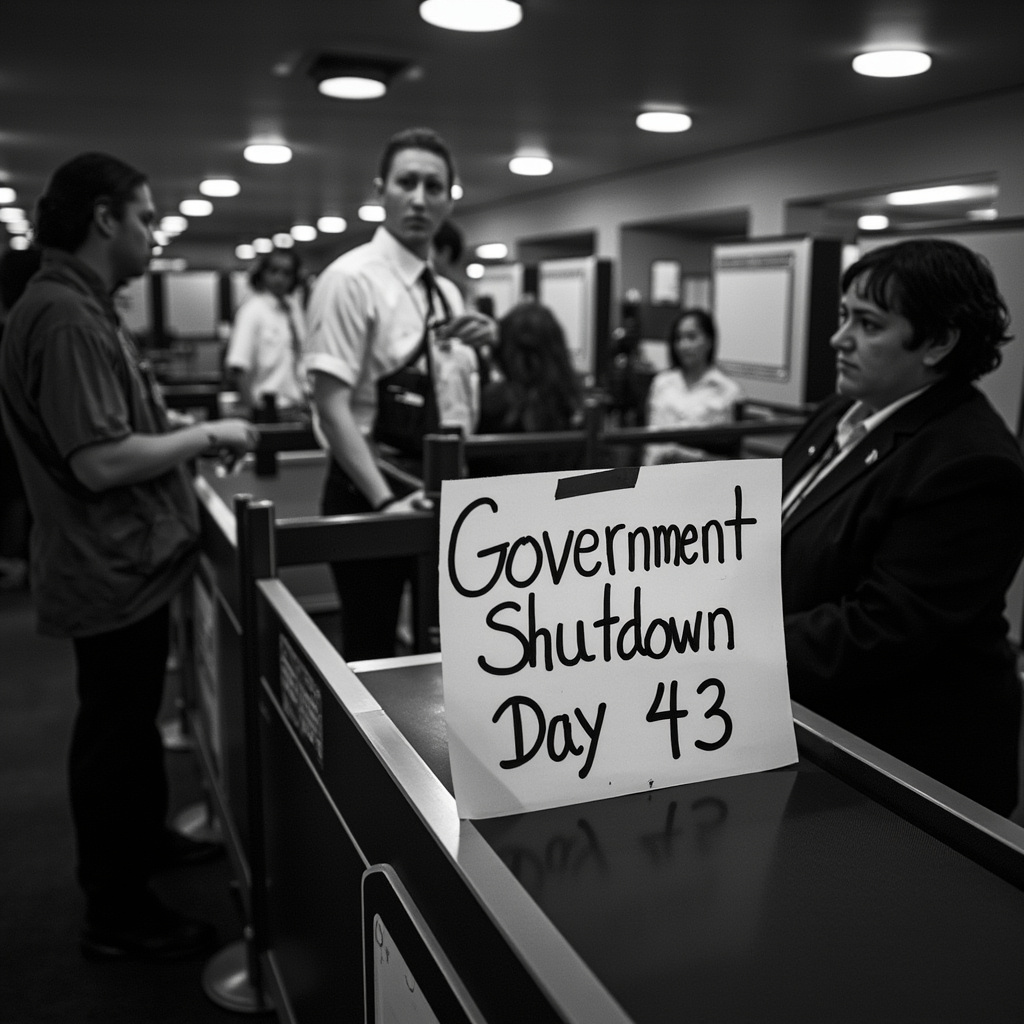
The DHS shutdown entered its 45th day on Monday. The Senate has not voted on the House's 60-day continuing resolution. The longest funding lapse for any federal department in American history has become, by the mechanism of sustained duration, ordinary.
The paper's accounting of what the shutdown actually costs documented the human dimension: TSA officers working without guaranteed pay, CBP staffing levels at coastal crossings that cannot sustain normal operations, FEMA grant programs paused with hurricane season approaching. The daily costs have not changed. The coverage has. [1]
Day 45's news: TSA officers were told Monday they could expect paychecks — not through a funding resolution, but through a court order requiring the government to honor its payroll obligations to essential workers. The administration announced this as though it were a policy choice. It was a legal compulsion.
The House passed a 60-day patch on a party-line vote. Senate Democrats have objected to the patch's immigration enforcement provisions, which mirror the DOGE-era proposals that triggered the original funding standoff in February. The Senate Republican caucus does not have the votes for cloture. The administration has not offered new terms. The shutdown continues because everyone who could end it has concluded that the political cost of ending it on the other side's terms exceeds the political cost of the shutdown itself.
This is a structural contradiction that the war has made easier to sustain. The president who is conducting an unauthorized war against Iran cannot simultaneously argue that DHS — the department that handles domestic security — is being adequately funded. Except he can, because the war has consumed the attention that would otherwise focus on the shutdown. The Iran war is, among other things, a DHS shutdown management tool.
Normalization is what happens when a crisis persists long enough that it stops being news. Day 1 of the shutdown was news. Day 21 was a milestone story. Day 44 broke the record. Day 45 gets a feature brief. By Day 60, if the shutdown reaches Day 60, the coverage will be: "Day 60." [2]
The airports are staffed. The borders are monitored. The essential work continues, performed by people who are being told their paychecks will arrive because a court said they must. That is not a functioning government. It is a government performing functionality while its legal authorization to spend money lapses into its seventh week.
Nobody is counting. The administration is grateful.
-- SAMUEL CRANE, Washington