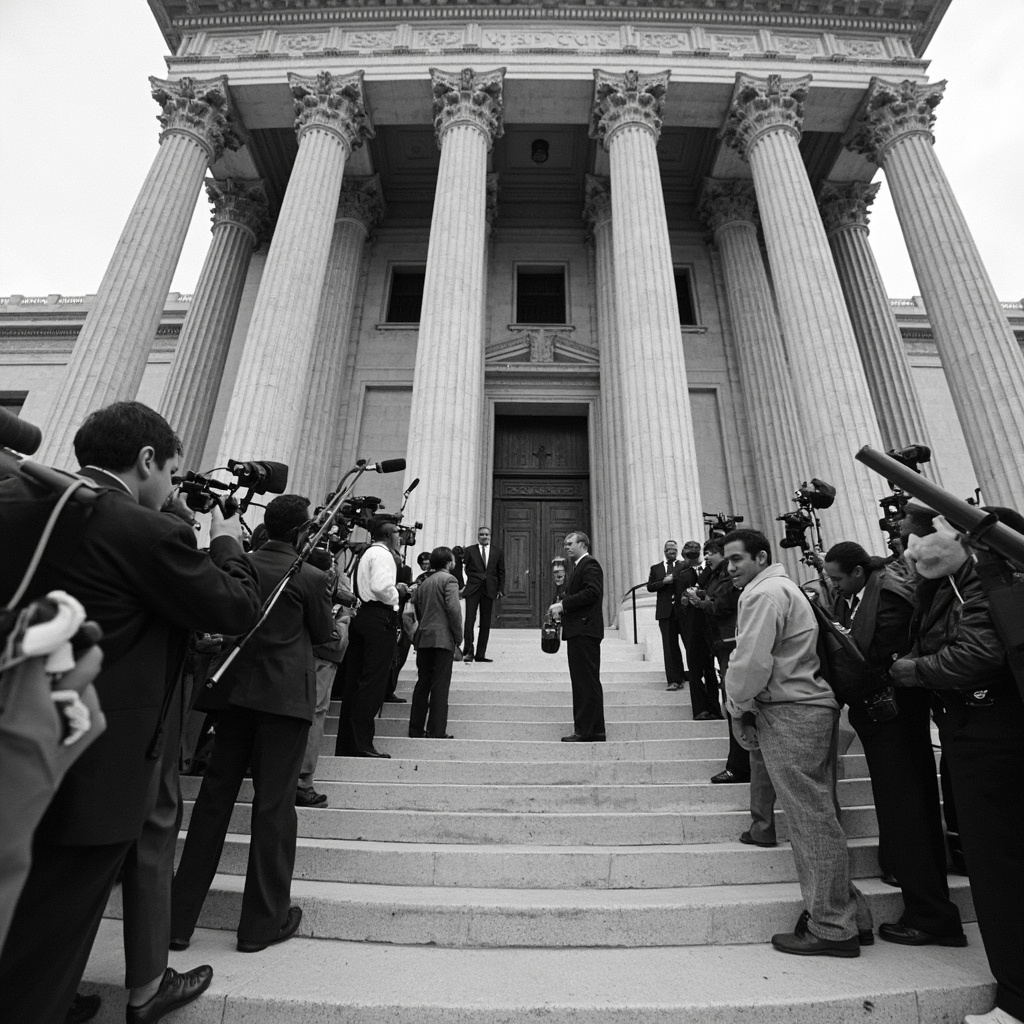
The federal prosecution of Don Lemon, charged in January with conspiracy and obstruction after livestreaming an anti-ICE protest at a Minneapolis church, showed visible cracks at this week's preliminary hearing in Los Angeles federal court, with the government's key witness offering testimony that undercut its own theory of the case [1].
Lemon was arrested on January 30, 2026, along with eight others, after a federal grand jury indicted them for allegedly conspiring to obstruct ICE enforcement operations by barricading themselves inside Iglesia de la Paz, a Lutheran church that had declared itself an immigration sanctuary. The indictment described Lemon as a participant in the conspiracy, alleging that he had foreknowledge of the occupation and used his social media platform to recruit participants. If convicted, he faces up to five years in federal prison [2].
The prosecution's theory rested on two pillars: that Lemon helped plan the church occupation rather than merely covering it, and that his livestream constituted active participation in obstruction by alerting others to ICE movements. At this week's hearing, both pillars wobbled.
The government's primary witness, a Temple University student who was arrested inside the church, testified under cross-examination that he had never met Lemon before the day of the protest and that his earlier statement to FBI agents — in which he said Lemon "helped plan the whole thing" — was made under duress during a 14-hour interrogation without counsel [3]. The student's attorney had already filed a motion to suppress the statement; the testimony at the hearing provided the defense with ammunition to argue that the government's case is built on coerced evidence.
The livestream evidence is similarly contested. Lemon's defense team, led by a former Minnesota prosecutor who resigned in protest against Trump administration policies, argued that the livestream was journalistic activity protected by the First Amendment. The defense presented evidence that Lemon was credentialed as an independent journalist at the time, that he did not enter the church until after the occupation had begun, and that his stream showed him reporting on events rather than directing them [4].
Legal analysts have been blunt in their assessments. Elie Honig, CNN's senior legal analyst, identified two fundamental problems with the prosecution: the lack of direct evidence of pre-planning involvement and the constitutional problems with criminalizing a journalist's coverage of a newsworthy event [5]. Andrew Weissmann, a former federal prosecutor, wrote on social media that the case "looks like it was brought for its headline value, not its evidentiary strength."
The broader significance extends well beyond Don Lemon's legal fate. The case is the highest-profile prosecution of a journalist by the Trump administration's Department of Justice under Attorney General Pam Bondi. It was announced with considerable fanfare — Bondi held a press conference calling Lemon "an activist masquerading as a journalist" — and was widely understood as a signal to the press corps: adversarial coverage of immigration enforcement carries personal risk [6].
If the case collapses, that deterrent evaporates. Not just for Lemon, but for every journalist calculating the risks of covering ICE operations, immigration raids, and sanctuary movements. The prosecution's power was never primarily about conviction — it was about the chilling effect. A reporter considering whether to livestream an ICE action thinks differently when a colleague is under federal indictment for doing exactly that.
The defense filed a motion on March 31 to dismiss the charges entirely, arguing that the indictment fails to allege conduct that constitutes a crime and that prosecuting a journalist for covering a protest violates the First Amendment. The judge has scheduled a hearing on the motion for April 14 [7].
Press freedom organizations have rallied behind Lemon with unusual intensity. The Committee to Protect Journalists, Reporters Without Borders, the Reporters Committee for Freedom of the Press, and PEN America have all filed amicus briefs. The ACLU has provided legal support. The case has generated more institutional solidarity than any press freedom matter since the Trump administration's prior-era disputes with CNN over Jim Acosta's White House access — a controversy that now looks quaint by comparison [8].
The outcome matters for reasons that transcend the defendant. If the government can prosecute a journalist for livestreaming a protest, the definition of "journalism" becomes a question that prosecutors rather than editors answer. That is a line that, once crossed, does not un-cross.
-- Anna Weber, Berlin