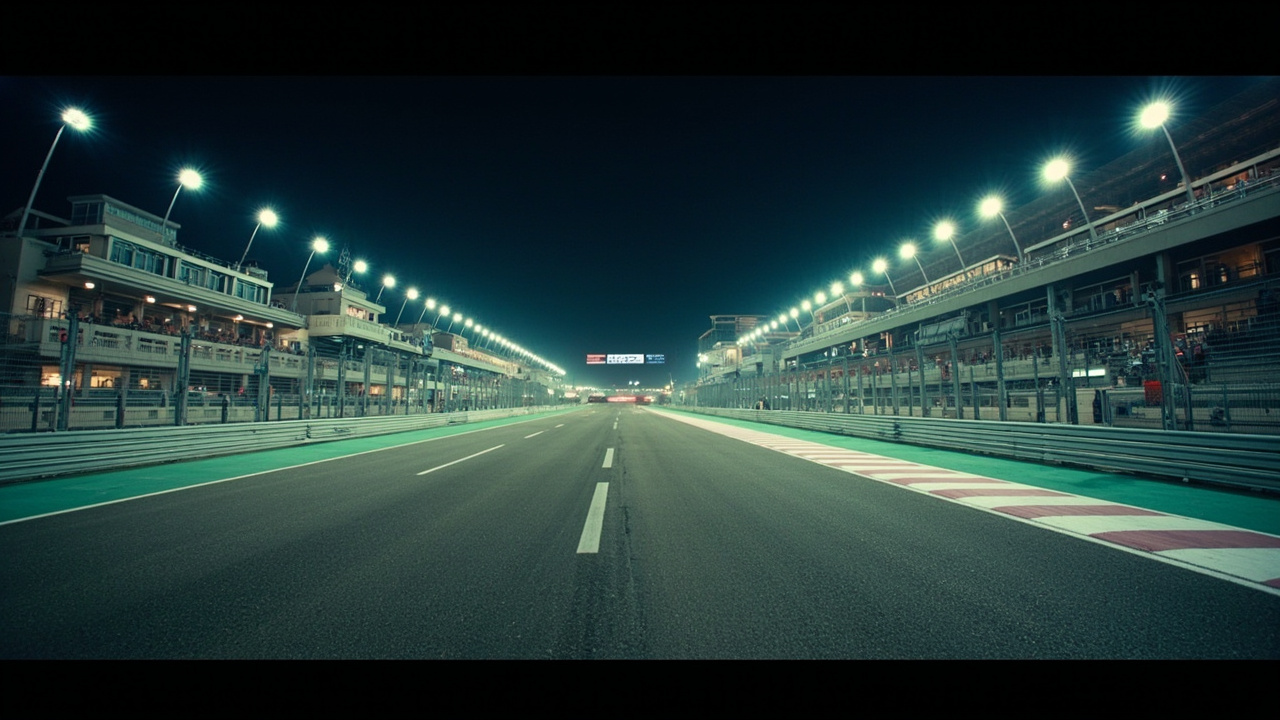
Formula 1 and the FIA have officially cancelled the Bahrain Grand Prix, scheduled for April 12, and the Saudi Arabian Grand Prix, set for April 19, citing security concerns arising from the Iran war [1][2]. The 2026 calendar shrinks from 24 races to 22. No replacement rounds have been announced. A four-week void now separates the Japanese Grand Prix in Suzuka from the Miami Grand Prix — an awkward caesura in what was supposed to be the sport's most packed season ever [5].
The cancellations are not isolated. They are the most visible fractures in a regional sports infrastructure that the Gulf states have spent the better part of a decade — and tens of billions of dollars — constructing. That infrastructure is now buckling under the weight of the very geopolitical instability it was designed to transcend.
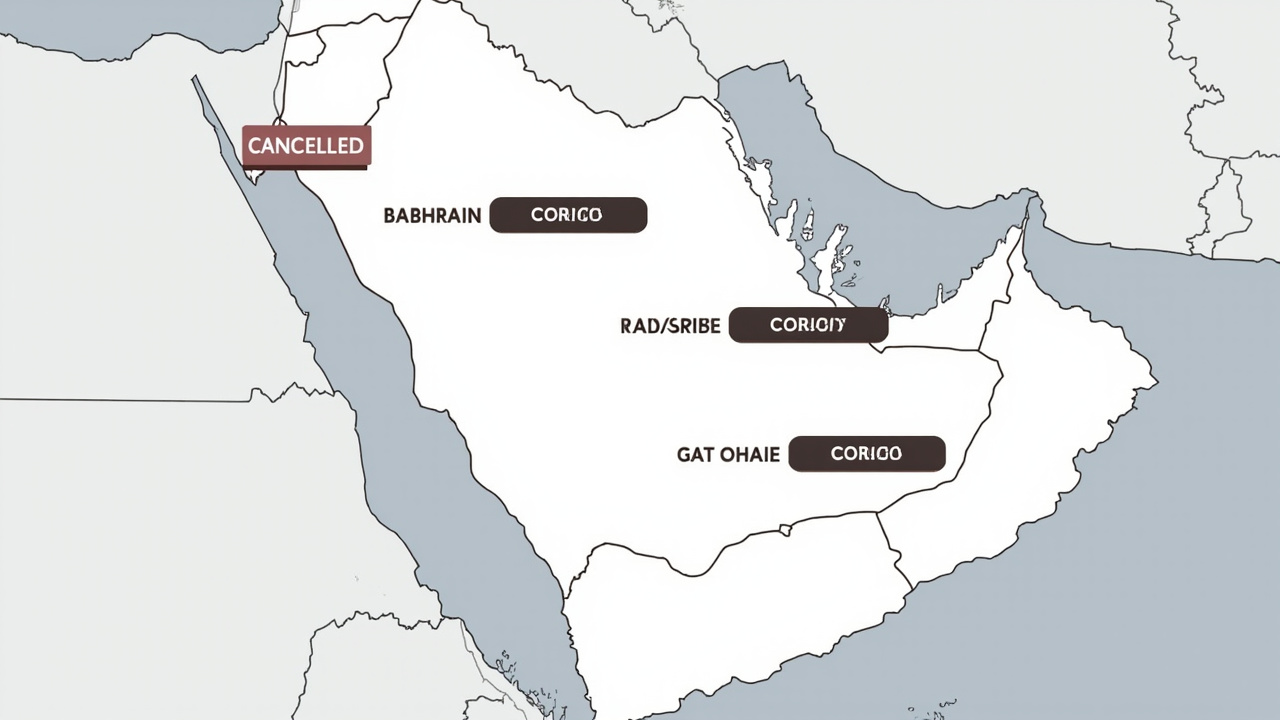
All Iranian domestic sport has been suspended. The Persian Gulf Pro League, Iran's top football division, is cancelled for the remainder of the season [3]. The AFC Champions League, which had drawn Gulf and Asian clubs into a single competitive framework, has been gutted — Iranian clubs withdrawn, fixtures involving regional travel rerouted or scrapped [4]. The World Triathlon Championship Series event in Abu Dhabi has been reduced to juniors only, its elite field scattered by travel advisories and team withdrawals [6]. Qatar's Football Festival, a marquee showcase event, has been cancelled outright. The Finalissima between Spain and their opponents — a fixture meant to consecrate South American and European champions on Gulf soil — will not take place [4].
The pattern is unmistakable. Bahrain, Saudi Arabia, Qatar, and the UAE positioned themselves as neutral ground for global sport, a geography defined not by borders and sectarian fault lines but by air-conditioned stadiums and floodlit circuits. The logic was simple and, for a time, effective: pour enough money into hosting rights, and the world will see you as a venue, not a conflict zone. Saudi Arabia alone committed an estimated $6 billion annually to its sports strategy, a centrepiece of Vision 2030 [7]. Bahrain's Sakhir circuit was the first purpose-built F1 track in the Middle East, opened in 2004 as a statement of regional modernity.
That logic assumed the region's wars would remain somebody else's problem. The Iran conflict has dissolved the assumption. Insurance premiums for sporting events in the Gulf have spiked. Broadcasters have flagged force majeure clauses. Teams and athletes, surveying a map where missile defence systems are active within a few hundred kilometres of race venues, have made rational calculations about acceptable risk [8].
F1's decision was commercially painful but operationally inevitable. The Bahrain and Saudi rounds together represent significant hosting fee revenue — each country pays north of $60 million annually for the privilege. Liberty Media, F1's parent company, will absorb the shortfall without replacement income unless it can negotiate late additions to the European or Asian legs of the calendar. That prospect grows dimmer as logistics chains tighten.
The deeper wound is reputational. The Gulf's sporting calendar was never merely about sport. It was a geopolitical argument rendered in carbon fibre and grass pitch — the proposition that economic integration and global attention could insulate a region from its own contradictions. For years, critics called it sportswashing. The states themselves called it modernisation. What the Iran war has demonstrated is that neither framing accounts for the simplest variable: geography. You cannot host a Grand Prix within range of a ballistic missile exchange and expect the circus to keep rolling.
The 2026 F1 season will proceed, diminished. The Gulf's sports ambitions will, eventually, resume. But the illusion of invulnerability — the idea that enough money could purchase immunity from regional entropy — is the first and most consequential casualty.
-- AMARA OKONKWO, Lagos