TL;DR
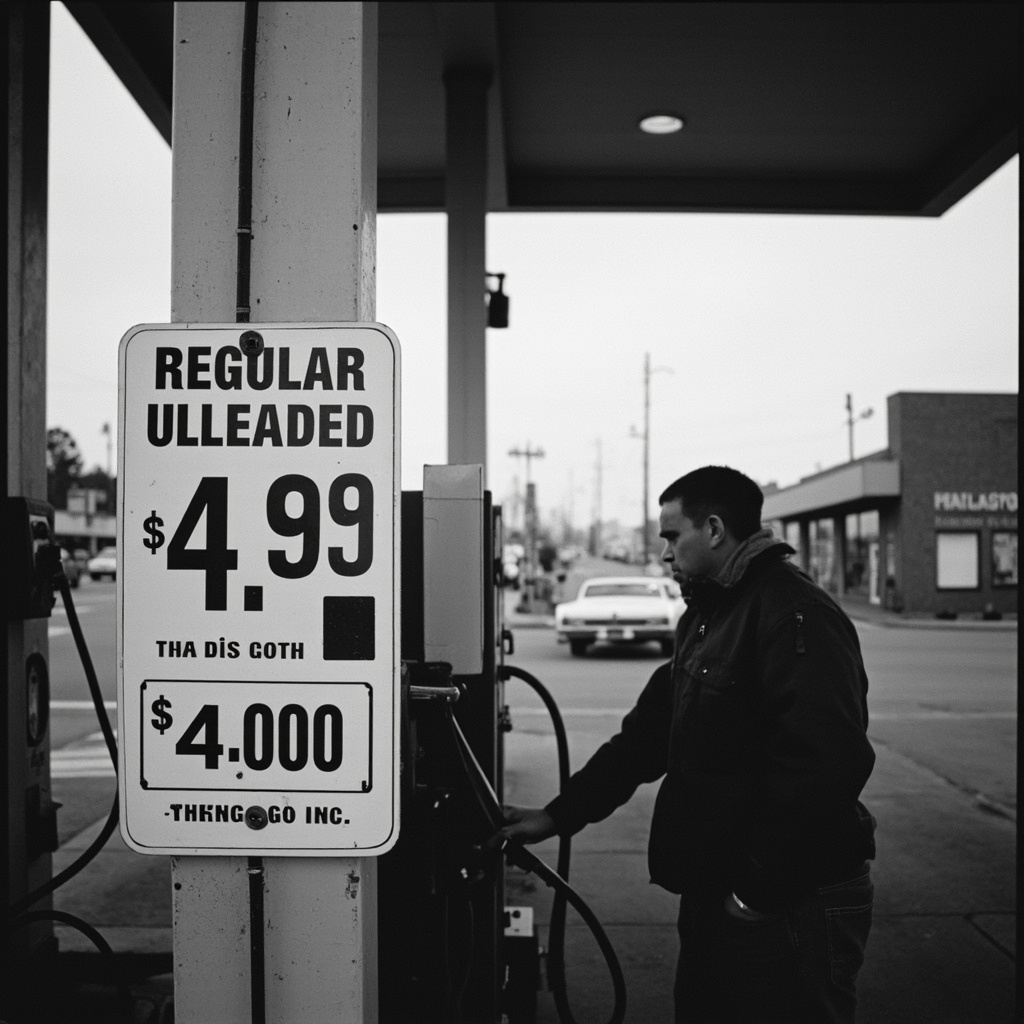
The national average for regular gasoline crossed $4 per gallon Monday — up $1.02 since the war began on February 28, and $4 before summer driving season peaks.
MSM Perspective
AAA and the Hill reported the $4 threshold as a consumer milestone; the war causation — explicitly a dollar-per-gallon transfer from wallets to the war premium — has been secondary.
X Perspective
X is connecting the gas price to the domestic cost of the war more directly than any Washington official has — '$4 gas is a war tax,' trending since Sunday night.
The national average price for a gallon of regular gasoline crossed $4.00 Monday, according to AAA — the first time since 2022 and thirty days into a war that has added one dollar per gallon to the price Americans pay to commute, run a business, or heat a home with fuel oil. [1] [2]
The trajectory is precise. On February 27, the day before the first US-Israeli strikes on Iran, the national average stood at $2.98. The AAA weekly data shows the progression: $3.02 in early March, $3.50 by March 9, $3.72 by mid-month, $3.96 by March 23, and now $4.00. [1]
This paper reported the $3.98 milestone last week as the moment the war became a number on every gas station sign in America. The number changed by two cents. The story did not. [2]
The $4 threshold carries symbolic weight disproportionate to the increment. It is the number Americans use to mark energy crises: $4 in the 2008 financial crisis, $4 in the 2022 Ukraine shock. Both prior instances were associated with political consequences — falling approval ratings, recession narratives, congressional pressure. The current administration's response to the gas price question has been the same as its response to the protest question: studied indifference. [3]
The summer driving season has not begun. AAA and GasBuddy both project the national average will approach $4.50 before the July peak if the Hormuz disruption holds and oil remains above $100. At that level, the annual gasoline expenditure for the average American household rises by roughly $1,800 compared with pre-war. That is the war's domestic tax, paid in cash at the pump, with no congressional vote. [1] [2]
-- HENDRIK VAN DER BERG, Brussels
Sources & X Posts
News Sources