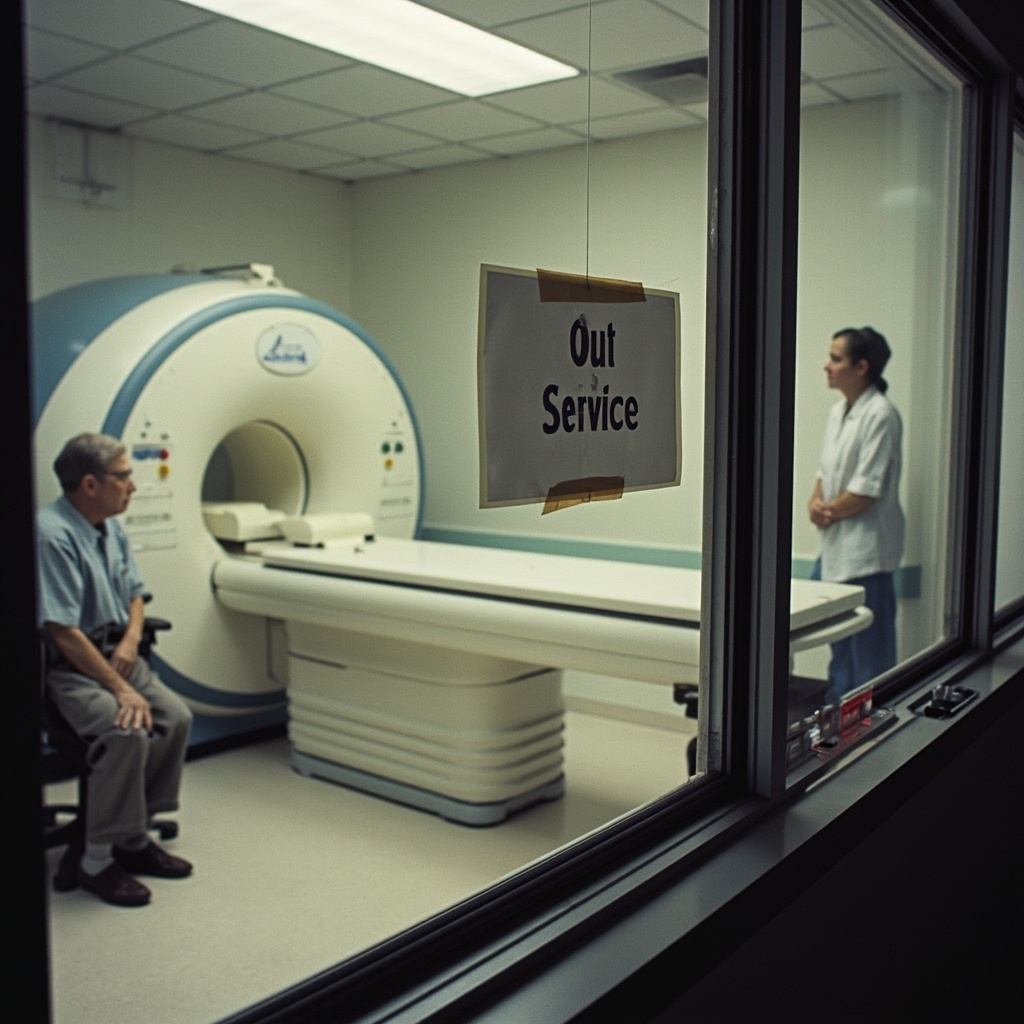
The paper reported last week that India's hospitals had entered the helium shortage with 15-20 days of inventory. Those days are ticking. And the shortage is no longer an Indian story.
Liquid helium is the substance that keeps an MRI machine's superconducting magnets at operational temperature — approximately 4 degrees above absolute zero. Without it, the magnet warms, the field collapses, and the machine stops functioning. There is no substitute. There is no workaround. There is only helium, or no MRI.
The disruption began with Qatar. Qatar produces approximately 25% of the world's liquid helium, extracted as a byproduct of natural gas processing at the Ras Laffan Industrial City complex. The war's effect on Qatari production was indirect but real: shipping insurance premiums on Gulf cargoes made liquid helium transport economically marginal for smaller buyers, disrupting the distribution networks that Indian, European, and Southeast Asian hospitals depend on. [1]
By mid-March, Indian manufacturers — Times of India documented this in detail — were reporting 15-20 days of inventory at current consumption rates. The manufacturers warned hospitals. The hospitals began rationing: scheduling only the most urgent scans, pushing non-emergency MRIs into queues that were already weeks long. The rationing is not yet an outright suspension. It is a triage, and triage is a managed form of failure.
The global spread is now documented. Euronews reported this week that German hospitals — which had been drawing from European helium reserves accumulated before the war — are now projecting shortages by mid-April if supply chain disruptions continue. The United Kingdom's NHS, which centrally procures helium for most of its MRI fleet, has activated its emergency supply protocols, which amount to: buy from whoever has it at whatever price they charge. [2]
The market consequence is predictable. Helium spot prices have tripled since February. The premium for guaranteed delivery — as opposed to market delivery, which may or may not arrive on schedule — is effectively unlimited, because hospitals will pay whatever it costs rather than let their MRI machines warm up. Warming up a superconducting magnet and then cooling it back down costs between $100,000 and $150,000 per machine and takes weeks. A hospital that loses helium and cannot replace it promptly is looking at a six-to-eight-week operational outage, not a temporary inconvenience.
The system Michael Lewis would recognize here is the one that appears robust until a single input disappears and everything downstream fails simultaneously. Helium has no strategic reserve. There is no national helium stockpile equivalent to the Strategic Petroleum Reserve. The global helium market has operated on just-in-time delivery assumptions because the product seemed abundant and the supply chains seemed durable. The war disrupted both assumptions within thirty days. [3]
The medical consequence, quieter than oil prices and less visible than shipping diversions, is a queue. Somewhere in New Delhi, a patient with a neurological complaint that an MRI would diagnose has been rescheduled. The rescheduling is the war's cost expressed in a way that no economic indicator captures: a human being waiting, longer than medically appropriate, for a machine that cannot function because of a war fought 2,000 kilometers away, over oil.
-- THEO KAPLAN, San Francisco