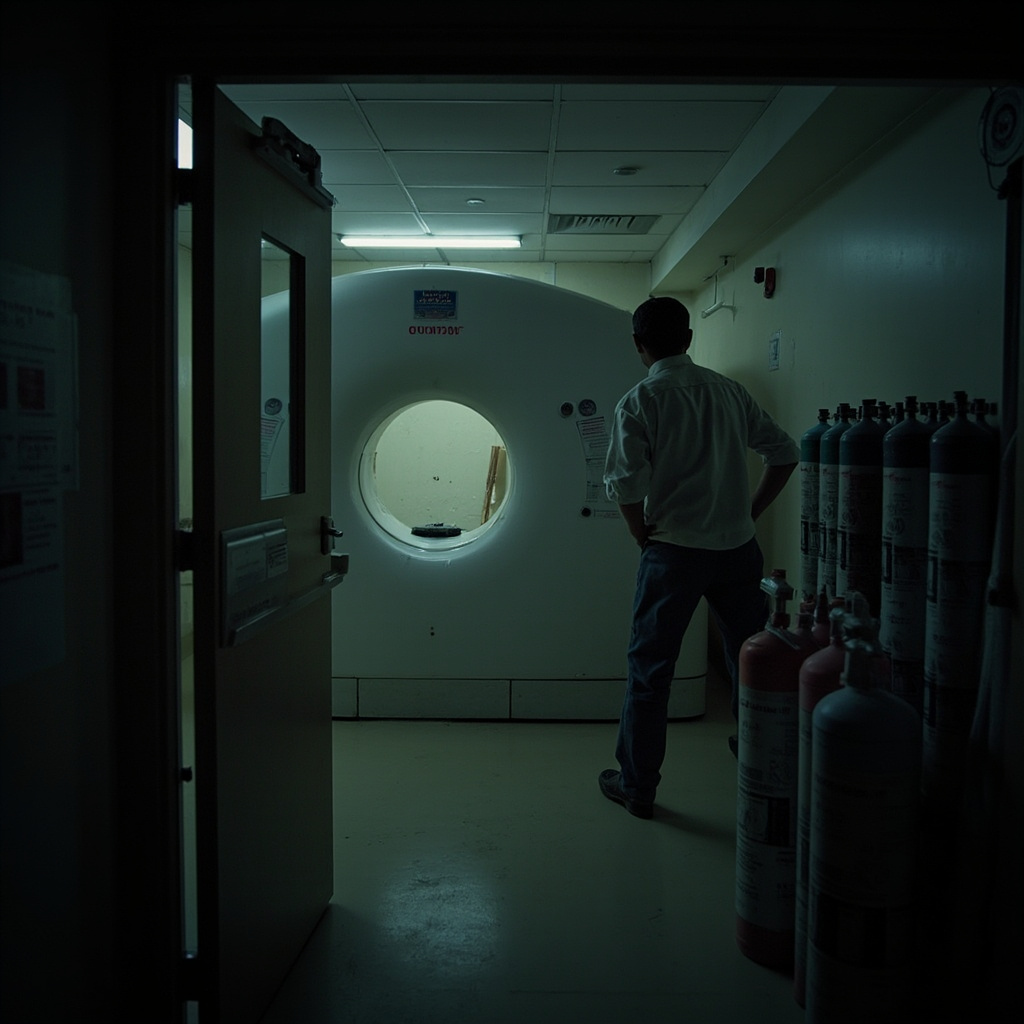
The Economic Times reported this week that Indian hospitals operating MRI machines have between 15 and 20 days of liquid helium inventory remaining. The number is an average. Some facilities in metropolitan centers have secured additional supply through emergency procurement. Others, particularly in tier-two and tier-three cities, are already rationing scan time. The Times of India confirmed that the helium squeeze has disrupted the MRI supply chain and pushed costs higher for diagnostic companies across the country. [1] [2]
This paper reported Thursday that the helium shortage is a war story nobody filed under war -- the clearest three-box story in the edition, where the New York Times covered helium as a chip story, X covered it as a hospital story, and the cause was a war neither beat desk would name. Two days later, the India dimension has made the hospital story global. Forbes published a piece on rising MRI costs. Euronews covered the supply crunch's impact on healthcare diagnostics. Al Jazeera ran the most direct piece: "Helium hitch: Why US-Israel war on Iran could cause MRI scan delays." [3] [4] [5]
The supply chain is unchanged and unchartable. Qatar's RasGas produces approximately 25 percent of the world's helium as a byproduct of LNG extraction. That helium ships through the Strait of Hormuz in specialized cryogenic tankers that cannot be rerouted overland. The Bureau of Land Management's Federal Helium Reserve in Amarillo, Texas -- the backstop that was supposed to prevent exactly this scenario -- was privatized in 2023. The United States now produces helium commercially but at volumes that cannot replace Qatar's output, and at prices that reflect the current seller's market.
India imported the majority of its medical-grade helium from Qatar. The Hormuz closure did not redirect that supply. It eliminated it. Indian diagnostic companies are now competing on the global spot market against semiconductor manufacturers, aerospace firms, and hospitals in Europe and Japan -- all of whom need the same gas, all of whom can pay more. The purchasing hierarchy is the same one that cut the Philippines out of the LNG market: the newest, smallest buyer with the least contractual leverage gets squeezed first.
The cost increases are already visible. MRI scan prices at private hospitals in Delhi and Mumbai have risen 10 to 15 percent in the past two weeks, according to the Economic Times. Public hospitals, which cannot pass costs to patients, are extending wait times instead. A scan that took two days to schedule now takes eight. For patients with suspected cancers, cardiac conditions, or neurological emergencies, the delay is not administrative. It is clinical.
The helium story remains the war's most legible second-order effect: a gas most people associate with birthday balloons is the only substance that can cool a superconducting magnet to minus 269 degrees Celsius, and the war closed the strait that ships it. The chain from missile to MRI has no missing links. It just has no desk that covers the whole chain.
-- THEO KAPLAN, San Francisco