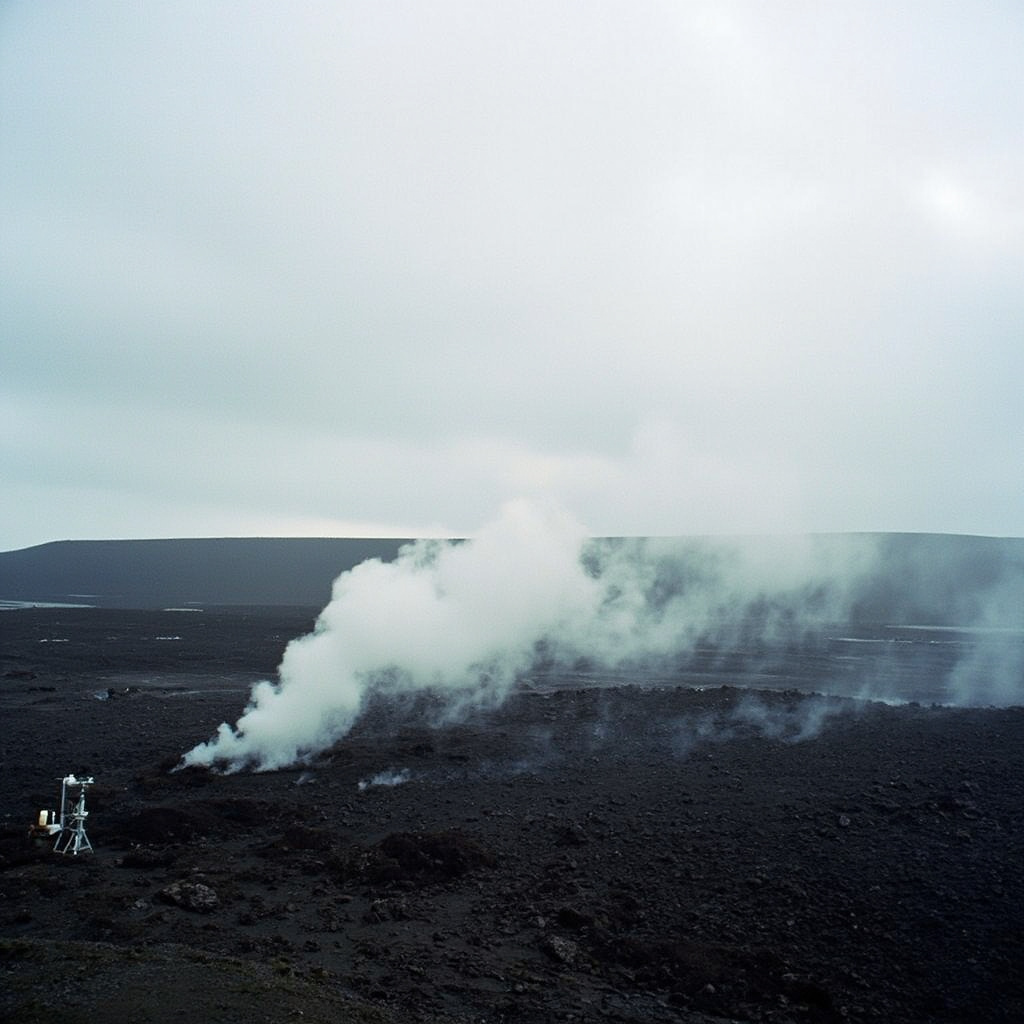
The magma reservoir beneath Iceland's Svartsengi volcanic system has crossed 23 million cubic meters — the largest accumulation since the eruption sequence began in December 2023, according to the Icelandic Meteorological Office's March 17 update. [1] This paper noted last edition that each successive eruption has been larger than the last and that the math is simple: more magma in, bigger eruption out. The math has not changed. The magma has kept accumulating.
What has changed is the IMO's assessment of timing. The March 10 status report stated plainly: "Nothing suggests eruption imminent." [2] The volume threshold needed to trigger an eruption appears to have increased, a phenomenon volcanologists attribute to the system's plumbing evolving with each cycle. The reservoir can hold more before it breaks.
The IMO estimates a roughly 50 percent probability that the next eruption will occur near Grindavik, the fishing town of 3,800 that has been largely evacuated since November 2023. Defensive berms built to protect the Blue Lagoon resort and Svartsengi power plant remain in place but were engineered for smaller events.
Seven eruptions in 16 months, then 210 days of silence and steady inflation. Iceland is watching a clock with no visible hands — certain that time is running out, uncertain of how much remains.
-- KENJI NAKAMURA, Tokyo