TL;DR
Indian MRI equipment manufacturers warned that helium inventory has dropped to 15-20 days as the war disrupts Qatar's supply chain — the queue for a scan just got longer.
MSM Perspective
The Times of India and Economic Times covered the supply chain disruption; Al Jazeera and Euronews connected it to the broader Hormuz crisis.
X Perspective
X's Indian healthcare accounts are posting about scan delays and cost spikes, calling helium the war's most unexpected casualty.
Indian MRI equipment manufacturers have warned that helium inventory levels have dropped to 15-20 days of stock, down from normal reserves of 60-90 days. The shortage traces directly to the war: Qatar, which supplies roughly one-third of the world's helium, has seen exports disrupted by the Hormuz blockade and associated shipping insurance spikes. [1]
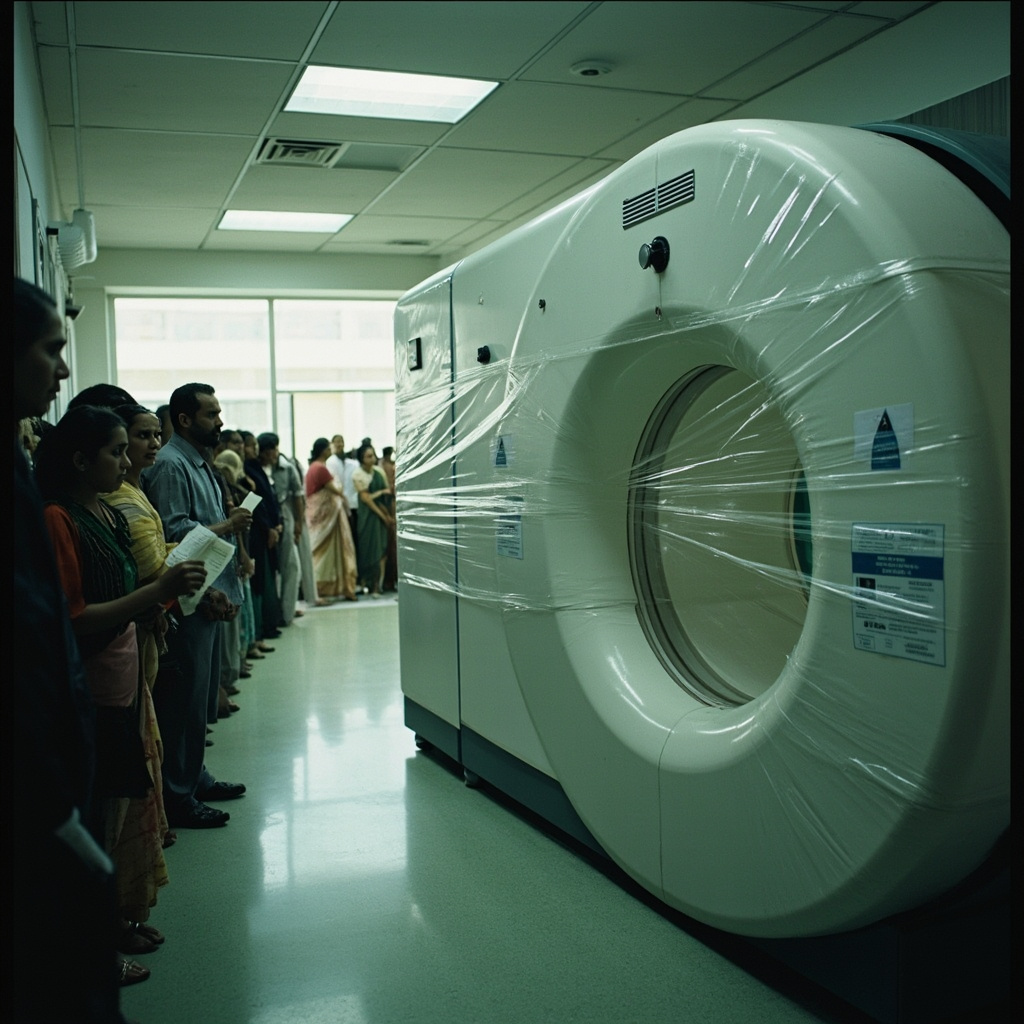
MRI machines require liquid helium to cool their superconducting magnets to near absolute zero. There is no substitute gas. When helium supply tightens, scan availability falls. During previous shortages, hospitals rationed MRI access. A sustained one-third supply cut would put diagnostic imaging at risk across India's network of thousands of MRI machines. [2]
Some industry voices have pushed back. CNBC TV18 quoted experts who said India's newer "zero boil-off" MRI machines and multiple sourcing channels make a full shutdown unlikely. But those machines represent a fraction of the installed base. The older systems that make up most of India's MRI capacity need regular helium refills. [3]
The helium crunch extends beyond MRI. Semiconductor fabrication, fiber optic manufacturing, and scientific research all depend on helium. But hospitals feel it first because MRI scans are time-sensitive — a patient waiting for a cancer diagnosis cannot be told to come back when the war ends.
This paper identified the helium shortage as the war's clearest three-box story: a supply chain most people never think about, a war most people cannot place on a map, and a hospital queue that affects everyone.
-- PRIYA SHARMA, Delhi
Sources & X Posts
News Sources