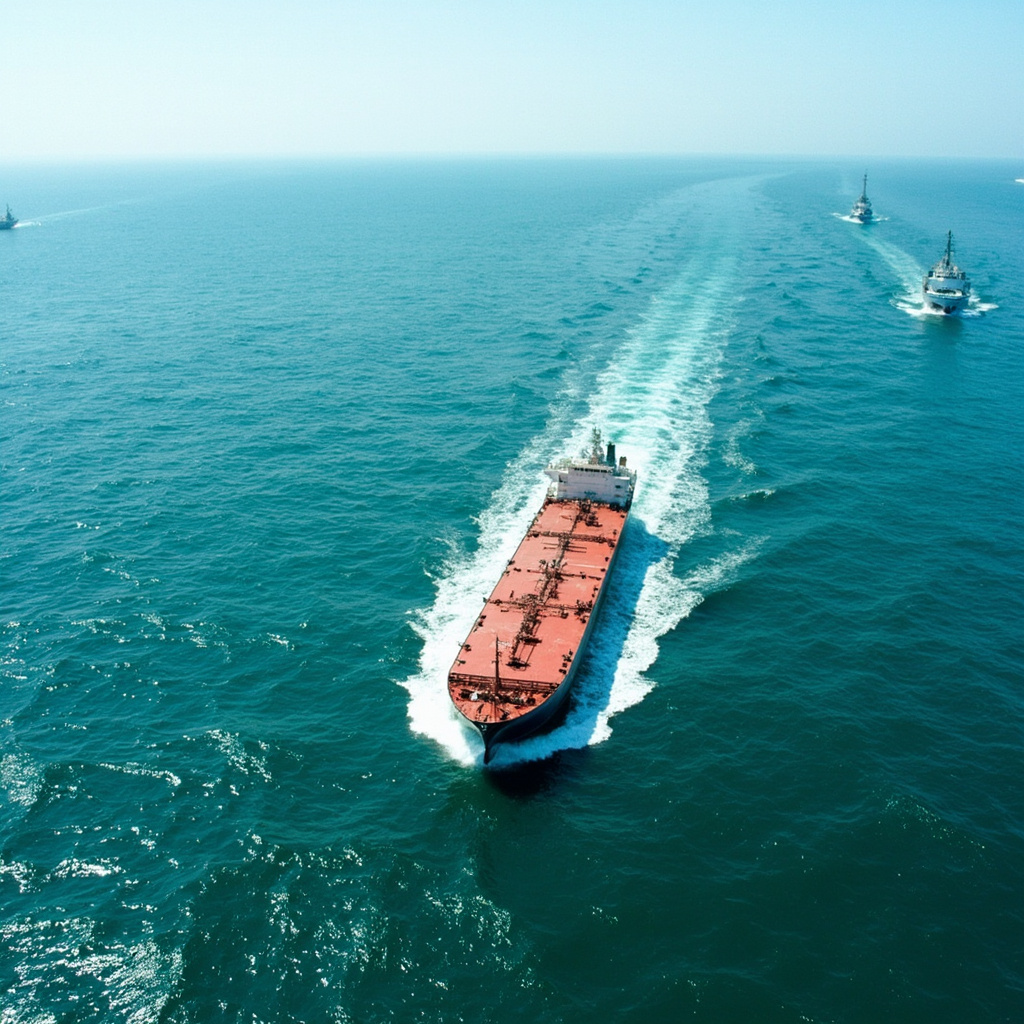
The Strait of Hormuz is closed. Except for Iran.
This paper reported yesterday that a trickle of traffic was still moving through Hormuz under degraded, negotiated conditions. The March 21 update sharpens that picture considerably: Iran's own crude is flowing at near-normal rates. Reuters data shows Iranian exports running between 1.1 and 1.5 million barrels per day through the strait since the war began. [1]
Everyone else is waiting. Over 500 tankers remain stranded or rerouted. P&I clubs cancelled Gulf war-risk cover on March 5. Brent crude sits above $107. The economic pain is global. But it is not evenly distributed.
The selective blockade is not an accident. It is strategy. Iran has demonstrated the ability to discriminate between vessels, allowing shipments destined for China and India to transit while blocking or threatening traffic linked to Western and Gulf state interests. [2] That makes the Strait of Hormuz less a chokepoint than a toll road, with Tehran setting the rates and choosing the customers.
The numbers tell the story. Normal Hormuz traffic runs roughly 20 million barrels per day. Current estimates suggest more than half of that is effectively blocked. [2] Iran's own exports account for a fraction of the total, but they flow unimpeded, generating the revenue Tehran needs to sustain a war economy while its adversaries absorb the energy shock.
For China and India, the arrangement is pragmatic. Both nations get continued access to Iranian crude at prices below the global benchmark, creating a de facto discount for the buyers Iran needs most. For Gulf states whose own exports remain paralyzed, the message is clear: the blockade punishes Iran's enemies, not Iran.
Brent at $107 is not a market finding equilibrium. It is a market pricing in the realization that the strait is not closed in the way most people assumed. It is partitioned.
-- KATYA VOLKOV, Moscow