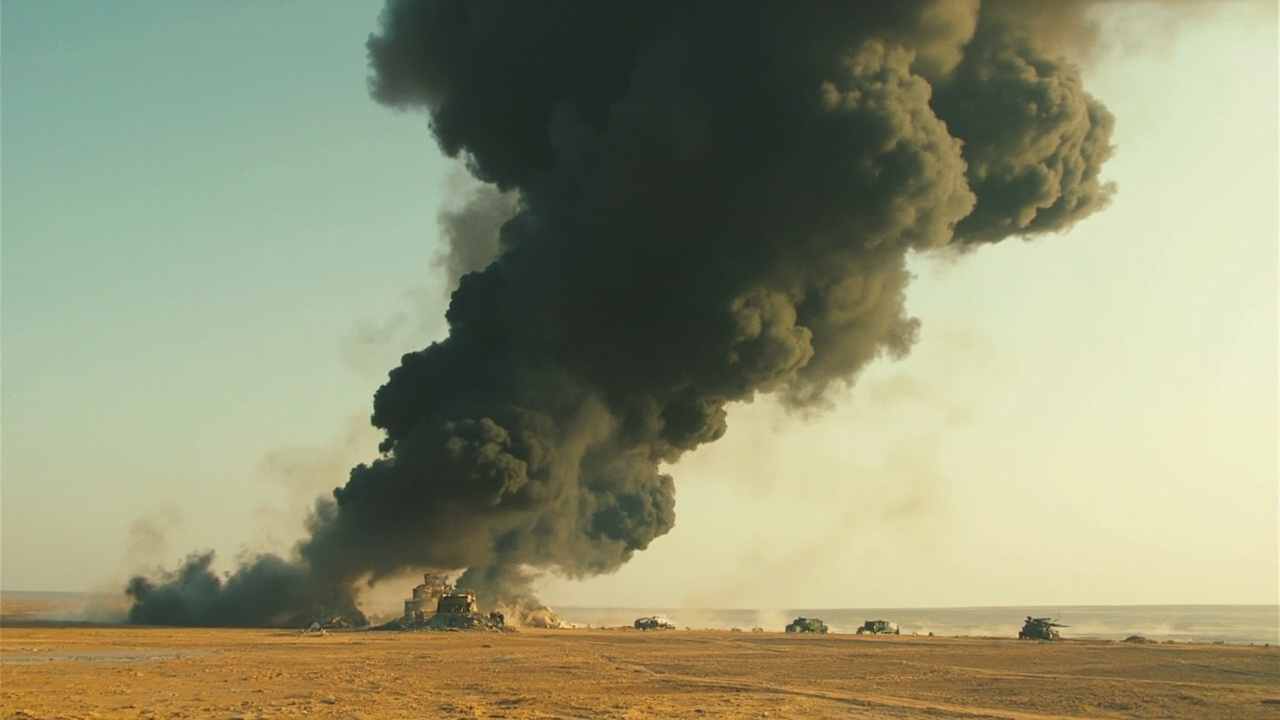
The last time the United States lost a fighter jet to enemy fire was April 7, 2003, when an Iraqi surface-to-air missile struck an F-15E Strike Eagle over Baghdad. The pilot ejected safely and was recovered. [1] Twenty-three years passed. The American military flew combat missions over Afghanistan, Iraq, Syria, and Libya. It dropped ordnance in Yemen, Somalia, and Pakistan. Not once in those 23 years did an adversary bring down a manned fixed-wing aircraft. The streak ended on Friday morning over the mountains of Kohgiluyeh and Boyer-Ahmad province in southwestern Iran, approximately 70 miles north of the Persian Gulf, when Iranian air defenses hit an F-15E Strike Eagle belonging to the 494th Fighter Squadron of the 48th Fighter Wing, based at RAF Lakenheath in Suffolk, England. [2][3]
The two-person crew ejected. The pilot was rescued by U.S. special operations forces within hours, evacuated from Iranian territory aboard an HH-60G Pave Hawk helicopter, and was reported alive and receiving medical treatment at a U.S. facility in the region. [4] The weapons systems officer — the back-seater who operates the jet's radar, targeting systems, and precision-guided munitions — has not been found. As of Saturday morning, the WSO remains missing somewhere in the mountains of southwestern Iran, with both American and Iranian forces racing to locate the downed aviator. [5]
As this paper reported yesterday, the war crossed to civilian infrastructure this week, with the U.S. destroying bridges and Iran striking Gulf data centers and refineries. The F-15E shootdown adds a new dimension to that escalation: the war is now killing the people flying the planes, not just the infrastructure underneath them. And the contradiction identified in this paper's account of the ninth war aim — that a country described as "eviscerated" and "no longer a threat" was simultaneously being targeted for further destruction — has acquired its sharpest edge yet. Iran's air defenses, which President Trump declared "100% annihilated" in remarks on Wednesday, shot down an American fighter jet on Friday. [6]
The Shootdown
The F-15E went down in the early hours of Friday, during what the Pentagon described as a routine strike sortie over Iranian territory. [2] The jet was operating out of a forward deployment location — the 494th Fighter Squadron had been redeployed from its home base at Lakenheath to Jordan as the 494th Expeditionary Fighter Squadron for Operation Epic Fury. [3] The aircraft's identity was confirmed not by CENTCOM, which declined to comment for hours after the shootdown, but by open-source intelligence analysts who examined photographs of wreckage published on Iranian state media. [7]
The vertical stabilizer — the tail fin — had survived the crash intact enough to show two identifying markings: the badge of U.S. Air Forces in Europe and a red tail flash stripe. The red stripe belongs to the 494th Fighter Squadron, known as the "Panthers." [3] The Aviationist, an aviation analysis site, published a side-by-side comparison of the wreckage markings with known 494th aircraft and concluded the identification was unambiguous. [7] Evergreen Intel, an OSINT account, provided further corroborating analysis. [7]
Iran's Islamic Revolutionary Guard Corps claimed a different kill. State media announced that the IRGC's Aerospace Force had shot down an F-35 — America's fifth-generation stealth fighter — using "a new advanced air defense system." [8] The claim was false. The wreckage was an F-15E, a fourth-generation strike aircraft that first flew in 1986 and entered service in 1988. The IRGC's misidentification of its own kill was, paradoxically, the strongest evidence that the wreckage was authentic: a fabricator would have planted debris matching the claim. [7]
The weapon system that brought down the jet has not been officially identified. Iranian state media attributed the kill to the IRGC Aerospace Force but provided no specific system designation. [8] U.S. military officials speaking to ABC News indicated that the early assessment pointed to a surface-to-air missile, though the type has not been disclosed. [9] The terrain where the wreckage was found — mountainous, rural, approximately 70 miles inland from the Gulf — is consistent with a missile engagement at medium altitude. A crater and burn scar at the crash site suggested "a fighter-sized impact into ground," according to The War Zone's analysis. [10]
The Rescue
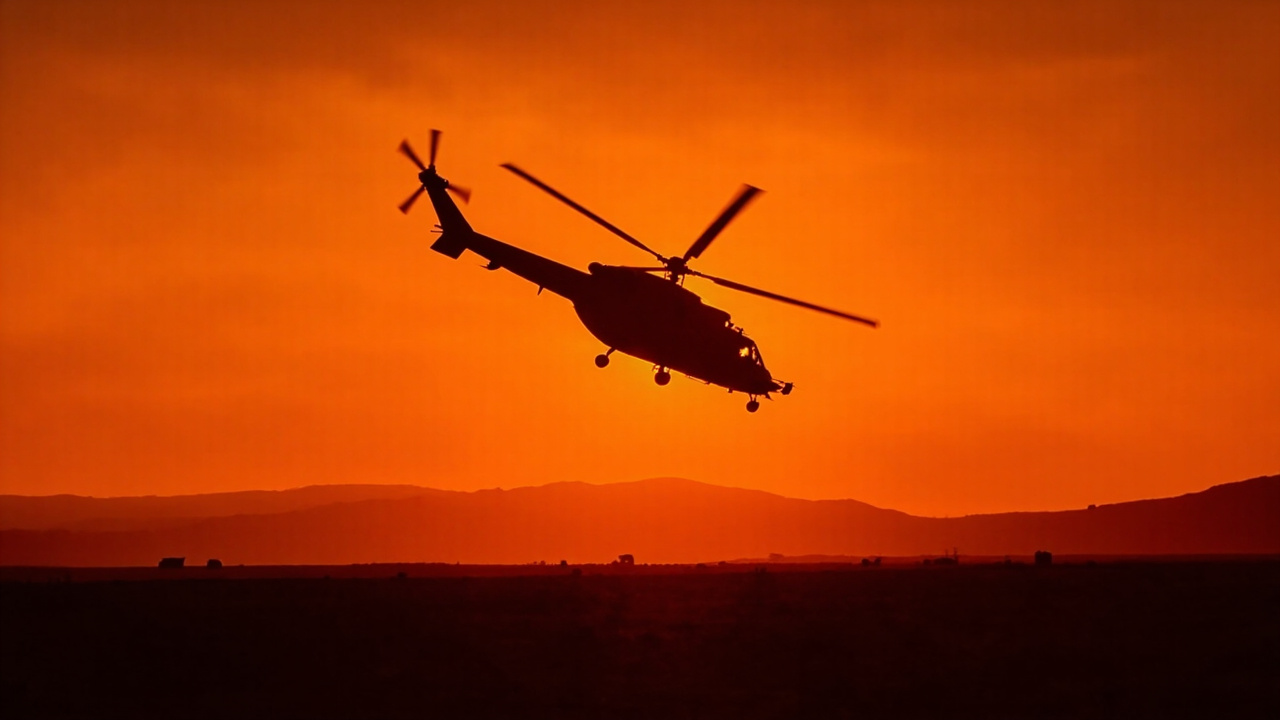
What followed the shootdown was the most complex combat search and rescue operation the United States has conducted since the 2003 invasion of Iraq. The pilot — the front-seater, who flies the aircraft — was located by U.S. forces and extracted from Iranian territory. Israeli media outlet N12 and CBS News both reported that the pilot was alive, in U.S. custody, and receiving medical attention. [4] The extraction involved HH-60G Pave Hawk helicopters and an HC-130J refueling aircraft, assets that were observed operating deep inside Iranian airspace by tracking services and Iranian ground observers. [10]
The rescue was not unopposed. Two U.S. Black Hawk helicopters involved in the search and rescue mission were struck by Iranian fire — reports indicate small arms fire from the ground. [4] Service members aboard were wounded but all survived, and both helicopters returned to base. CBS reported that the helicopter crew members were receiving medical treatment. [4]
It was during this rescue operation that the second aircraft loss occurred. An A-10C Thunderbolt II — the "Warthog" — providing close air support for the search and rescue mission was hit by Iranian fire. [11] The single-seat attack aircraft, famous for its 30mm GAU-8 cannon and its legendary ability to absorb battle damage, was damaged severely enough that the pilot could not return to base. The pilot nursed the stricken A-10 out of Iranian airspace and across the Persian Gulf into Kuwaiti airspace, where the aircraft was no longer flyable. The pilot ejected and was recovered safely. [11] The A-10 crashed in Kuwait.
Two American combat aircraft lost in a single day. One pilot rescued from behind enemy lines. One weapons systems officer still missing. Two helicopter crews wounded. It was, as one X account summarized, "the worst day for American military aviation since the war began on February 28." [12]
The Missing Aviator
The search for the weapons systems officer is the most operationally fraught aspect of Friday's events. The WSO ejected from the F-15E along with the pilot, but the two crew members were separated upon landing — a common outcome when ejection seats deploy at altitude and wind disperses the two parachutes over different terrain. [5]
Iranian state television in Kohgiluyeh and Boyer-Ahmad province broadcast an announcement offering a "worthy reward" for the live capture of the American aviator. [13] Video circulated on Iranian social media appearing to show local tribesmen firing small arms at U.S. aircraft conducting search patterns overhead. [14] The governor of the province issued a public appeal urging residents to assist in locating the pilot. [13]
The Pentagon confirmed to the House Armed Services Committee on Friday evening that "the status of the second F-15E Strike Eagle service member is NOT known." [10] The language was precise, and deliberately so. "Not known" is distinct from "missing in action" and from "captured." It means the United States does not have information confirming whether the WSO is alive, injured, captured, or dead.
Iran's Parliament Speaker Mohammad Bagher Ghalibaf seized on the situation with a taunt posted to X: a post mocking the downgrade from "regime change" to "can anyone find our pilots?" [15] The political dimension of a missing American aviator behind enemy lines in Iran — a scenario that evokes the 444-day hostage crisis of 1979-1981 — is not lost on anyone in Washington.
The Air Superiority Question
Forty-eight hours before the shootdown, CENTCOM Commander Admiral Brad Cooper stated that the U.S. had established unchallenged air superiority over Iran. "We don't see their navy sailing. We don't see their aircraft flying," Cooper told reporters on April 2. [16] The statement was consistent with the narrative the administration has maintained since the first week of Operation Epic Fury: that Iran's air defenses were systematically destroyed in the opening salvos, that American pilots faced minimal risk over Iranian airspace, and that the air campaign could continue indefinitely without significant losses.
The F-15E shootdown does not necessarily invalidate the air superiority claim in a technical military sense. Air superiority does not mean zero losses. The United States lost aircraft over North Vietnam while maintaining air superiority. It lost aircraft in the opening days of Desert Storm while conducting the most lopsided air campaign in modern history. A single shootdown does not mean Iran has reconstituted its air defense network. [1]
But the political meaning is different from the military meaning. Trump declared Iran's radar "100% annihilated" on Wednesday. [6] Iran shot down an F-15E on Friday. The sequence matters because the administration has sold the war to the American public on the premise that American technological superiority renders the campaign essentially riskless — that the strikes are surgical, the defenses are destroyed, and the only casualties are on the other side. Friday destroyed that premise.
The total losses for Operation Epic Fury now stand at 13 U.S. service members killed in action, more than 300 wounded from attacks on U.S. facilities in the region, 16 MQ-9 Reaper drones lost over Iran, three F-15Es destroyed in a friendly fire incident with Kuwaiti air defenses on March 1, the F-35 that took damage and made an emergency landing on March 19, and now an F-15E shot down by enemy fire and an A-10 lost during the rescue operation. [2][4] The material losses are significant. The human cost — one aviator missing behind enemy lines — is the kind of cost that changes the domestic politics of a war.
The Precedent
The last U.S. fixed-wing jet lost to enemy fire before Friday was an F-15E Strike Eagle over Baghdad on April 7, 2003, during the invasion of Iraq. [1] Before that, the most recent loss was an F-16 over Serbia in 1999 and an F-117 stealth fighter over the same country — the only F-117 ever lost in combat. The A-10 losses in Friday's incident bring the total of manned aircraft lost to enemy action in the Iran war to two in a single day, excluding the March 1 friendly fire incident.
The 23-year gap between combat shootdowns was not merely luck. It reflected decades of investment in stealth technology, electronic warfare, standoff weapons that allow pilots to strike from beyond the range of air defenses, and the systematic degradation of adversary air defense networks before sending manned aircraft into contested airspace. The doctrine worked against Iraq in 1991 and 2003. It worked against Serbia in 1999. It worked against Libya in 2011. It has not worked, on this day, against Iran.
Iran's air defense network — a patchwork of Russian-supplied S-300 systems, domestically produced Bavar-373 systems, and older Soviet-era equipment — was supposed to be degraded beyond operational relevance by the end of the war's second week. CENTCOM's daily operations summaries through late March claimed systematic destruction of radar sites, missile batteries, and command nodes. The F-15E shootdown on Friday suggests either that the degradation was less complete than claimed, that Iran has mobile systems that survived the initial strikes, or that the air defense network has some capacity for reconstitution that U.S. intelligence did not anticipate.
The IRGC's claim of a "new advanced air defense system" is unverified and should be treated with caution. Iran has a history of exaggerating its military capabilities. But the claim does not need to be true for the shootdown to matter. What matters is that an American fighter jet was hit, that it went down, that one crew member is missing, and that the rescue operation cost a second aircraft and wounded additional service members.
What Comes Next
The missing WSO is now the war's most urgent human story. If the aviator is captured by Iranian forces or the IRGC, the political consequences will dominate the news cycle for days or weeks. The 1979 hostage crisis lasted 444 days and destroyed a presidency. A single American prisoner of war in Iran — in a war launched without Congressional authorization, sold on the premise of American invincibility, and justified by nine different and contradictory war aims — would become the symbol around which every criticism of the war would coalesce.
If the WSO is recovered by U.S. forces, the administration will declare the rescue a triumph and the story will fade within 48 hours. If the WSO is dead, the administration will honor the fallen and pivot to retribution.
But the F-15E itself is already in Iranian hands. Photographs show the wreckage scattered across mountainous terrain. The red tail flash of the 494th is visible. The vertical stabilizer carries the USAFE badge. Iranian civilians drove to the crash site in private cars to photograph the debris. [7] The imagery will be weaponized by Iranian media for months. The wreckage of an American fighter jet on Iranian soil is a propaganda asset of incalculable value — the physical proof that American air power is not invincible, that Iran can fight back, that the "eviscerated" country can still bite.
Thirty-six days into a war that was supposed to last "two to three weeks," the United States has lost its first fighter jet to enemy fire in 23 years. The pilot is safe. The WSO is not. The air defenses that were "100% annihilated" are still shooting. And somewhere in the mountains of Kohgiluyeh and Boyer-Ahmad province, an American is either hiding, running, or already in captivity — the answer to which will determine whether April 3, 2026, becomes a footnote or a turning point.